


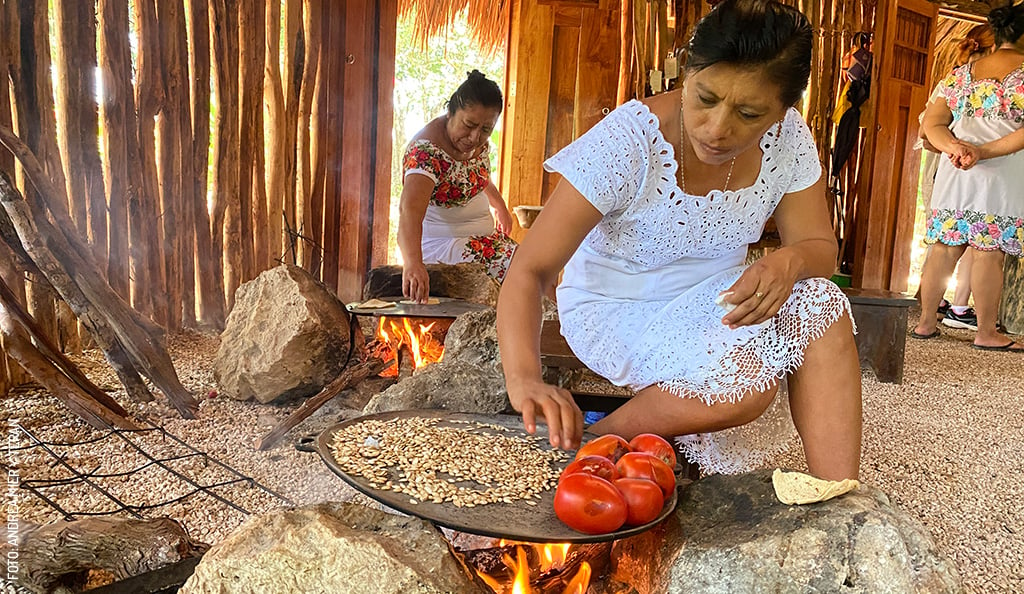
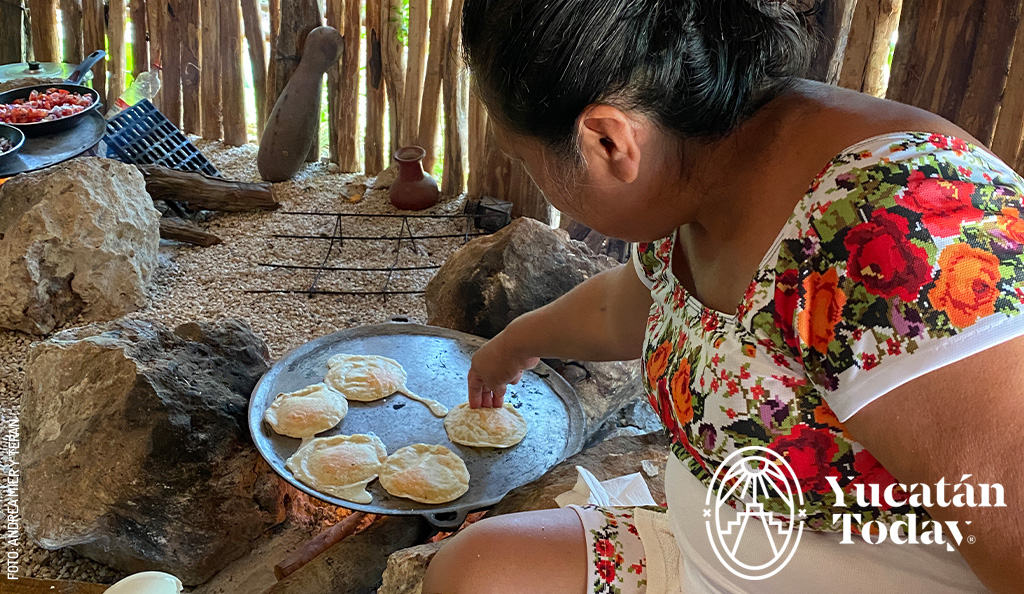
Throughout Mexico, the kitchen is where traditions, flavors, and ancestral knowledge come together: it's where families gather, meals become expressions of affection, and different generations enjoy each other’s company. In Yucatán, particularly, cooking is also a cultural practice deeply rooted in centuries of Maya heritage, reflected not only in its ingredients, but also in the tools, techniques, and rituals that bring every dish to life.
While gas and electric stoves are standard in Mérida and other cities, many families in rural Yucatán still prepare their meals using traditional methods. Likewise, while most of us buy ready-made tortillas or packaged seasonings, others continue to nixtamalize their own corn and grind it into fresh masa, and prepare their own recados (traditional spice pastes) from scratch.
Curious to learn more—or even get in the kitchen yourself? Read on.
The Maya Kitchen and the Three-Stone Hearth
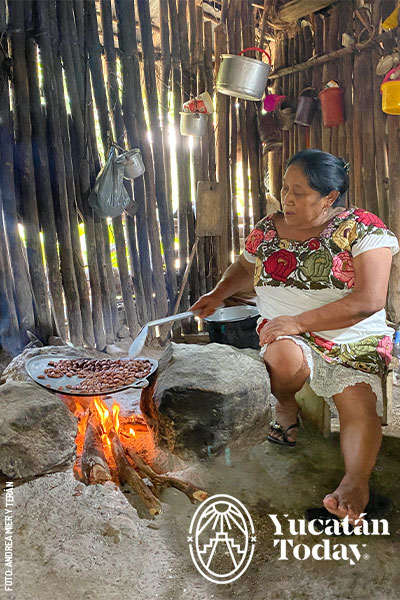
In a traditional Maya home, the kitchen is typically a separate structure from the main house, usually located in the backyard. At its center sits the k'óoben, a three-stone hearth built directly on the ground.
Surrounding it are the simple, low furnishings that define daily life: stools, a round table for hand-making corn tortillas, and essential tools such as hand mills, metates (grinding stones), molcajetes (stone mortars), and the ubiquitous plastic buckets and containers used throughout the cooking process.
The k'óoben is used for boiling, roasting, and grilling food. Combined with a comal (flat griddle), it is also used to toast seeds and cook fresh tortillas. The wood smoke itself isn’t wasted either: it was used to smoke meats and preserve them long before refrigeration existed.
The píib: an underground oven
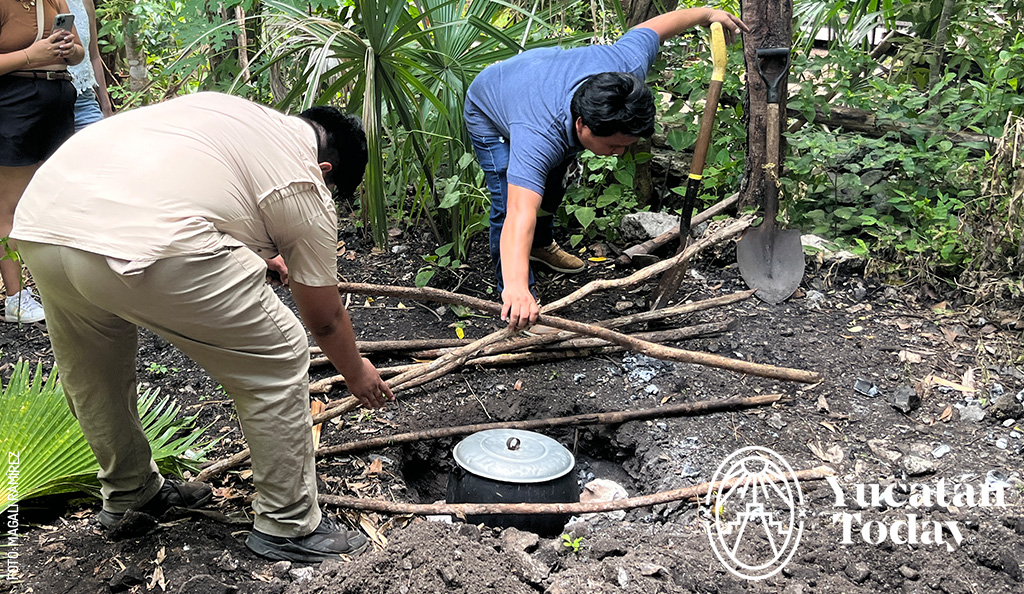
You’re very likely to come across signs advertising “comida enterrada”—buried food. As weird as that may sound, the term refers to one of the most iconic cooking techniques in traditional Maya cuisine: the píib.
This underground oven is dug into the family's solar (home garden or yard), with its size depending on how much food will be prepared.
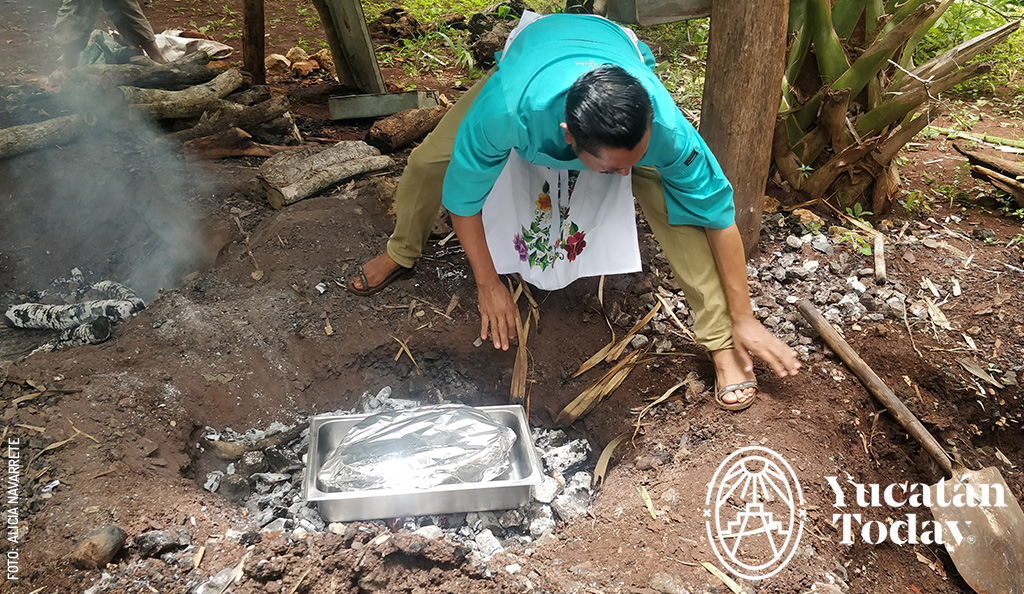
Once the pit has been dug, a wood fire is built inside. When the fire has produced enough heat, large stones are added to retain a steady cooking temperature. The food is placed over the hot stones and covered with leaves from native trees such as ramón (Brosimum alicastrum), pixoy (Guazuma ulmifolia), coconut palm, or huano (Sabal gretheriae). These leaves form a natural lid that seals in moisture and aroma. Finally, the pit is covered with a sheet of metal and buried beneath a layer of earth, trapping the heat for hours of slow cooking.
Both the píib and the k'óoben represent far more than culinary techniques. They are living traditions that require generations of knowledge about fire, timing, and local ingredients. The result is unmistakable: tender foods infused with rich aromas and textures that elevate the ingredients and create new dimensions of flavor.
Find out more about traditional Maya cooking in our article ‘True to the Essence: The Maya Kitchen and Its Cultural Significance.’
A taste of Yucatán
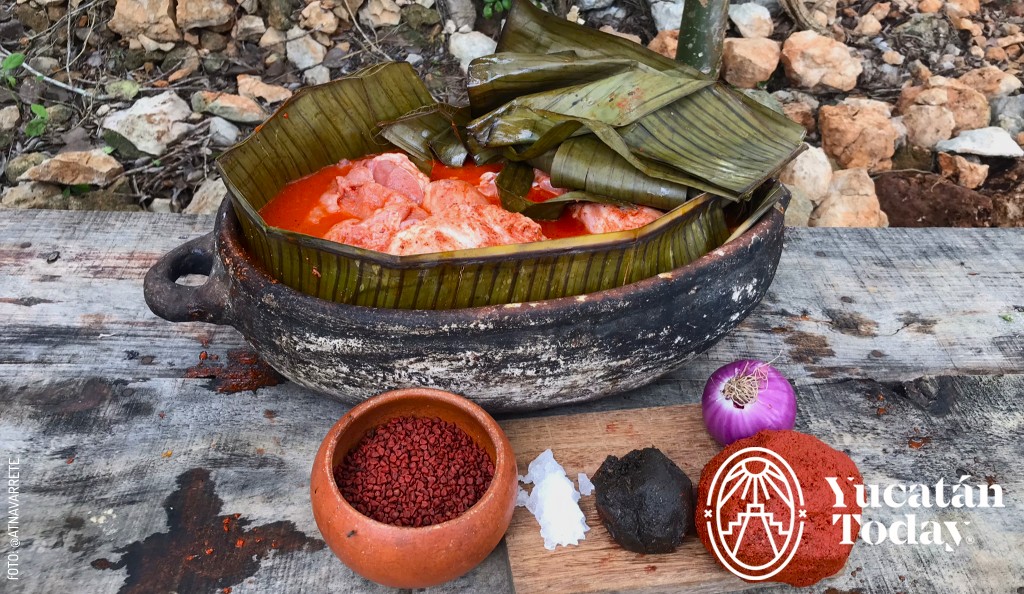
Yucatecan cuisine is the result of centuries of culinary exchange, blending ancient Maya knowledge and cooking techniques with ingredients introduced from other parts of the world—particularly Europe. At its heart, however, lies the milpa, the traditional farming system built around the cultivation of corn, beans, and squash, complemented by crops such as tomatoes, a variety of chiles, sweet potatoes, jicama, and leafy greens like chaya and cabbage.
These vegetables, together with animal proteins (today, primarily pork, turkey, and chicken) are seasoned with local herbs and spices that give Yucatecan cuisine its unmistakable character.
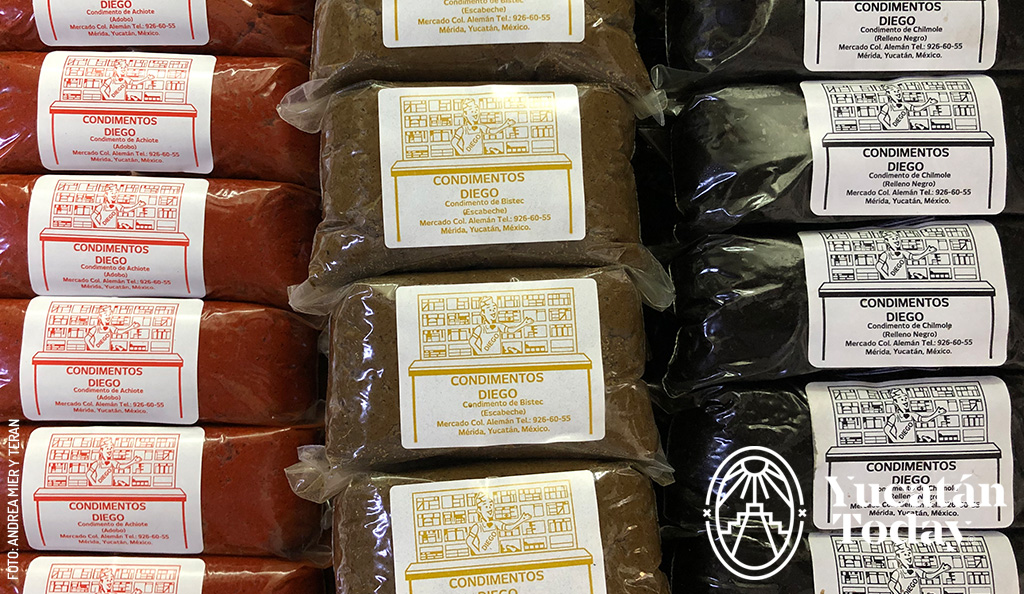
These herbs and spices are ground and blended into fragrant seasoning pastes known as recados, the essential building blocks behind many of the region's most iconic dishes. Here are three of the most important.
Red Recado
The orangey red seasoning paste known as recado rojo is made from ground achiote (annatto) seeds blended with oregano, black pepper, cloves, garlic, cinnamon, bay leaves, bitter orange juice, and salt.
Black Recado
The most labor-intensive of Yucatán's traditional recados, recado negro is prepared by grinding charred chiles with black pepper, allspice, cloves, bay leaves, Yucatecan oregano, onion, garlic, and salt.
White Recado
Recado blanco encompasses several seasoning blends that share a base of black pepper, cloves, and Yucatecan oregano. These include recados for escabeche, puchero, bistec, and the versatile recado para todo ("all-purpose recado").
Find out more about more Yucatecan recados in our article “The Mystic World of Recados (Yucatecan Seasonings).”
Keeping tradition alive
Traditional Yucatecan dishes are usually labor-intensive: they aren’t hard to make, but they involve either many steps or many different elements that can take hours and/or several sets of hands to carry out. Consequently, many Yucatecos (in Mérida especially) find it increasingly difficult to make them at home for an everyday lunch (which is usually the main meal of the day for locals).
Traditional kitchens throughout Yucatán are helping preserve these recipes and the knowledge behind them, ensuring that future generations continue to value not only the dishes themselves but also the remarkable work involved in preparing them entirely by hand.
Visiting one of these kitchens is about much more than enjoying an authentic meal. It is an opportunity to experience traditions passed down through countless generations while discovering something about yourself: you may uncover a hidden talent for cooking, learn a new recipe to recreate at home, or simply confirm that your greatest culinary gift is appreciating the finished dish.
A few traditional cooking workshops in Yucatán
Valladolid, Yucatán
Google maps: ALDEA XBATUN
WA: 985 852 6555 (José Cen)
IG: aldeaxbatun
Corazón del Mayab
Mérida
WA 999 908 1201
corazondelmayab@gmail.com
Calle 21 x 26 y 28, Maní, Yucatán
Tel. 999 330 7120
knulpat@gmail.com
FB: Cocina Tradicional de Maní
Santa Elena, Yucatán
Tel. 997 133 5768
Calle 27 por 28 y 26, Centro, Maní
Cel. 997 166 4565
WhatsApp. 985 114 0808
Calle 31 x 22 y 24, Col. San Isidro, Maní
Tel. 997 114 6086
FB: Tuuch Kaaj
Halachó, Yucatán
Google maps: Yaaxche Centro Etnogastronómico / Quinta Santa Cruz
WA: 997 151 0862
IG: y.aaxche
Xocén Birding Trail
Tel. 985 211 7068
First published in Yucatán Today print and digital magazine no. 465, in September 2026.


Related articles


