


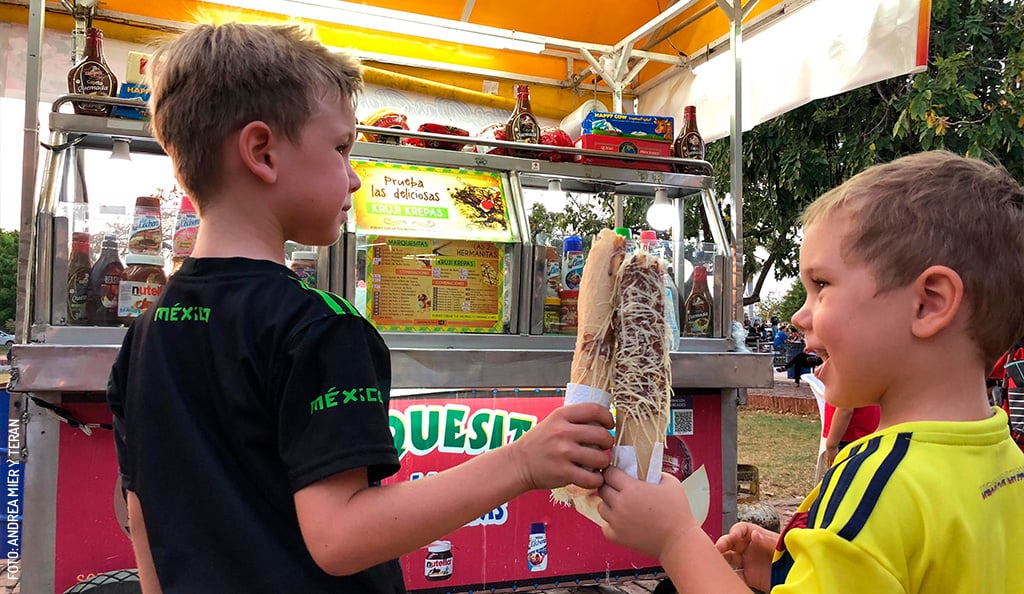
Created around 1930 at Heladería Polito in Santiago Park, Mérida, marquesitas are a traditional Yucatecan dessert featuring a crispy, rolled wafer filled with shredded Dutch Edam cheese (queso de bola). Between the 1940s and 1950s, they acquired their signature sweet-and-savory flavor profile, which today often includes toppings like Nutella, cajeta (caramelized goat milk), or condensed milk, with average prices ranging from $40 to $100 MXN pesos.
Marquesitas: The Quintessential Yucatecan Treat
We all have a certain dish, snack, or dessert that tastes like a special moment—where a single bite can instantly transport us back to some of the happiest memories of our lives.
In my case, that has always been marquesitas. I remember how my grandmother would always buy me one after a day of adventures downtown; how I’d share one with my mom during our trips through the state's interior; and even the very first time someone bought me one on a date.
And just like me, I’m sure most Yucatecans have a story where marquesitas play a starring role, as we’ve practically known them for as long as we can remember.
But what lies behind them? What’s their history? What do they represent? Here is a short beginner’s guide to answer your questions about marquesitas, written by a true marquelover at heart.
How did marquesitas come about?
While there are various accounts of their origin, the most widely known tells us that marquesitas were born in Santiago Park, specifically at Heladería Polito. The earliest versions of this dessert were crafted there around the 1930s as a solution to dropping ice cream sales during the cooler months of the year, when customers only bought the empty sugar cones (barquillas).
Years later, between the 1940s and 1950s, Dutch Edam cheese—which Yucatecos call queso de bola, or ball cheese—was incorporated. Marquesitas then took on the signature flavor combination that defines them today, becoming one of the state's most iconic sweet treats.
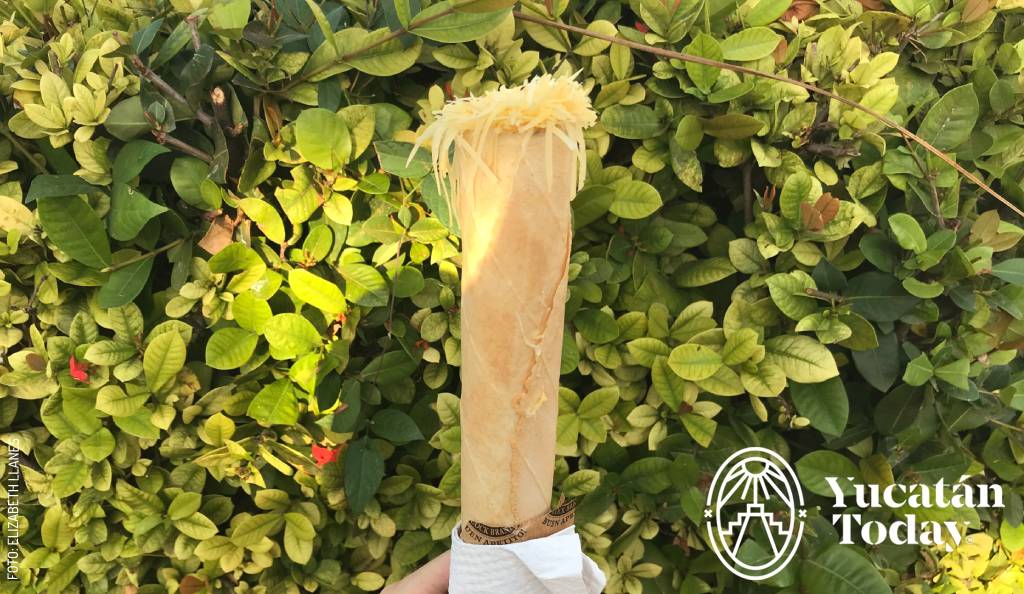
As for the name, which means “little marchioness” (a Spanish nobility title for a female marquis), several theories exist. Some claim it was in honor of a marquis who lived in the area, while others say it arose because it was the favorite treat of a marquis's daughters.
As you can see, as it happens with many other popular traditions around the world, there are many different takes on the story behind marquesitas.
So what exactly are marquesitas?
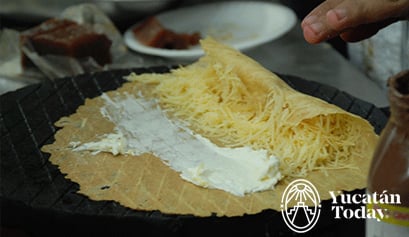
Based on how they are made, you could say marquesitas are distant cousins of the French crepe. However, they are actually made from a batter similar to ice cream sugar cones. Once cooked on a heavy iron press, the hot wafer is filled with freshly shredded queso de bola and then rolled up (rather than folded).
That is the traditional preparation: crispy sweet wafer and salty cheese, nothing else. If you’ve never tried one, you might think the sharp, savory taste of the cheese would completely overpower it (and honestly, if you don't know what to expect, that salty hit will catch you off guard!).
But if you have a sweet tooth like yours truly, don’t worry. Luckily, nowadays there are countless flavor combinations to add an extra touch of sweetness.
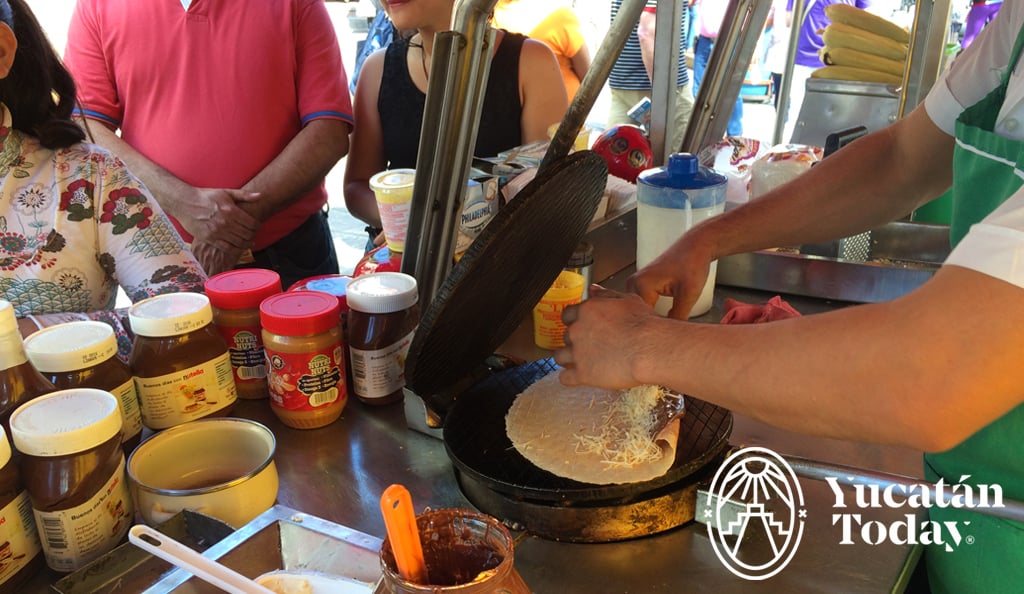
The most popular toppings include Nutella, cajeta (dulce de leche), condensed milk, fruit jams, chocolate syrup, and even sliced fruit, including strawberries or bananas. Of course, options vary by stand, and in most cases, you can fully customize yours. Just keep in mind that extra toppings usually come with a small additional fee.
Personally, my go-to order is the traditional cheese with a xiix (a tiny bit) of Nutella. To me, it hits the absolute perfect balance between sweet and savory. Plus, the best part is eating it piping hot off the press, when every bite gives you that characteristic crunch that is absolute music to your ears.
Right, so where can I try a marquesita?
This is probably the best part, because there isn't just one right answer: marquesitas are practically everywhere across Mérida and throughout Yucatán’s many municipalities. You can find them in parks, street markets (tianguis), food carts, brick-and-mortar shops, and more recently, even in pre-packaged options.
Some of the most popular spots to enjoy one are Parque de las Américas, Paseo de Montejo, Parque de la Alemán, the Historic Center, and Parque La Plancha. If you're looking for spots outside the downtown core, you can also visit any tianguis in Mérida (like the Francisco de Montejo market held at Parque La Capilla on Thursdays and Saturdays), as well as near parks and churches on Sunday evenings.
And, of course, there’s always the option to visit the birthplace of this delicacy: Helados Polito, right next to Santiago Park, an establishment with nearly a century of history behind it.
Okay, so, how expensive is a marquesita?
The answer depends on a few things: mainly where you buy it and how many toppings (or rather, fillings) you decide to pile on. But as a general rule of thumb, you'll usually find them priced anywhere between $40 and $100 pesos.
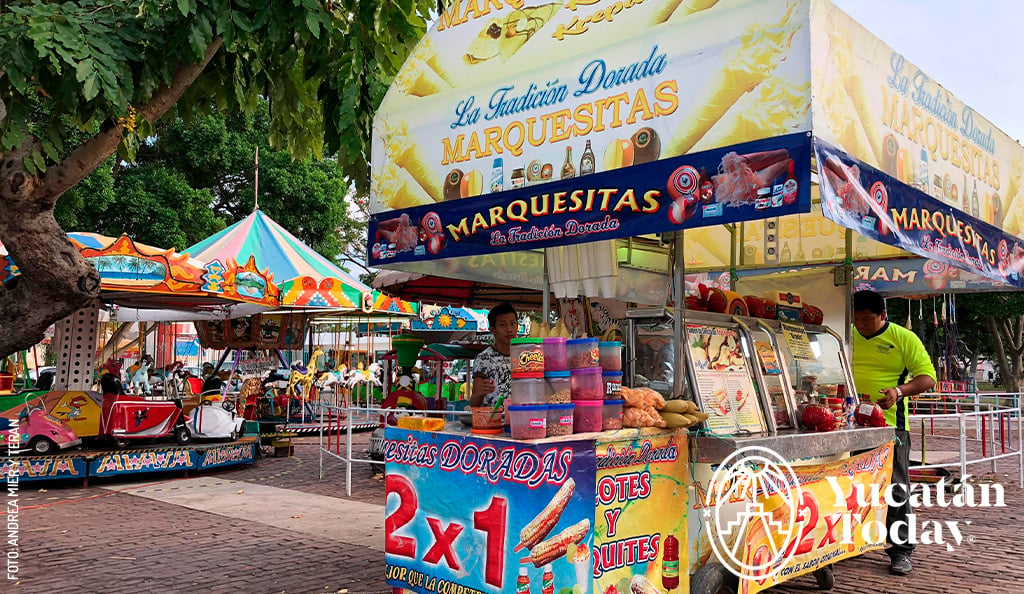
One last tip: although more and more vendors now accept cards or digital transfers, it's always a good idea to carry a little cash. It keeps the transaction quick and easy.
As you can see, no matter where you go in Yucatán, you're never far from a marquesita. And best of all, thanks to the endless combinations, there’s always a new way to treat your tummy. Who knows? Maybe the marquesita you buy today will wind up becoming one of those cherished memories that, with a single bite, transports you back to a happy moment.
So, my dear traveler, take this as your sign to pause, spot a marquesero, and enjoy one. Because marquesitas are so much more than a dessert: they are memories, tradition, and one of those simple pleasures that make Yucatán feel like Yucatán.
First published on the Yucatán Today website in November 2026.


Related articles


