


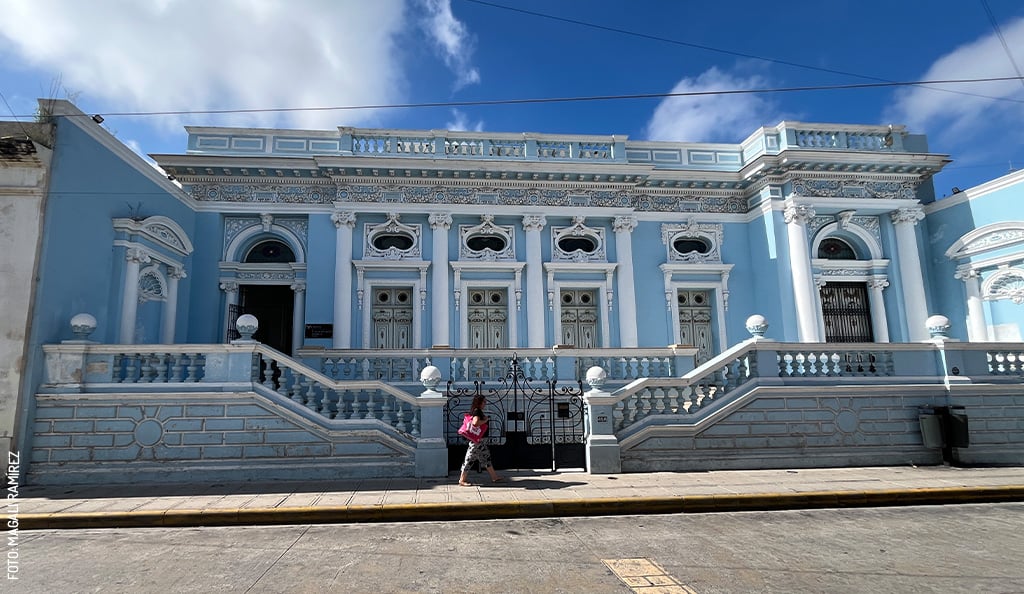
Mérida's 59th Street is a 2.5-kilometer historic corridor in the city center (running east to west, from 50th Street to Itzáes Avenue) that features unique architectural landmarks such as Casa Amábilis—the city's only 20th-century Rococo-style building—the Art Deco La Nacional building, and the 17th-century Temple of the Third Order, built with stones from ancient Maya temples. As the starting point of the historic Camino Real to Sisal and Mérida's first paved street, it gathers key cultural and tourist attractions, including the Gran Hotel (1902), the birthplace of Andrés Quintana Roo, the Palacio de la Música, and Parque Hidalgo.
Calle 59: The Prettiest Street in Mérida’s Centro
If walking is your thing, Mérida offers plenty of ways to wear out the soles of your shoes. But of all the avenues, promenades, and parks, my favorites are the streets. And among those, there’s one in particular: Calle 59, or 59th Street. In fact, I’d go so far as to say that Calle 59 is the prettiest street in the city. Don’t believe me? Lace up your alpargatas or huaraches and come take a walk with me.
Calle 59, from end to end
First things first: where exactly is Calle 59? It practically cuts across the city from side to side, stretching about 7 kilometers or 4.5 miles (9.5 km or 6 miles if you include the section that becomes Avenida Fidel Velázquez and continues all the way to the Mérida Periférico). Its western end is marked by the Yucatán Psychiatric Hospital and Parque Ecológico del Poniente, while to the east it reaches Circuito Colonias, not far from Parque Recreativo del Oriente.
For now, though, we’ll focus on the stretch that runs through downtown, starting at Calle 50. If I had to go with a ballpark estimate (or, more accurately, a walk-park estimate), this section is about two and a half kilometers long (1.5 mi), which means you could cover it in around 20 minutes. But that wouldn’t be the point. Here, you’ll want to take your time, exploring one block at a time and enjoying the Mérida “barrios” (old neighborhoods) the street passes through — La Mejorada, the heart of downtown, and Santiago — before eventually reaching Avenida Itzáes.
Plan your walk along Calle 59
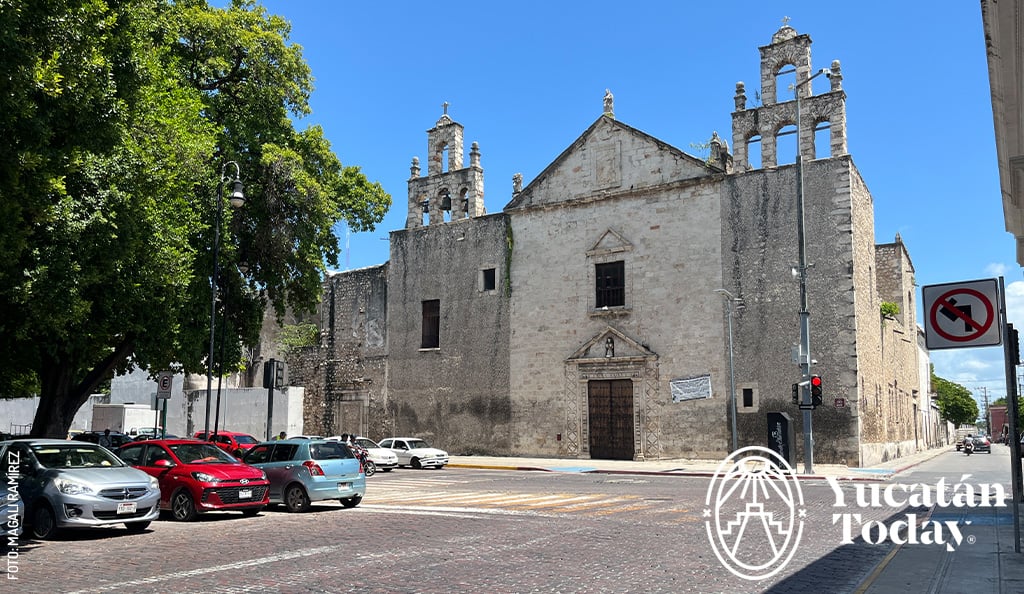
The first thing to know is that Calle 59 runs east to west. This matters because, in the morning, the sun rises above La Mejorada Temple, travels roughly parallel to the street throughout the day, and in the afternoon disappears behind Parque de la Paz, at the site of the former Juárez penitentiary. In other words, bring your camera: the play of light and shadows throughout the day makes for some great photo opportunities.
Calle 59 was already part of Mérida’s original grid, although it has gone by several names over the years. Between 1877 and 1895, it was named after then-President Porfirio Díaz. Long before that, it was known as the road to Santa Catarina (a once-peripheral neighborhood that no longer exists) and to Santiago.
And it was precisely along its stretch through Santiago that the street marked the beginning of the Camino Real to Sisal, then the Península’s most important port. This was the route taken by Empress Carlota (Charlotte of Belgium) when she arrived in Mérida in 1865.
Highlights along Calle 59
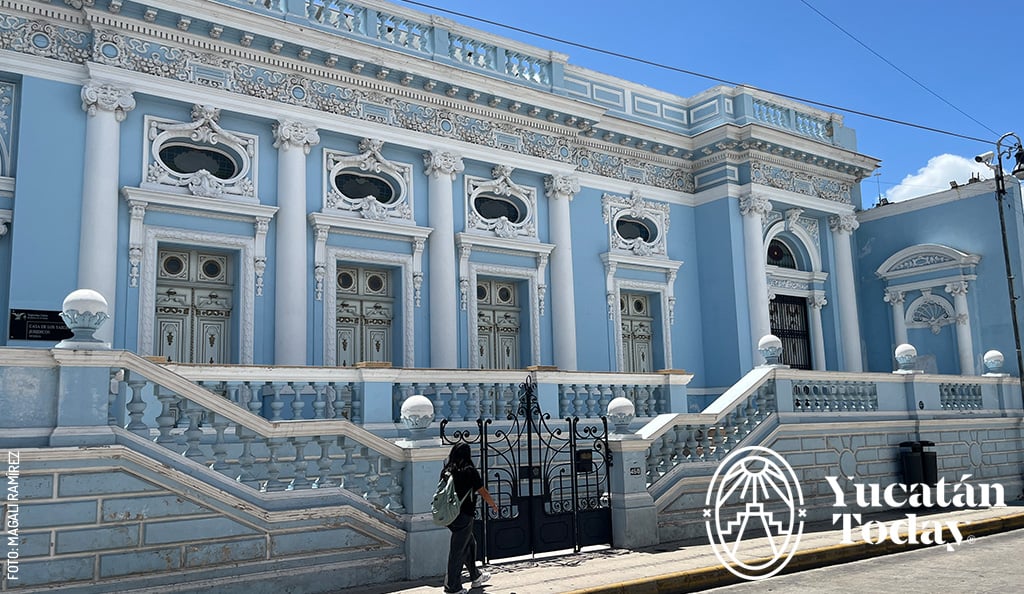
Calle 59 has the distinction of being the first street in Mérida to be paved, and during the second half of the 19th century and the early 20th century, it was one of the city residents’ favorite promenades. And no wonder: along its length is a veritable catalog of buildings and homes built in different periods and architectural styles, from the eye-catching Rococo (which, in Mérida, is only represented by the 20th-century Casa Amábilis, now home to the Casa de la Cultura Jurídica) to the Art Deco of the La Nacional building, also dating to the same century. Along the way, you’ll also find leafy parks and little plazas where you can rest, catch a breeze, and sit for a chat.
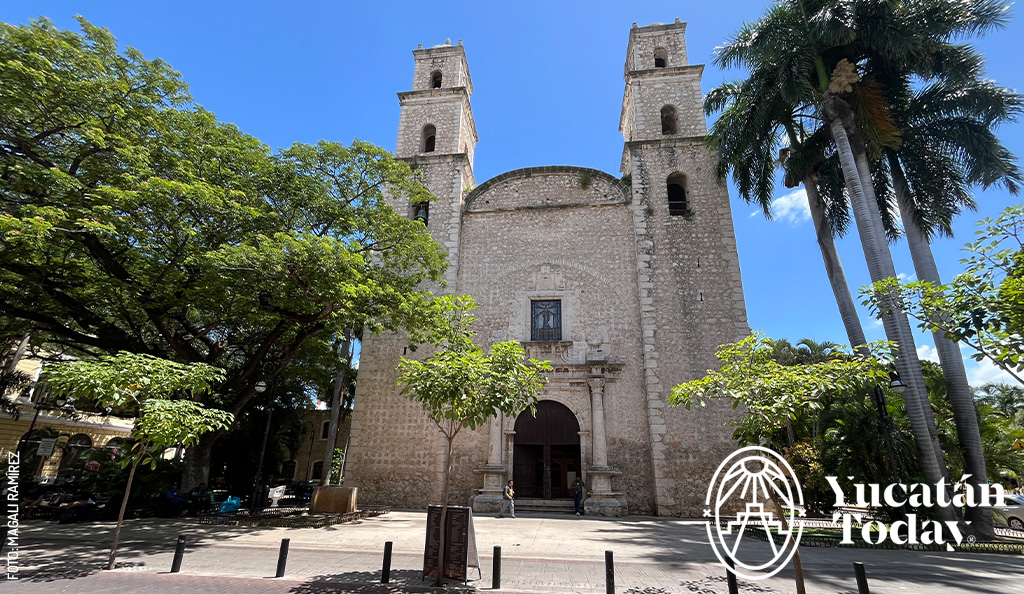
If you prefer something a little more austere, the Franciscan style of the parishes of Nuestra Señora del Carmen (Our Lady of Mt. Carmel), better known as La Mejorada, and Santiago Apóstol (St. James) is also along your route. Santiago is famously said to have been the site of the first Mass celebrated in Mérida. At the intersection with Calle 60, you’ll also find Templo de la Tercera Orden, or El Jesús, a former Jesuit church. Its exterior walls incorporate carved stones from ancient Maya temples, while inside, enormous murals cover the walls. All three churches date to the 17th century.
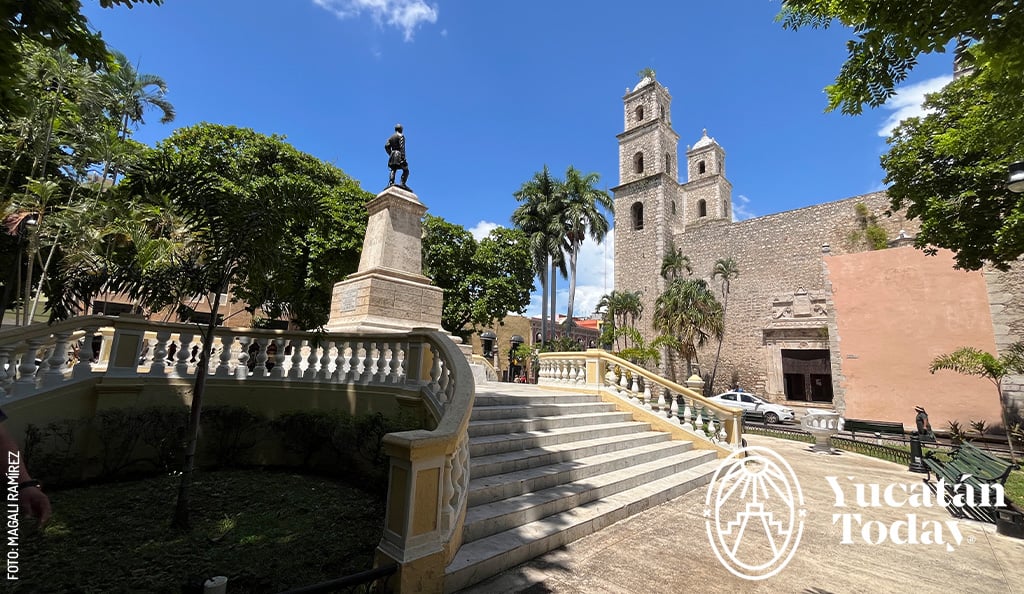
Decades ago, grandparents tell us, people would gather in places like charming Parque Hidalgo, which a British explorer in the 19th century called “the most beautiful corner of Mérida.” Back then, however, it was known as Parque de los Hidalgos. People came here to see and be seen, flirt, show off a little, and catch up on the latest neighborhood gossip. It must have been quite the popular spot, because Mérida’s first purpose-built hotel, the Gran Hotel, was built right here in 1902 in the French style.
As the 20th century progressed, the first movie theaters arrived, and Calle 59 had at least two of them: Fantasio and Cinema 59. Others were just nearby, including Cantarell and Rex, drawing neighborhood crowds eager to catch the biggest premieres of the day.
More than buildings alone
These days, relatively few people live along Mérida’s calle 59. Many of its historic buildings have been repurposed as businesses, from grocery stores and souvenir, craft, and clothing shops to restaurants occupying former homes. One example is the house where Andrés Quintana Roo was born—a Yucateco so influential that the neighboring state now bears his name. As for more recent figures, legend has it that before setting off on his adventure in Cuba, a young Fidel Castro stayed at the aforementioned Gran Hotel, which, incidentally, is still operating on this street.
But alongside the hunger for curiosities comes the hunger for food. You’ll find plenty of options at all kinds of price points, from casual restaurants and regional cooking to tacos, fast food, and even experimental cuisine. For dessert, nothing beats a classic marquesita, whose origins can be traced to the Santiago market, where you’re sure to find plenty of other treats worth sampling. And if what you’re after is a drink, you’ll have cafés, bars, and ice cream shops to choose from.
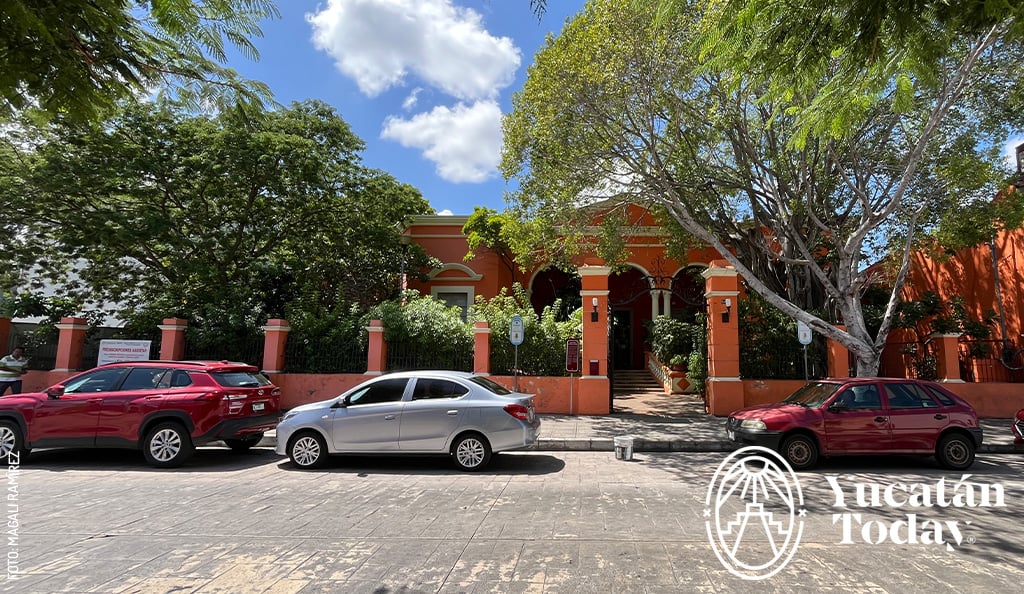
Now, if your thirst is for knowledge, there are also two museums along the way that you shouldn’t miss. The Museum of Natural History is housed in a building that once served as the old School of Nursing, while Palacio de la Música is an extremely Instagrammable building that is not only home to México’s national museum of Mexican music, but also regularly hosts recitals and concerts, including performances by the Yucatán Symphony Orchestra.
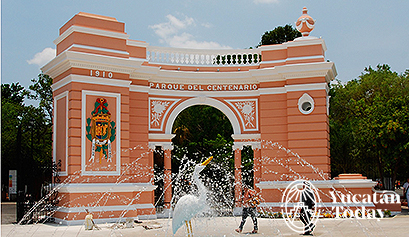
And while it isn’t technically a museum, Parque del Centenario (a public park opened in 1910 to commemorate the centennial of México’s independence) holds a few pieces of the city’s history, including the carved stone benches that once lined the now-gone Paseo de las Bonitas in the previous century.
What I’ve mentioned here is by no means everything. There are other buildings and homes that deserve a closer look, plaques bearing stories on various corners, and little details you’ll only discover on foot. So let out your inner flâneur (urban explorer) and hit the pavement on Calle 59, a street where history, art, old and modern architecture, public spaces, and cuisine all come together. To me, it’s the prettiest street in Mérida.
Do you agree? And if not, which street do you think is the prettiest in the city?
Along Calle 59:
Intersection with Calle 50:
-
Parroquia de Nuestra Señora del Carmen (La Mejorada)
Between Calles 52 and 54:
-
Casa Amábilis (Casa de la Cultura Jurídica)
Intersection with Calle 58:
-
Museum and Palacio de la Música
Intersection with Calle 60:
-
La Nacional building
-
Parque Hidalgo
-
Templo de la Tercera Orden (El Jesús)
Between Calles 60 and 62:
-
Birthplace of Andrés Quintana Roo (currently Restaurante Amaro)
Intersection with Calle 70:
-
Parroquia de Santiago Apóstol
Between Calles 84 and 84-A:
-
Museum of Natural History
Intersection with Av. Itzáes (Calle 86):
-
Parque del Centenario
First published in Yucatán Today print and digital magazine no. 467, in November 2026.


Related articles


