

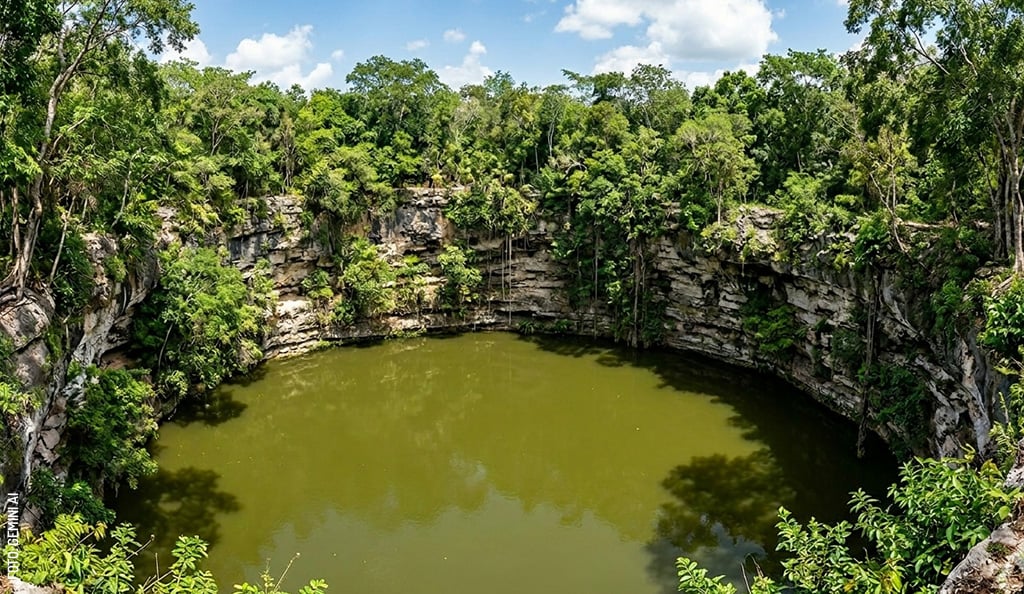
You’ve seen endless pictures and videos, and now, Yucatán’s famed cenotes—with their promise of cool, crystal-clear water and bright turquoise hues—call out to you as if from a dream. You’re looking forward to the crown jewel, right in the heart of México’s own Modern Wonder of the World, the archeological site of Chichén Itzá: the Sacred Cenote. What a specimen that must be, right? You make the 300-meter (1000-foot) trek from El Castillo, waiting to be astounded by its majesty. And then you look down to see it: it’s a giant pool of murky, swampy, bright green water.
Look, if it’s any consolation, you’re not the first person to be underwhelmed, if not extremely disappointed—that is THE Sacred Cenote of Chichén Itzá?
The science of the stagnant green water
The Sacred Cenote in Chichén Itzá is unique for several reasons, and its deeply unappealing looks are just one of them. The Sacred Cenote is a sort of “window” into the legendary underground waters of the Yucatán Península—but a very slow-moving one. It’s useful to remember that in the northern Yucatán Península, the impact of a giant meteor basically liquified the crust of the Earth. The water that flows underwater travels through fractures in the limestone; at the surface of an open sinkhole like this one, the water often appears still or stagnant.
The vertical, 15-meter walls of the Sacred Cenote also limit sunlight and block wildlife, allowing microalgae to thrive. This lack of movement, combined with centuries of "leaf litter," dust, and silt, in addition to a massive amount of ceremonial objects, creates that signature dark green hue. Essentially, the water isn't "gross"—it's a perfectly preserved time capsule that reflects the lush green foliage surrounding it.
Dredging for treasure: exploring the Sacred Cenote in Chichén Itzá
The ceremonial use of the Sacred Cenote has been well documented since the arrival of the Spaniards in Yucatán. In 1566, friar Diego de Landa wrote that the Maya “threw into it a great many other things, like precious stones and things which they prized," as well as human beings.
This particular cenote’s natural features have never made it easy to explore. Between 1904 and 1911, Edward Herbert Thompson (at the time the U.S. Consul, and then-owner of the land where Chichén Itzá sits) undertook the task of dredging it, first using a machine, then by diving. Sadly, the dredging process under his supervision was both invasive and destructive. It led to significant looting: many artifacts disappeared for good, and many others were shipped out of México, particularly to the Peabody Museum of Archaeology and Ethnology in Cambridge, Massachusetts, which sponsored Thompson’s exploration.
Still, the artifacts that did survive these early explorations now constitute a literal treasure. The murky waters of the Sacred Cenote, lacking oxygen at its depths, did an outstanding job preserving even the materials that should have rotted centuries ago, like wood and textiles, including the oldest sample of Maya embroidery known to this day. All in all, thousands of pieces of pottery, jade, obsidian, seashells, limestone, wood, gold, and even human remains were recovered. The Peabody Museum alone counts over 3,000 items in its Chichén Itzá Cenote collection. Many of these artifacts are not local either; they serve as evidence of the city’s trade ties with distant regions and proof that Chichén Itzá was once the most important pilgrimage center in Mesoamerica.
Where to see the treasures recovered from the Sacred Cenote
While a large portion of these items are currently in the United States, that doesn't mean you can’t see them in México. The best places to catch a glimpse of these treasures are the National Museum of Anthropology, in México City, and the Gran Museo del Mundo Maya, in Mérida. Occasionally, Mérida’s Regional Museum of Anthropology, Palacio Cantón (on Paseo de Montejo x calle 43) displays some of these artifacts, but the exhibits may vary.
Finally, there’s also the Gran Museo de Chichén Itzá, in the vicinity of the archaeological site; while the main attractions here are the many examples of large-format stonework, there are also a few smaller items you can check out. Better yet: a new area is being prepared to house a significant showcase of objects rescued from the Sacred Cenote, and it is set to open very soon.
Some of the treasures found in the Sacred Cenote in Chichén Itzá
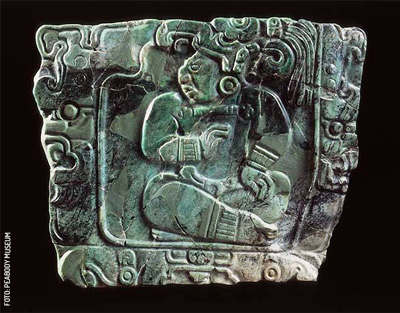
Greenstone pendant depicting a seated man
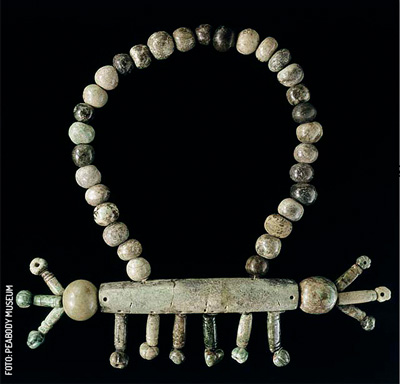
Jadeite beads
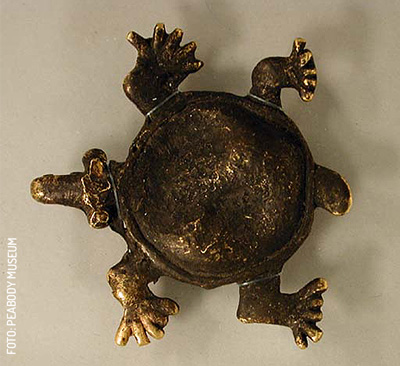
Animal-shaped bell, crafted from gold
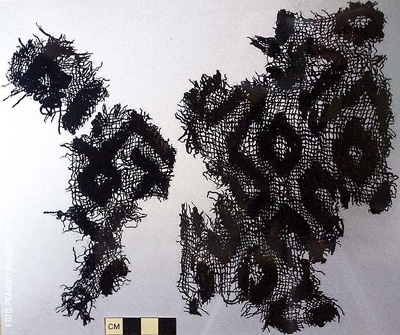
Textile fragment of woven cotton
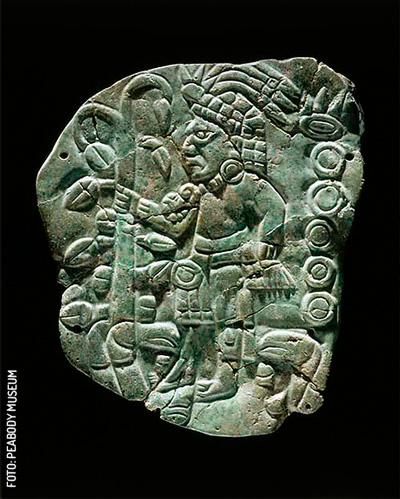
Greenstone tablet showing a human figure using a cacao tree as a scepter (perforated and reconstituted).
%206.3%20cm%20x%204%20cm%20by%20Peabody%20Museum.jpg)
Anthropomorphic pendant in tumbaga (a gold and copper alloy).
Many of the recovered artifacts show evidence of having been “ritually killed”—perforated, broken, or burned—before being sacrificed in the cenote.
By Alicia Navarrete Alonso, with help from Archaeologist José Osorio León
First published in Yucatán Today print and digital magazine no. 460, in April 2026.



Related articles


