


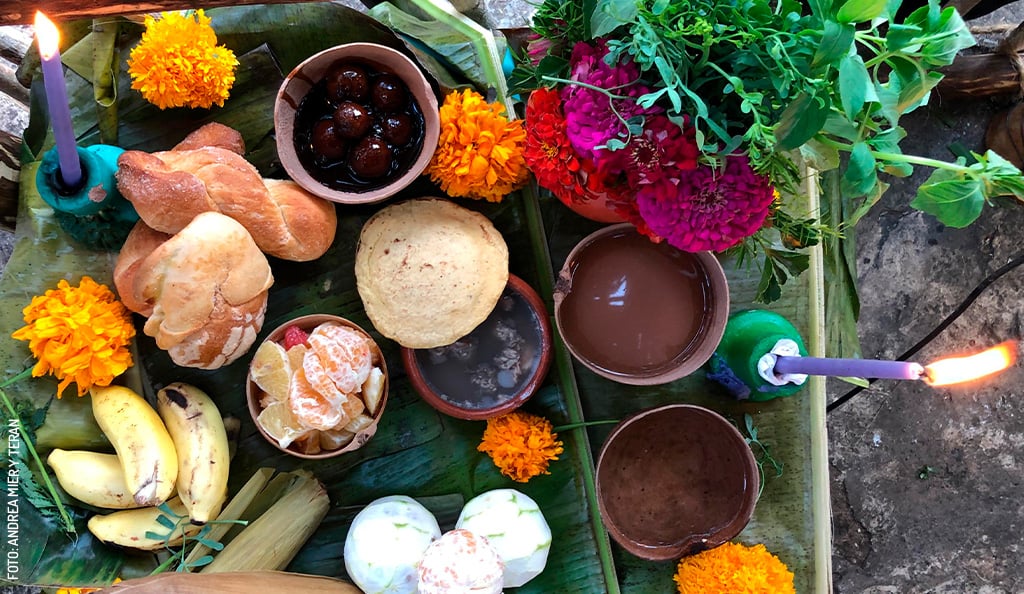
What Food Goes on Yucatecan Day of the Dead Altars?
Now that you know that in Yucatán, Día de Muertos—known here as Días de Finados or Janal Pixan—is about sharing a table with the memory of loved ones who are no longer with us, you may be wondering what exactly we’re serving at that table.
Let’s start with a little context. For centuries—and well into the middle of the 20th century—the Yucatán Peninsula was isolated from the rest of Mexico; getting here by road or by boat could take several days. As a result, dishes that seem completely ordinary to us today, from chilaquiles to chiles en nogada (not to mention the sushi, pizza, and spicy chicken wings now found everywhere), were once considered exotic or simply unknown.
As in many other parts of the world, people mostly ate the dishes their parents, grandparents, great-grandparents, and great-great-grandparents had eaten for generations, making small family variations and occasionally incorporating a new ingredient that had recently become available—Dutch cheese, for example.
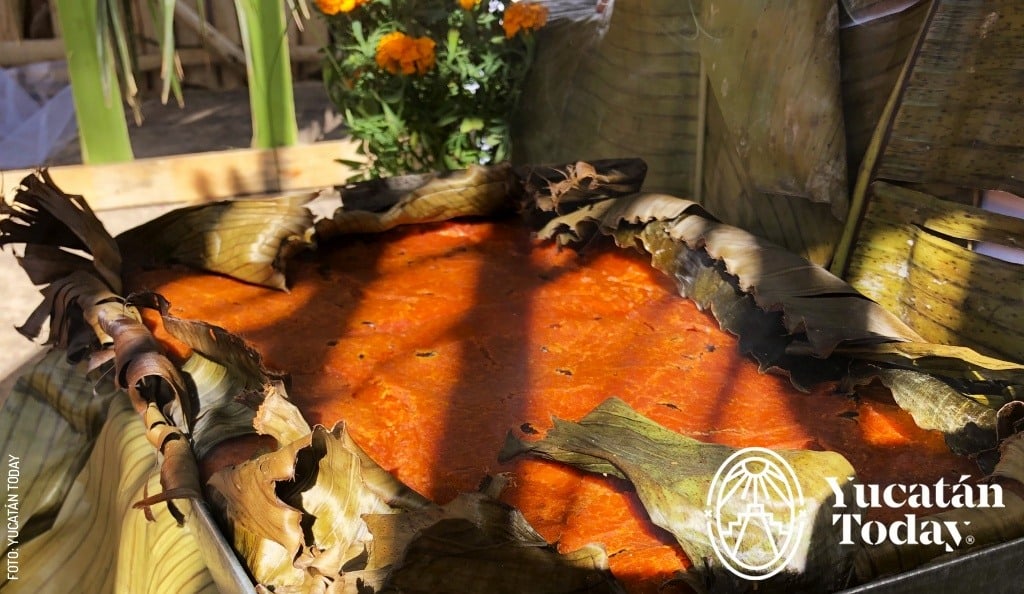
So when the traditions of Días de Finados—by then increasingly known as Janal Pixan—began to be publicly highlighted as a way of preserving them in the 1980s, the food placed on altars was traditional Yucatecan fare. Altar displays (and competitions), which are meant to be seen for only a few hours, bring breakfast, lunch, and dinner together in a single place, including mukbilpollo, which was traditionally reserved for the biix, the moment when the departed began their journey back.
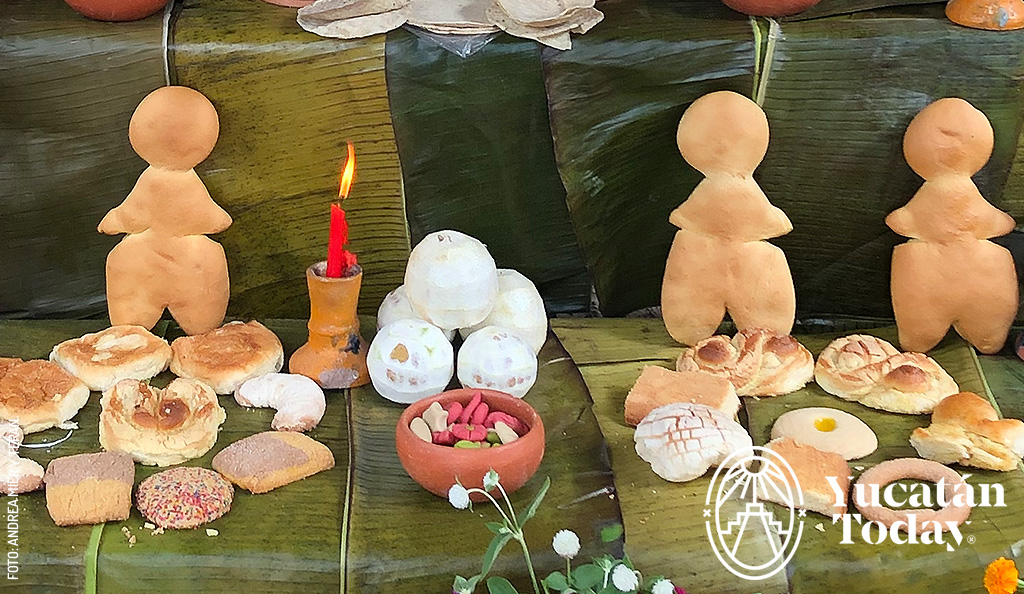
For this reason, as with so many aspects of life, there are now two types of Yucatecan altars: those prepared at home and those created for public display. A display altar should include very specific varieties of wildflowers, pepita, pumpkin, or papaya sweets, atole, pibinales, and xtuchitos (the traditional bread made in Yucatán for the Finados season), as well as a green cross, beeswax candles, and copal incense. All of these things, which many people might now consider curiosities, were everyday staples for Yucatecans of the past. Altar displays are a way of preserving not only these memories, but also the flavors and knowledge that come with them.
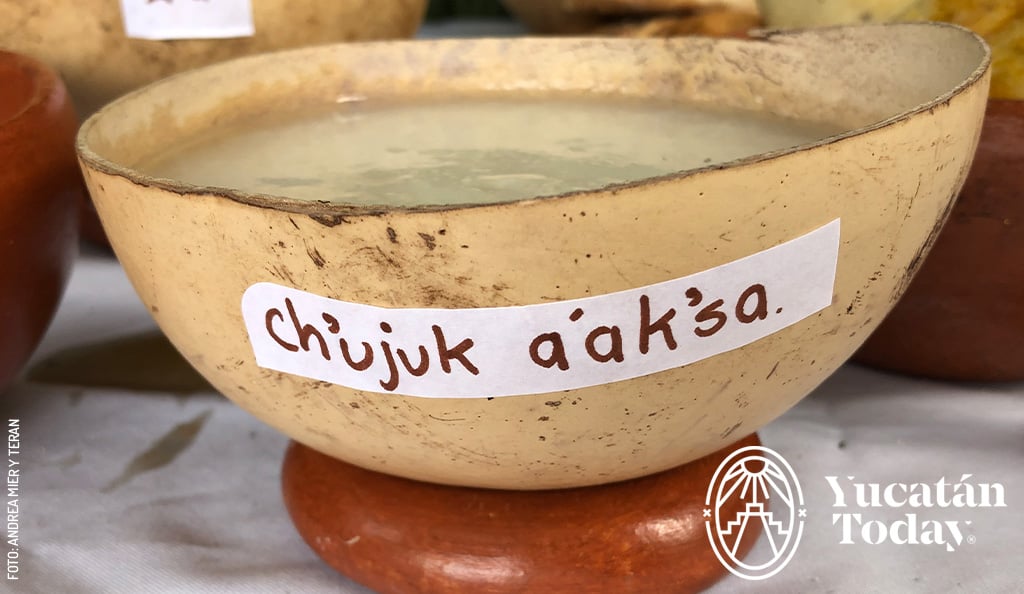
Home altars, on the other hand, inevitably change over time, incorporating the favorite foods and drinks of the departed as new generations join the invitation. Just as our grandparents’ altars may not have been filled with photographs, if the tradition continues, one day our grandchildren may welcome us with sushi, pizza, Nutella marquesitas, and esquites with so-called Japanese-style peanuts. Served in jícaras, I hope, because I, for one, would not like to be frightened by my own reflection.
Traditional Foods Found on Yucatecan Altars
Whether you’re preparing your own traditional altar for display or simply want to recognize some of the foods you’ll find on one, here’s a handy guide.
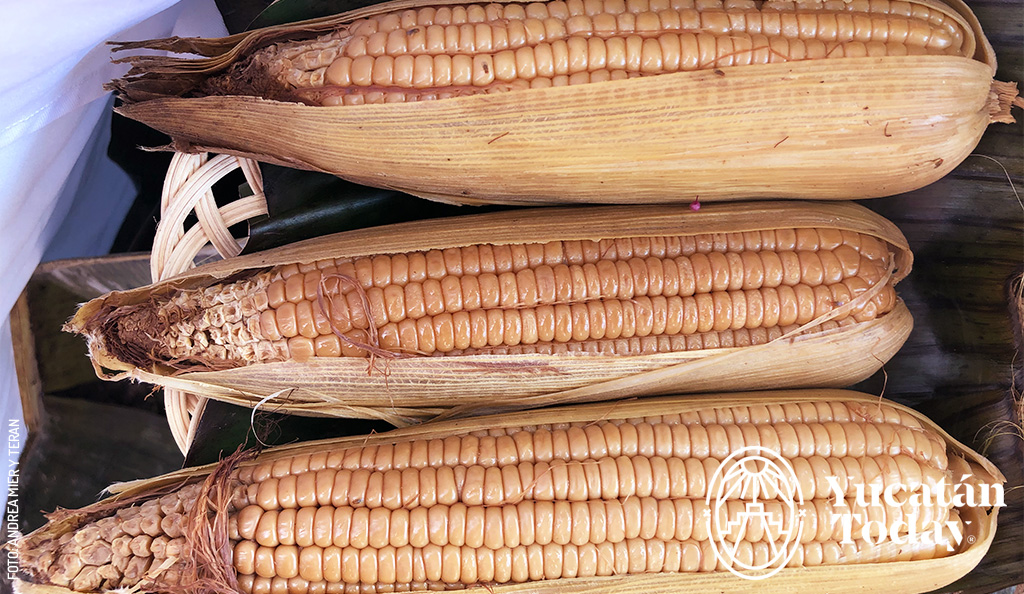
Pibinal. A tender ear of corn cooked underground for several days, with a caramel-brown color and an intensely smoky flavor.
Atole nuevo. White atole (a hot corn-based beverage) made with freshly harvested corn.
Drinking chocolate. Made with water and cacao, with spices added according to family tradition.
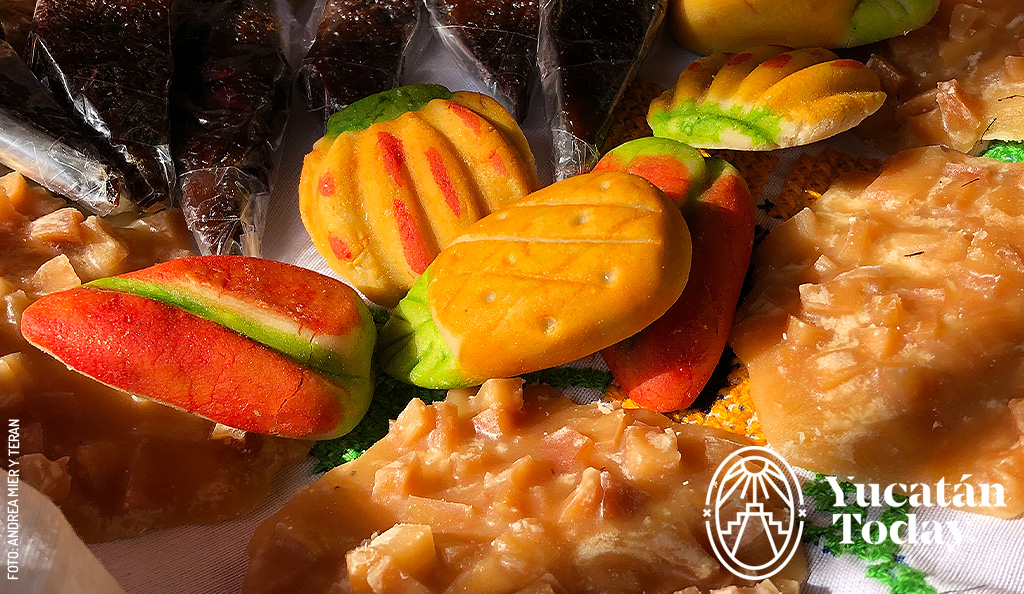
Pepita sweets. Artisanal marzipan made from ground pumpkin seeds, usually shaped like miniature fruits.
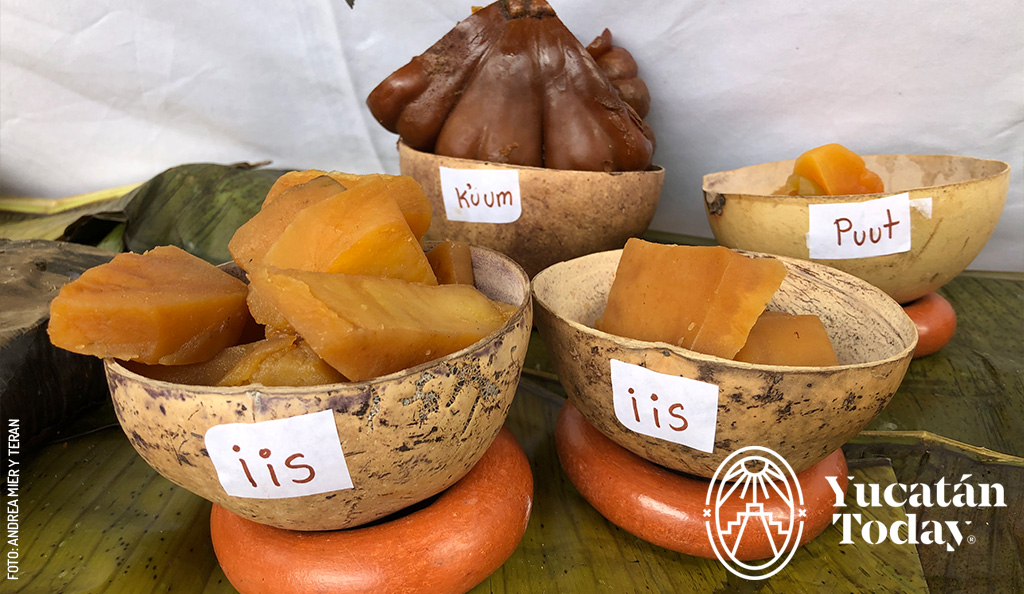
Candied or syrup-cooked fruit. Fruit—from papaya to cocoyol, nance, or pumpkin—cooked in syrup, sometimes with alcohol.
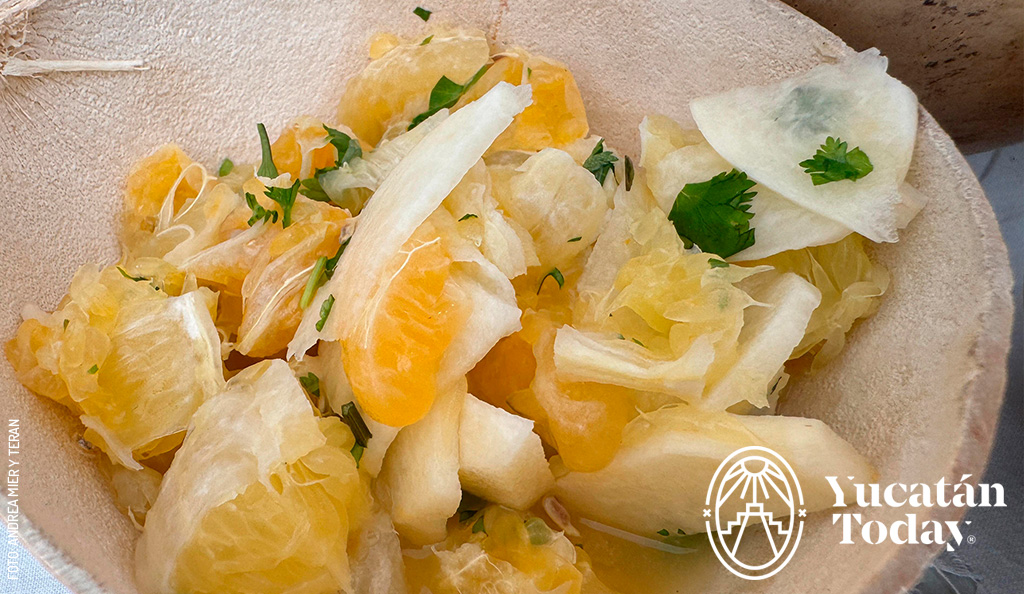
Xe’ek’. A citrus and jícama salad.
Pan de Finados or xtuchitos. Bread flavored with anise or other spices, shaped like people or animals.
The deceased’s favorite dish. Any traditional dish that was particularly enjoyed by the person being honored by the altar.
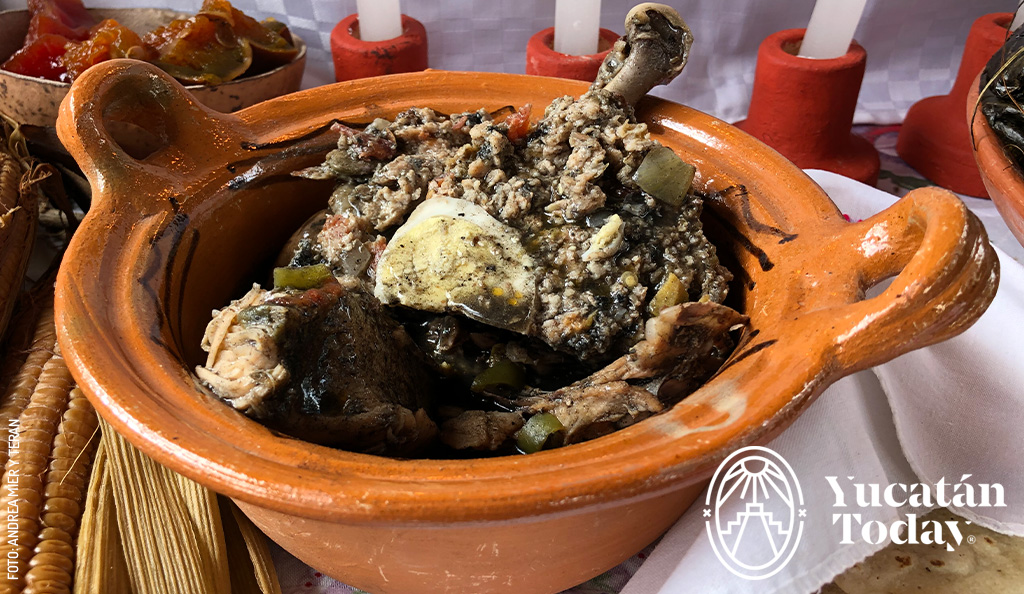
Mukbilpollo or pib. On the final day, mukbilpollo or other types of tamales are placed on the altar. These are foods that the departed can take with them on their journey back to the underworld.
Foods You Won’t Find on a Traditional Yucatecan Altar
Pan de muerto. The traditional Day of the Dead bread from central Mexico—with its references to bones and tears—is not used on traditional Yucatecan altars.
Sugar skulls. Not sugar, not chocolate, and not any other representations of death.
There you have it: everything you need to tell an old-fashioned traditional altar from a modern one—or even an intercultural one. Make yours however you like: what matters is the love you put into welcoming the pixanes you hope will come to visit!
First published in Yucatán Today print and digital magazine no. 466, in October 2026.



Related articles


