


A Unique Cemetery Visit in Hoctún
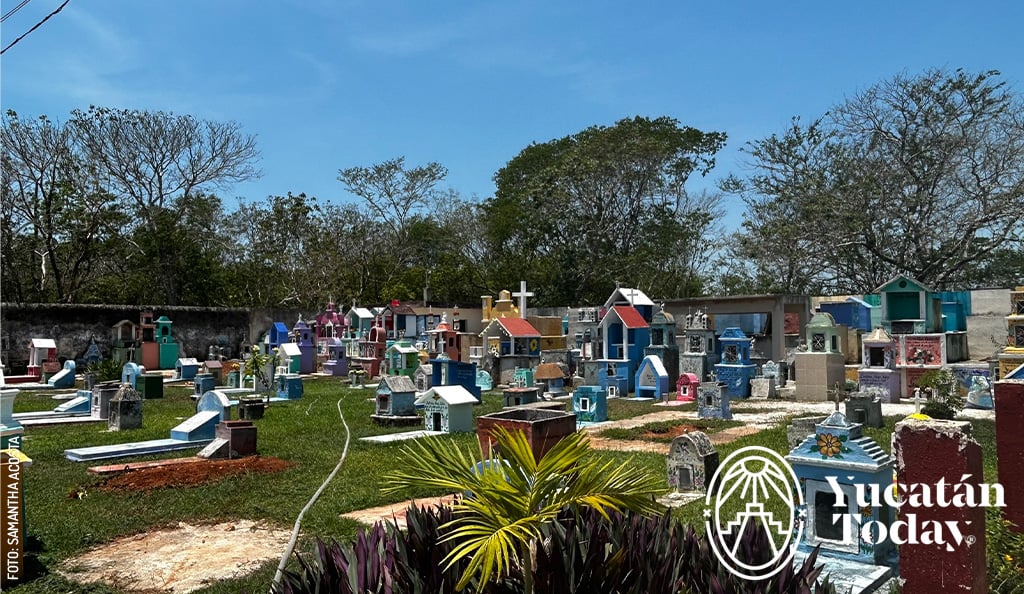
Given México’s unique relationship with death, it’s no surprise that in Yucatán—as in many other parts of the country—we find colorful and unusual artistic and ritual expressions in cemeteries. Even so, the cemetery in the village of Hoctún (not to be confused with Homún, the town famous for its cenotes) has earned a reputation as the most picturesque cemetery in the state. But what makes it so special?
Welcome to Hoctún
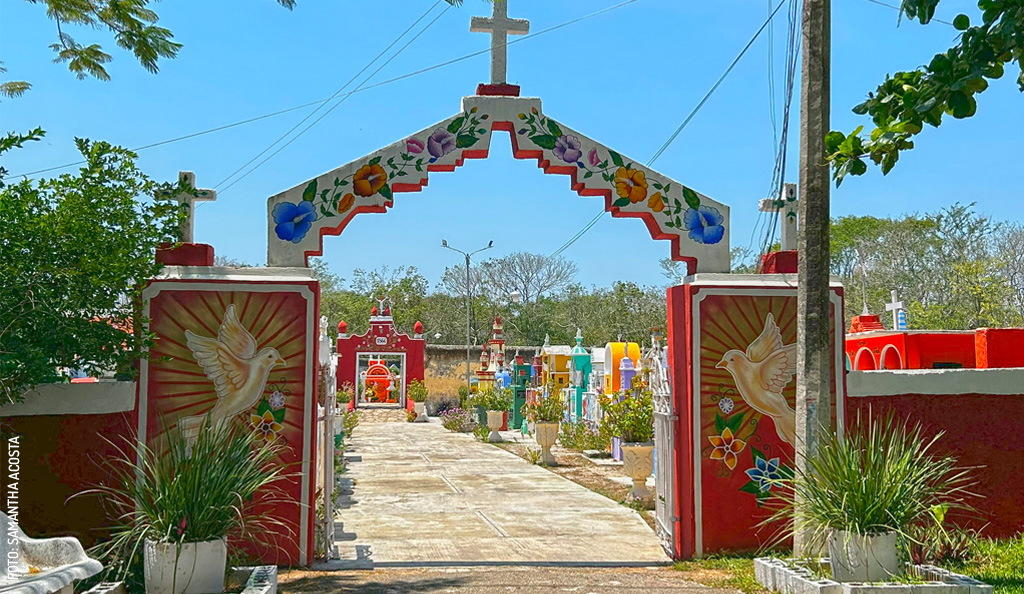
Hoctún is a small town of just over 4,000 residents, located about 50 km (31 miles) east of Mérida. Its cemetery welcomes visitors through a modest entrance decorated with floral motifs reminiscent of the embroidery found on traditional hipiles. Once inside, what would otherwise be a space dominated by rows of burial niches is transformed into an explosion of color and unexpected shapes.
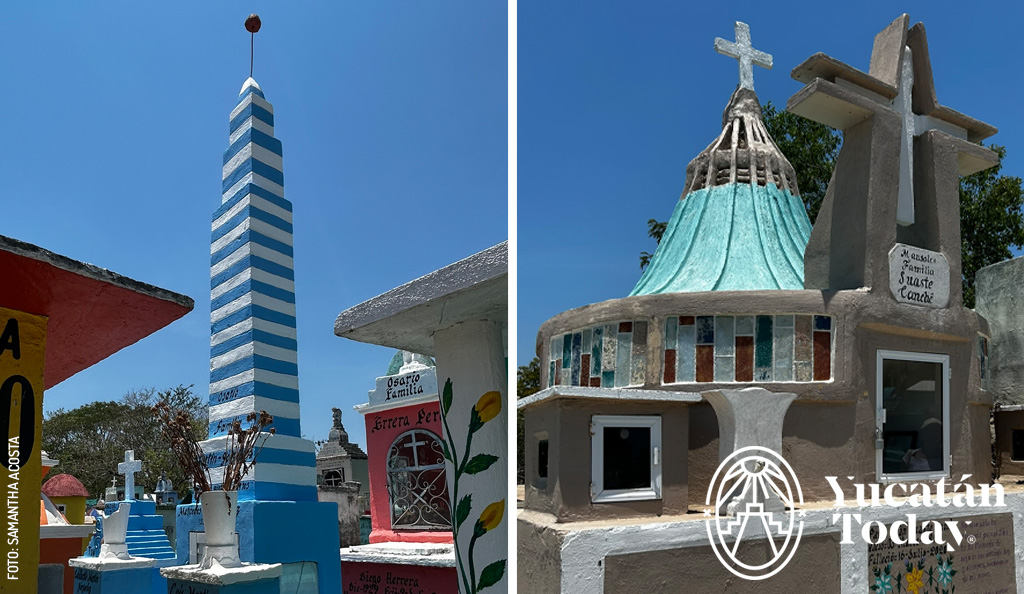
As you wander through the cemetery, you'll encounter paintings of flowers, angels, doves, and religious figures, but also video game characters, vehicles, and references to personal hobbies. Some mausoleums are topped with miniature versions of Chichén Itzá pyramids, while others recreate the Basilica of Guadalupe or the Torre Latinoamericana, one of México City’s most recognizable skyscrapers. Every turn offers a new surprise and a glimpse into what may have been meaningful to the person resting beneath each tomb.
“Burials” above ground
In Hoctún—and throughout much of Yucatán—it is common for graves to be built above ground, since the region's rocky terrain makes excavation difficult. This distinctive style of construction may have inspired the cemetery’s former gravedigger, Anacleto Cobá Moo, to begin painting and decorating the niches to give them a sense of individuality.
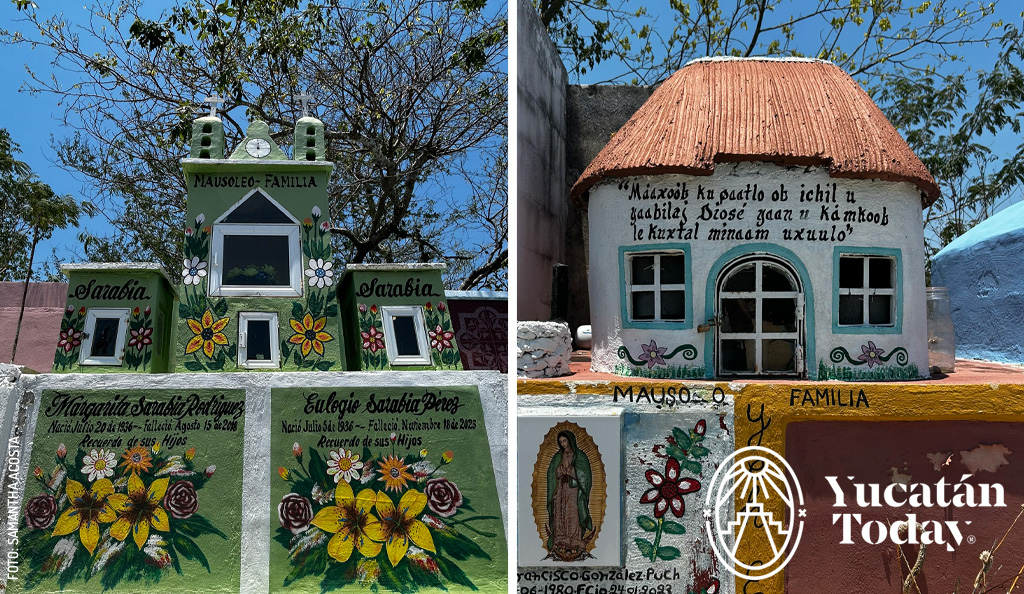
Over the more than 50 years he spent working at the cemetery, he continually refined his craft, evolving from simple floral designs featuring bright contrasting colors to elaborate structures, including, say, a multi-story pagoda. His creations eventually became a local tradition, and it is easy to imagine that, over time, families began carefully considering how they would decorate each new tomb.
The Hoctún cemetery itself is not very large. It now includes a newer section at the back, where most of the graves are built closer to ground level—though still beautifully painted—and arranged in a way that resembles a garden. Visitors can comfortably stroll through nearly every path, marveling at the details found along the way.
Don Anacleto Cobá passed away a few years ago. And while his son has taken over as gravedigger and caretaker, it is clear that many creative hands now contribute to keeping this extraordinary place filled with color while honoring the people who rest beneath these small works of art.
Beyond Hoctún
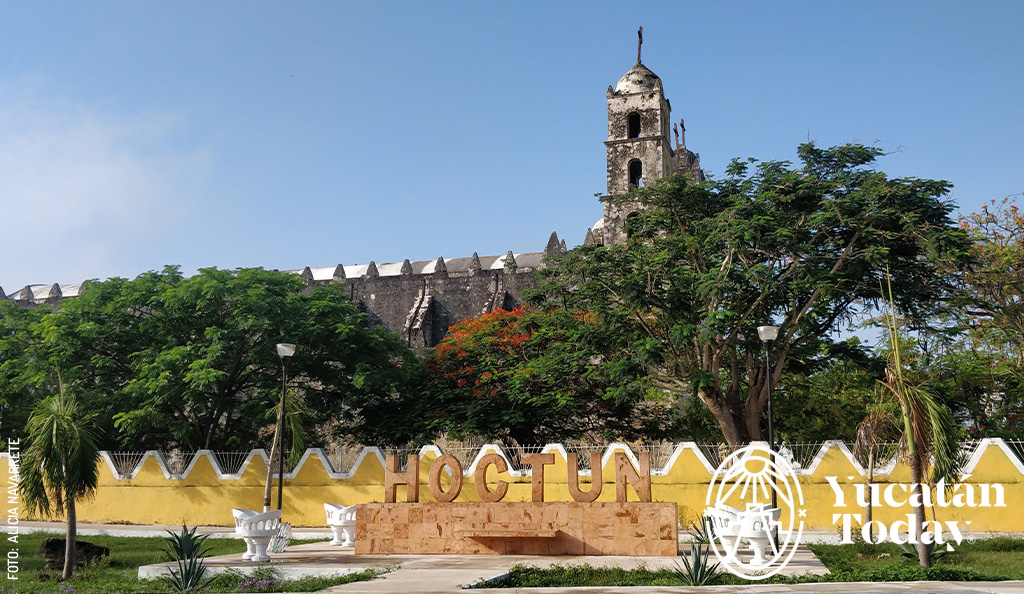
If you find yourself in Hoctún (or plan to visit) and wonder what else there is to do besides visiting the cemetery, consider stopping by the town’s main church, the Parish of San Miguel Arcángel (St. Michael). Although its façade is relatively understated, the church houses beautiful wooden altarpieces featuring figures such as the Holy Christ of the Transfiguration and Our Lady of the Immaculate Conception.
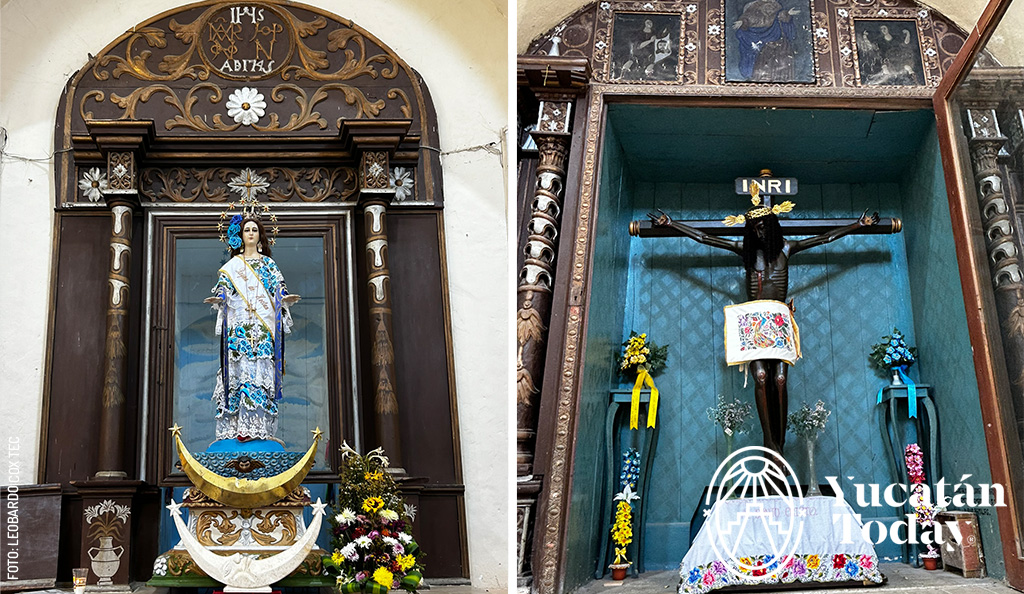
As is common in many Yucatecan towns, these religious images are often dressed in traditional attire donated by devotees, so their outfits may be different from one visit to the next.
To end the excursion on a delicious note, on your way back to Mérida make a detour to Tixkokob, home to Pueblo Pibil. This restaurant, named in the Michelin Guide, specializes in preparing some of Yucatán’s most iconic dishes using traditional underground pit-cooking techniques.
Finally, treat yourself to dessert in Nolo, a village just next to Tixkokob, where several stands serve a famous treat known as a timba. Timbas are similar to machacados—a refreshing combination of shaved ice, fresh fruit, and condensed milk—, but they also include vanilla and horchata. While several vendors sell them, one of the best-known spots is La Conchita, also known as Las Timbas de Nolo, located on the town’s main street.
Plan your one-day getaway to Hoctún
- Hoctún cemetery
- San Miguel Arcángel parish church
- Lunch at Pueblo Pibil
- Frozen dessert at Las Timbas de Nolo
First published in Yucatán Today print and digital magazine no. 464, in August 2026.
Photography by Alicia Navarrete and Samantha Acosta for use in Yucatán Today.


Related articles


