


Beyond their cultural significance, the wildflowers of the Yucatán Península are vital to the local ecosystem and economy. They provide food and shelter for insects and birds, and many have medicinal or ornamental properties.
January in Yucatán, a vision in pink
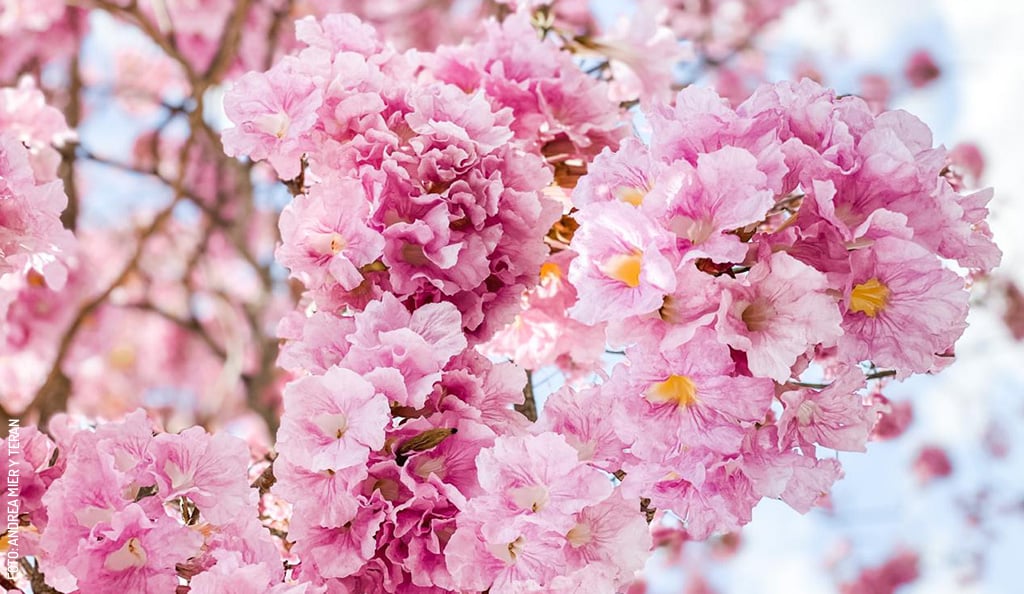
Japan has its cherry blossoms, and México City has its jacarandas. In Yucatán, there are several species of trees that brighten our landscape with their vibrant colors, depending on the season. Beginning in January, pink is the name of the game, thanks to the makulís (Tabebuia rosea), a massive tree famous for turning completely pink when it blooms.
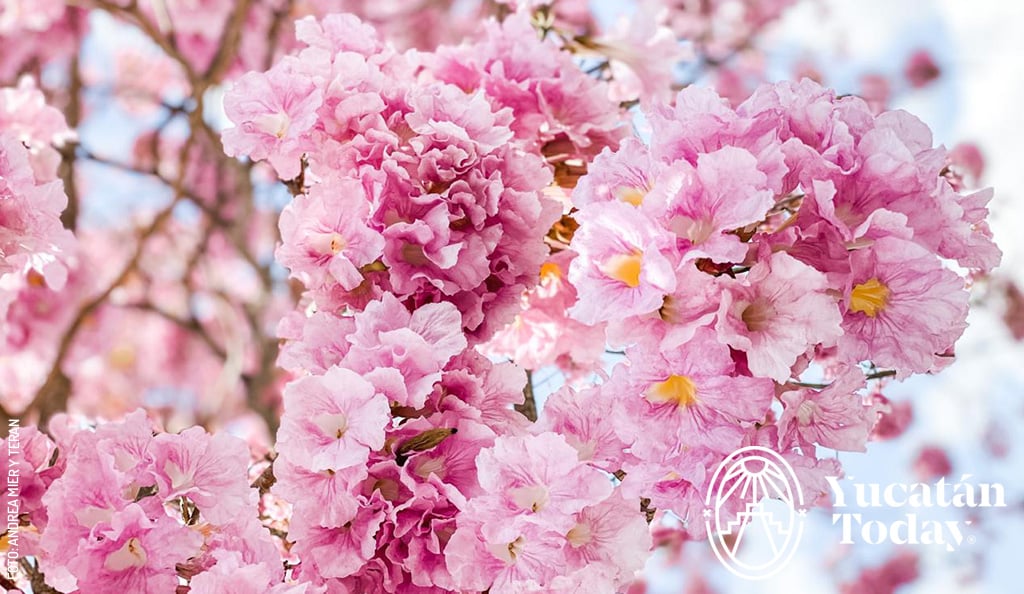
The makulís (pronounced mah-cool-EES) is a tree that grows from southeastern México down to Venezuela and Ecuador. It can exceed 25 meters (80 feet) in height, although specimens between 6 and 10 meters (20 to 30 feet) are more common within the city of Mérida. Its flowers can range from pale pink to light magenta, and, in some cases, even lavender tones.
You don't have to be a particular lover of flowers or nature to find yourself amazed by the beauty of the blooming makulís in Yucatán. Seeing even just one of these enormous trees completely painted in shades of pink, usually towering over a colorful carpet of flowers on the ground around it, is an experience that will have you stopping for at least a few seconds to take in fully.
Traditional uses of the makulís
The wood of the makulís used to be widely utilized in making both furniture and crafts; similarly, its leaves and bark were commonly used in traditional Maya medicine, particularly in treating fever, diabetes, and certain parasites. However, urban growth has reduced their numbers, making it less accessible for those who know how to work with it and pass the knowledge on.
Other important wildflowers for local ecosystems in Yucatán
![Flor-silvestre-Yucatan-campanilla-azul-ipomoea-tricolor-by-Andrea-Mier-y-Teran]()
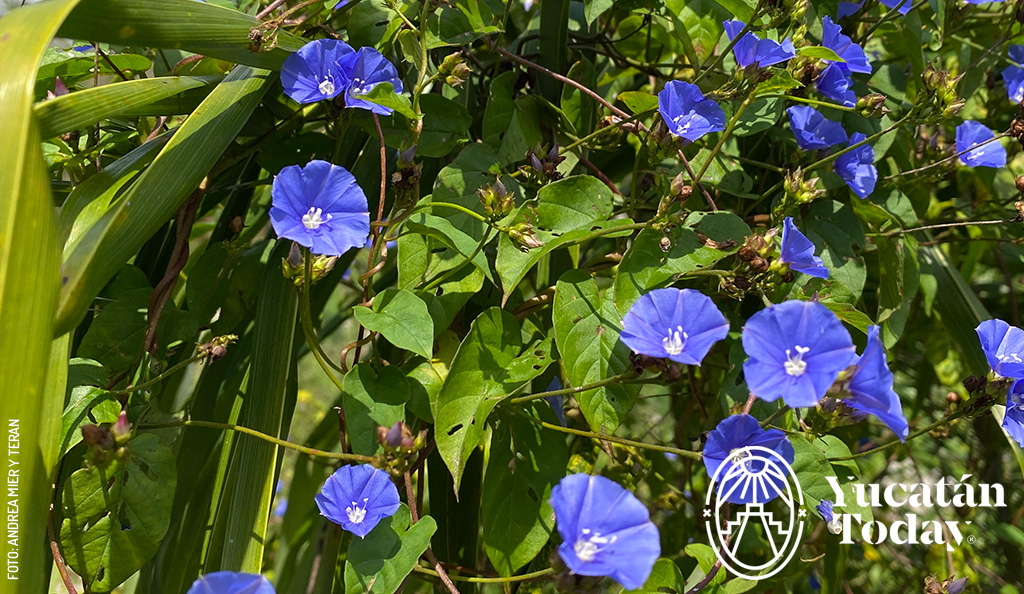
The blue morning glory (Ipomoea tricolor), or ulu’um ja’ in Maya, is a beautiful vine found in nature, especially along roadsides and on walls with sunny and humid soil. It begins to bloom in October, right before the Day of the Dead season (Finados), and continues painting the landscapes blue through March.
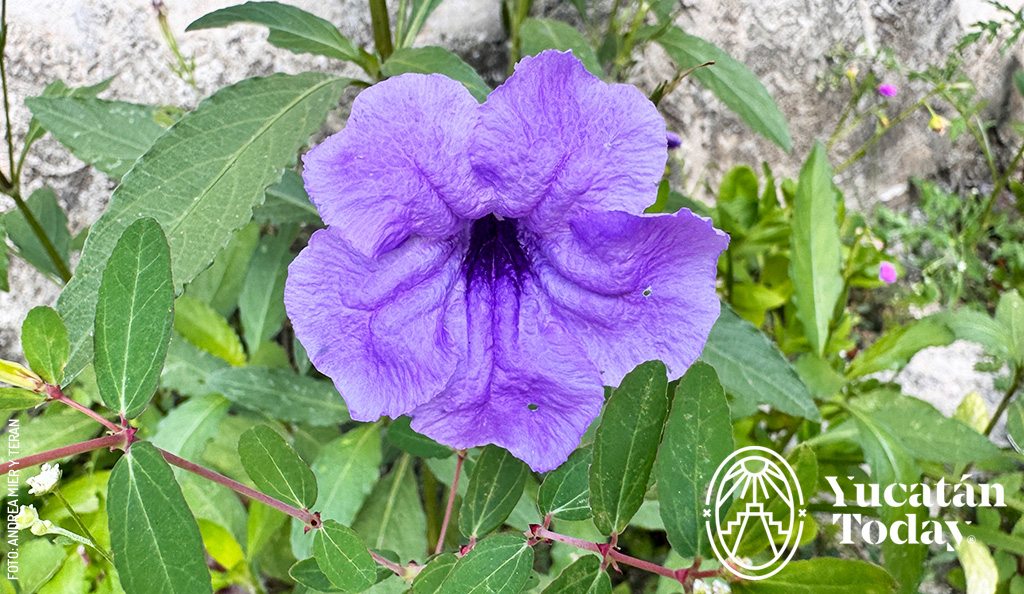
- The wild petunia (Ruellia nudiflora) or cracker plant, also called maravilla de monte in Spanish and kabalya’axnik in Maya, is a very common and colorful wildflower that blooms almost year-round (January–February and April–October). It reproduces easily by seed, forming beautiful natural clusters of various shades of purple. This small plant is also valued for the medicinal properties found in its leaves and roots.
- The Saint Lucia flower (Commelina erecta L.), or paj ts’a’ in Maya, is a small and delicate flower with two blue petals and one tiny white one that we can easily spot in May. Its blossoms close after noon. It is known for its ability to stop bleeding, and its sap is used to soothe irritated eyes, which earned it the name of the patron saint of the blind.
- The xich'iil aak' (Kallstroemia maxima) or verdolaga (purslane) is an annual herb that grows close to the ground. Its small flowers, which can range from orange to white, produce extracts that have been used to fight plant diseases, and in traditional medicine, it is used to help treat skin abscesses.
The flowers that fuel Yucatán's honey
The Yucatán Peninsula is a major honey producer, consistently ranking as one of the leaders in México and a significant exporter worldwide. Yucatecan honey is especially valued for its quality, and local beekeepers, many of whom are Maya, depend on two distinct bloom cycles of wildflowers, often referred to by locals as the yellow and white waves.
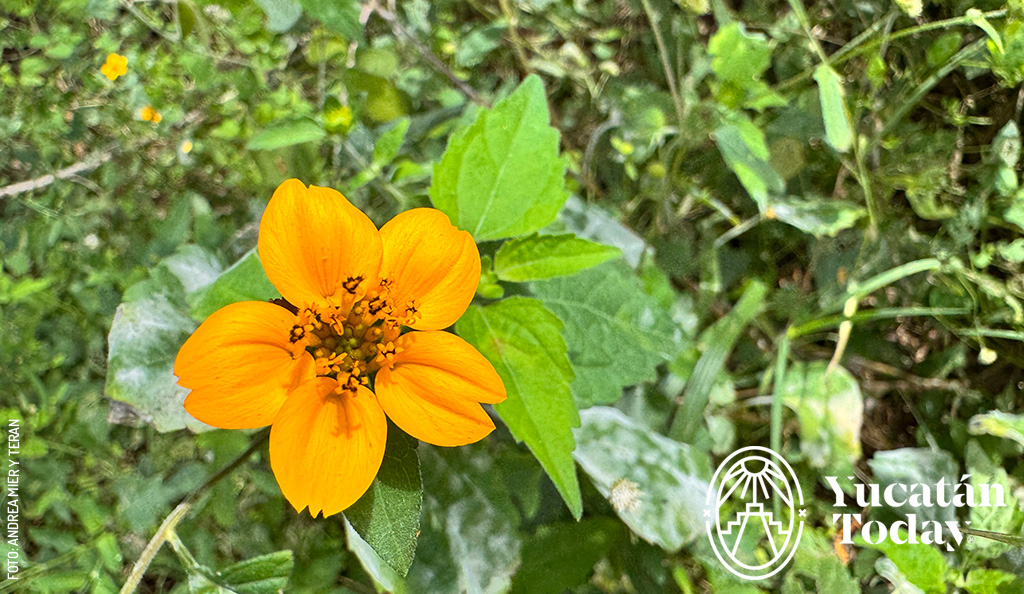
Yucatán’s yellow bloom
The first major bloom occurs between November and March, and it comes from the tajonal (Viguiera dentata), a wild plant with bright yellow flowers that grows abundantly in the countryside. The honey from this flower is a clear golden amber color with a mild, floral flavor. This marks the beginning of the beekeeping season on the Península.
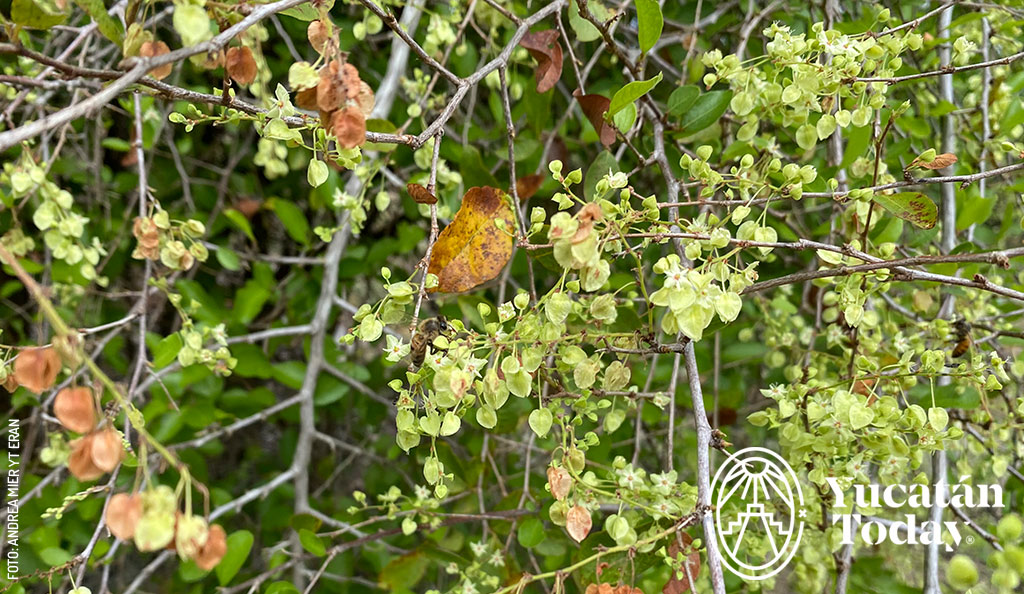
Yucatán’s white bloom
The second key bloom runs from September to July and comes from the dzidzilché (Gymnopodium floribundum). The dzidzilché is a native tree with light green flowers; it accounts for a considerable portion of the region's honey production. Dzidzilché honey is considered a gourmet product, with a darker color, an intense floral aroma, and a rich, caramel-like flavor.
Supporting local blooms—and pollinators
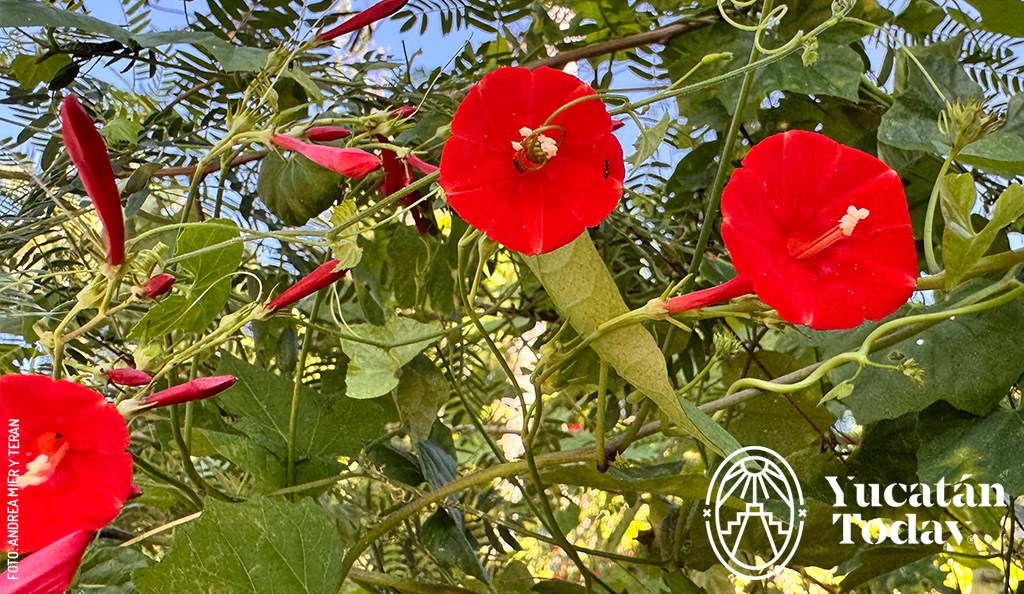 In recent years, drought cycles—made worse by deforestation and the use of pesticides on golf courses and for pest control—have significantly affected local flowers and honey production. One way we can support our community and environment is by planting endemic species in our gardens to help local pollinators. The Scientific Research Center of Yucatán (CICY), located in the Chuburná de Hidalgo neighborhood in Mérida, is a research center that also has a botanical garden and a nursery focused on native and endemic plants, where you can purchase plants.
Endemic or native? What’s the difference?
A native plant is any plant that grows naturally in a certain area. An endemic plant is any plant that grows naturally only in a certain area.
For example, wild petunias are found throughout the Americas; they’re native to Yucatán. The Yucatecan jasmine (Samyda yucatanensis), on the other hand, is only found on the Yucatán Península; it is an endemic plant.
Yucatán's wildflowers not only provide traditional remedies but are also the basis of a vital industry that has sustained the Maya people for generations, and they make our world a more beautiful place.
Collaborative text by Alicia Navarrete and Cordelia Newlin.
First published in Yucatán Today print and digital magazine no. 457, in January 2026.


Related articles


