


Celestún: Faith, Tradition, and the Spirit of the Sea
 Celestún is a beautiful fishing village on Yucatán’s western coast and an important ecotourism destination, home to one of the region’s most significant protected natural areas: the Celestún Biosphere Reserve. Although it is widely known for its stunning landscapes, far less is said about its traditions—spaces where coastal heritage and the faith of a community come together to reveal its identity to the world.
Celestún: the painted stone
There is little documented information about the origins of Celestún. According to Dr. Julia Fraga, rather than being a permanent settlement, it was originally a site where the ancient Maya harvested salt and marine resources. During the 17th century, the community of Hobon-ché was established; it eventually gave way to Celestún, which was officially founded as a town in 1718.
The Diccionario Maya Cordemex suggests that the town's name comes from selestun, meaning “decorated” or “painted stone.” This could refer to the reddish coloration that red mangroves impart to the waters and limestone formations in the area. Historian Manuel Rejón proposes another origin: tseleltun, meaning “tilted stone.”
Local tradition, however, tells a different story. According to residents, the town was founded by an elderly fisherman from Campeche named Celestino Tun, and the port was named after a shortened version of his name—“Celes”—in his honor.
The Star of the Sea (Stella Maris)
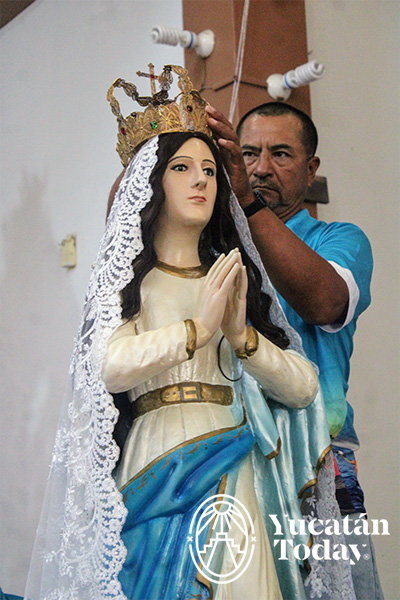
The patron saint of Celestún is the Virgin of the Immaculate Conception. The people of Celestún believe her intercession is constant and effective. Affectionately known as “The Star of the Sea,” she bears a poetic and theological title that compares her to the North Star, which guides ships at night, as she is considered the spiritual guide of sailors and fishermen.
Many fishermen attest that, during storms, she is the one who leads them safely back to shore. Others claim she has rescued more than one devoted follower from shipwrecks, which is why their faith in her remains unshakable.
In 1998, Father Carlos Puc Romero bestowed upon her the title of Our Lady of the Sea, (Stella Maris), recognizing the deep devotion she inspires along the coast. To this day, locals speak of mysterious occasions when sand, silt, or seaweed has appeared at the feet of her image—signs believed to accompany extraordinary events in Celestún and regarded as miracles.
Some elders even say that, on full moon nights, they have seen her leave the church and head toward the sea, perhaps to watch over those navigating its waters.
The procession at sea
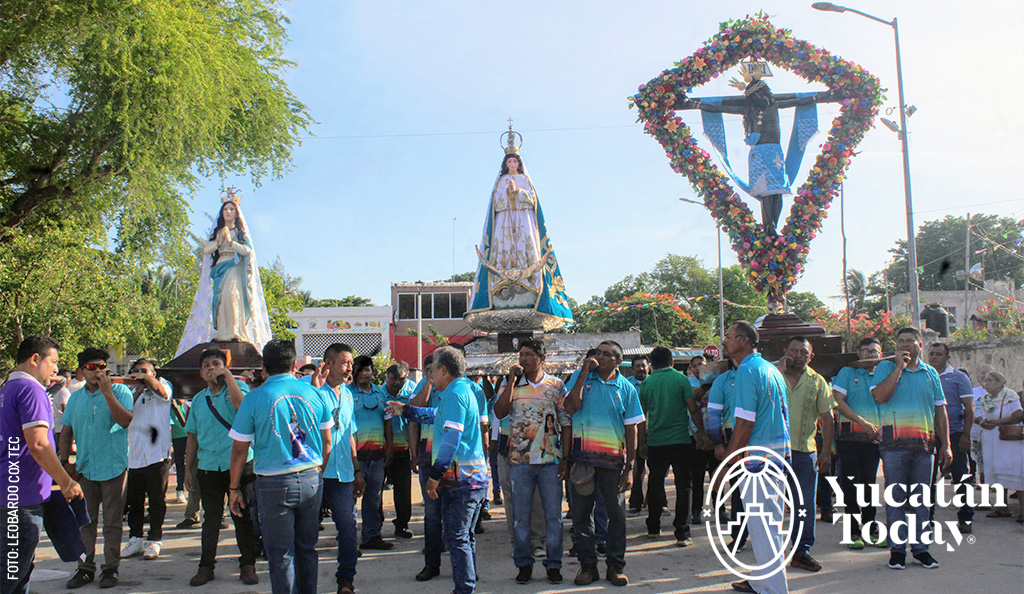
The greatest expression of faith in Celestún takes place on the second Sunday of July. Early that morning, residents gather at the church to celebrate the Virgin. Accompanied by songs and prayers, they carry her image in procession through the streets of town.
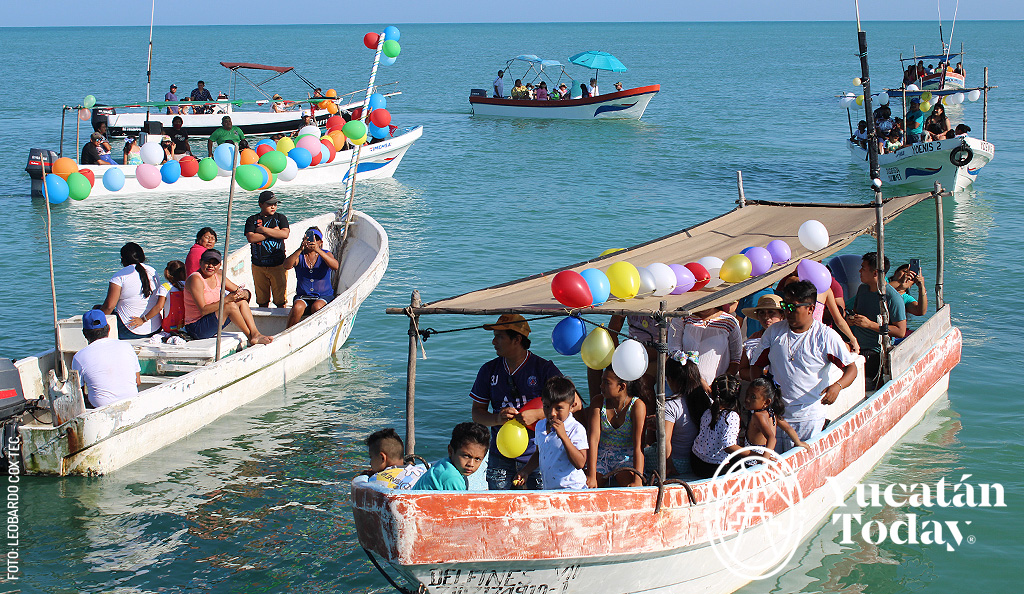
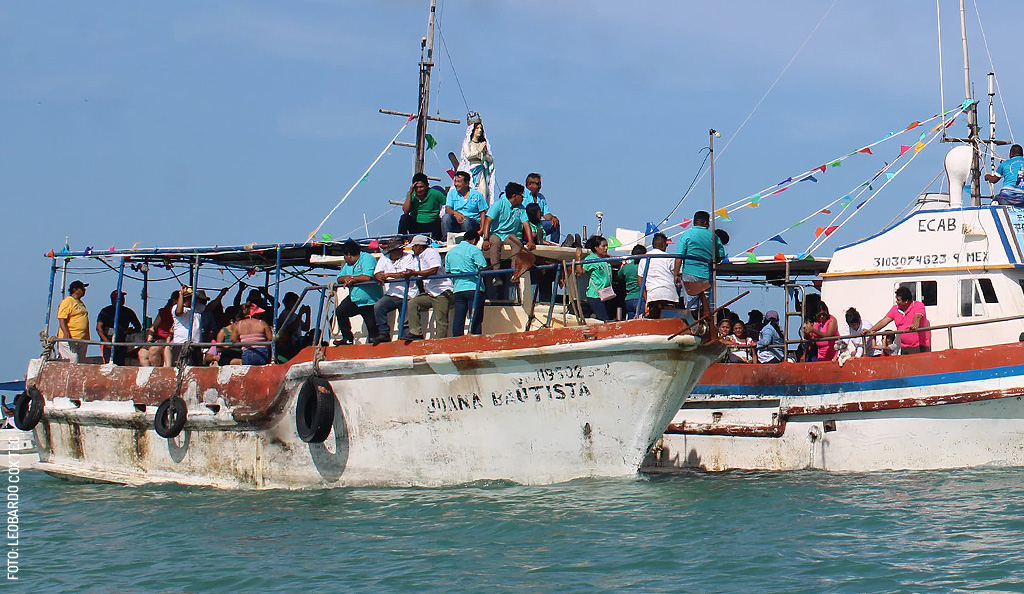
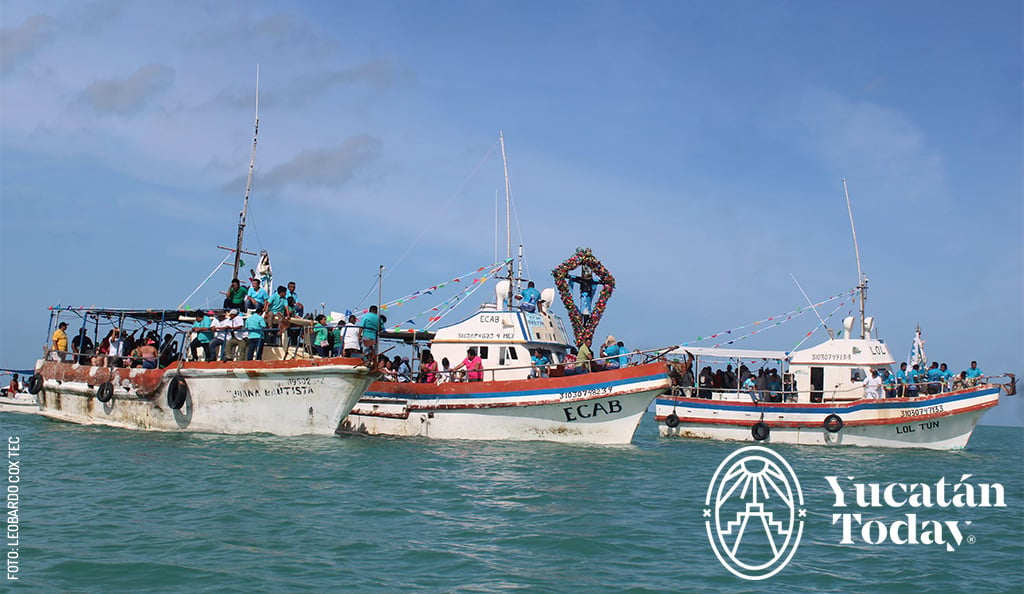
The pilgrimage eventually reaches the beach, where a beautifully decorated boat awaits to lead a maritime procession known locally as the bordeo. Although the feast of the Immaculate Conception is celebrated during the first ten days of December, the July procession is the most anticipated event among fishermen because of its symbolic importance: through this act, they pray for abundant catches and trust that their patron saint will bless and calm the sea.
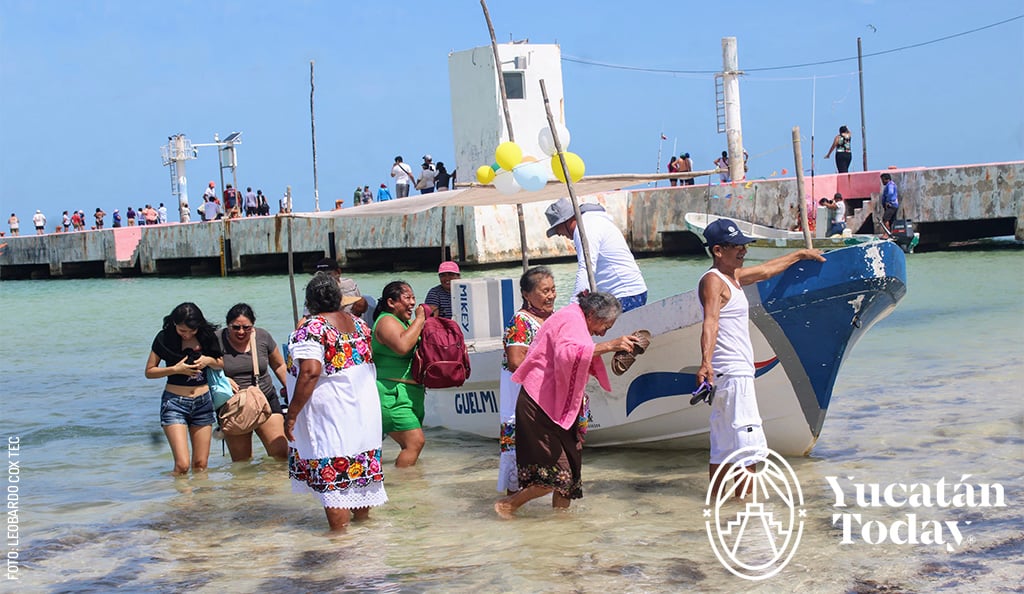
In Celestún, faith is meant to be shared. Local residents not only participate in the procession, but also decorate their own boats and offer visitors free rides as an act of gratitude and devotion. Everyone is welcome to accompany the Virgin on her journey, a tradition that makes the Star of the Sea procession truly special. Because of its scale and organization, it is undoubtedly one of the most important maritime processions in the region.
On several occasions, the Virgin of Celestún has been accompanied during her maritime procession by the Virgin of Tetiz and the Holy Christ of Love (Santo Cristo de Amor) from Kinchil.
Another pilgrimage that takes place at sea in Yucatán is that of the Black Christ, which takes place in Sisal every August. Read all about it in our article When Faith Meets the Sea: the Pilgrimage of the Black Christ of Sisal.
First published in Yucatán Today website in June 2026.
Photography by Leobardo Cox Tec.


Related articles


