


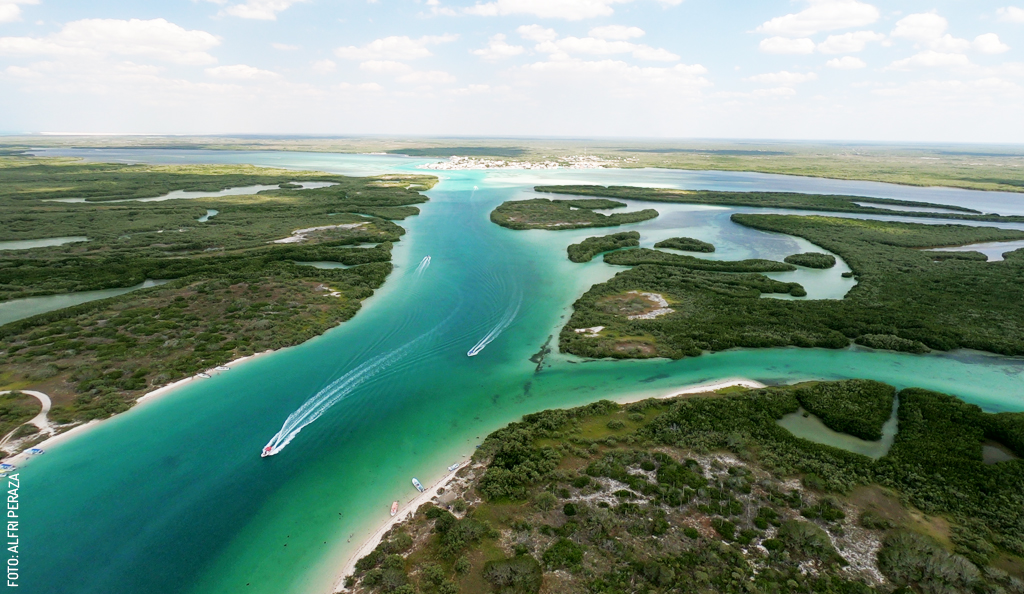
Home to more than 200,000 species of plants and animals (at this point, 10% of all known species on Earth), México is the world's fifth most biodiverse country. And while Yucatán is not México's most biodiverse state, it nonetheless plays a vital role as a refuge for thousands of species, including hundreds that are endemic to the region, meaning they are found only in southeastern México.
This remarkable natural wealth has not gone unnoticed. México's National Commission of Natural Protected Areas (Conanp) is entirely dedicated to the conservation of the country's natural heritage and ecological processes, not only for their environmental value but also for the well-being of the people who live in and visit these extraordinary places.
But what exactly is a protected natural area? Basically, it is a terrestrial or marine territory whose ecosystems remain largely intact, and which require preservation and, often, restoration. In México, these are not pristine wildernesses devoid of people; rather, they are landscapes where communities have often lived for centuries while maintaining a sustainable relationship with their natural surroundings.
Protected natural areas are classified into several categories. Here, we'll focus on one in particular: Biosphere Reserves.
What is a Biosphere Reserve?
A Biosphere Reserve is a protected natural area that also serves as a testing ground for sustainable development projects that promote both economic growth and social well-being. UNESCO considers these reserves "living laboratories," where science, culture, and local communities come together to conserve the natural environment.
Wait, what does UNESCO have to do with Biosphere Reserves?
UNESCO does not designate protected natural areas or determine their conservation category; countries do. Instead, through its Man and the Biosphere (MAB) Programme, UNESCO recognizes Biosphere Reserves that successfully combine biodiversity conservation with sustainable development. Once admitted into the network, these reserves gain access to international collaboration, research initiatives, and conservation programs.
Rather than keeping people away from nature in order to protect it, the Man and Biosphere Programme recognizes places where healthy ecosystems and thriving communities coexist. Residents are required to play an active role in protecting and restoring their environment while developing sustainable livelihoods that benefit both nature and future generations.
UNESCO currently recognizes three Biosphere Reserves in Yucatán:
- Ría Celestún Biosphere Reserve
- Ría Lagartos Biosphere Reserve
- Arrecife Alacranes (Alacranes Reef) Biosphere Reserve
In this article, we'll focus on the first two. Although they lie on opposite ends of Yucatán's coastline, Ría Celestún and Ría Lagartos have more in common than you would expect, including a remarkable diversity of wildlife—they’re home to many of the same species, but distributed differently according to each reserve's unique environmental conditions.
Ría Celestún and Ría Lagartos at a glance
|
Ría Celestún |
Ría Lagartos |
|
|
Location |
Westernmost coast of Yucatán |
Easternmost coast of Yucatán |
|
Area |
81,500 hectares (201 sq. mi.) |
60,000 hectares (148 sq. mi.) |
|
Year of UNESCO recognition |
2000 |
1986 |
|
Year of designation as a Ramsar site |
||
|
Wetland water |
Relatively low salinity |
Hypersaline |
|
Mangrove ecosystem |
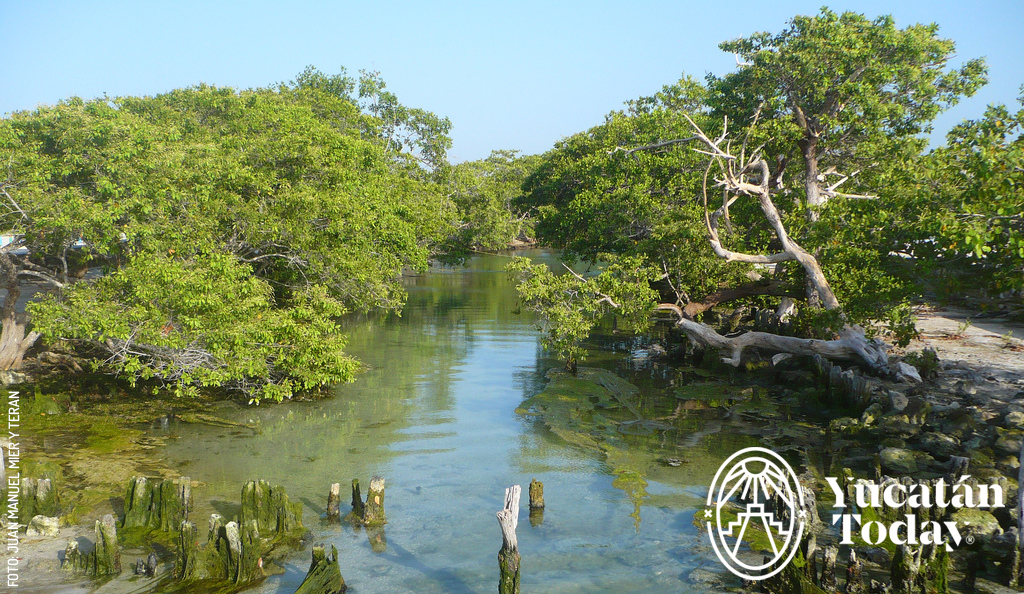
Dominated by red mangroves, which typically reach 15–20 m (49–66 ft) in height |
Dominated by dwarf black mangroves, which rarely exceed 2 m (6.5 ft) in height |
* Being designated a Ramsar Site means a wetland has been recognized as a Wetland of International Importance under the Convention on Wetlands, signed in Ramsar, Iran, in 1971. The Convention recognizes that these wetlands are valuable "not only for the country in which they are located, but for humanity as a whole." Ría Lagartos specifically is designated as a Wetland of International Importance Especially as Waterfowl Habitat, reflecting its crucial role in the conservation of aquatic birds.
How to Visit Yucatán's Biosphere Reserves
Because biosphere reserves are not physically fenced or enclosed, there is no single way or designated route to visit them. The Ría Celestún Biosphere Reserve, for example, stretches about 15 km (9.3 mi) inland, encompassing the Yucatán municipalities of Celestún, Halachó, Maxcanú, and part of Hunucmá.
However, what most people consider the “official” visit is going on a boat tour through the mangroves, typically marketed as flamingo- or crocodile-watching tours.
Tour prices are set per boat (accommodating up to seven passengers) and are non-negotiable. The best way to lower the cost per person is to fill the boat, either by traveling with your own group or by sharing the tour with other visitors.
Tours in the Ría Celestún Biosphere Reserve
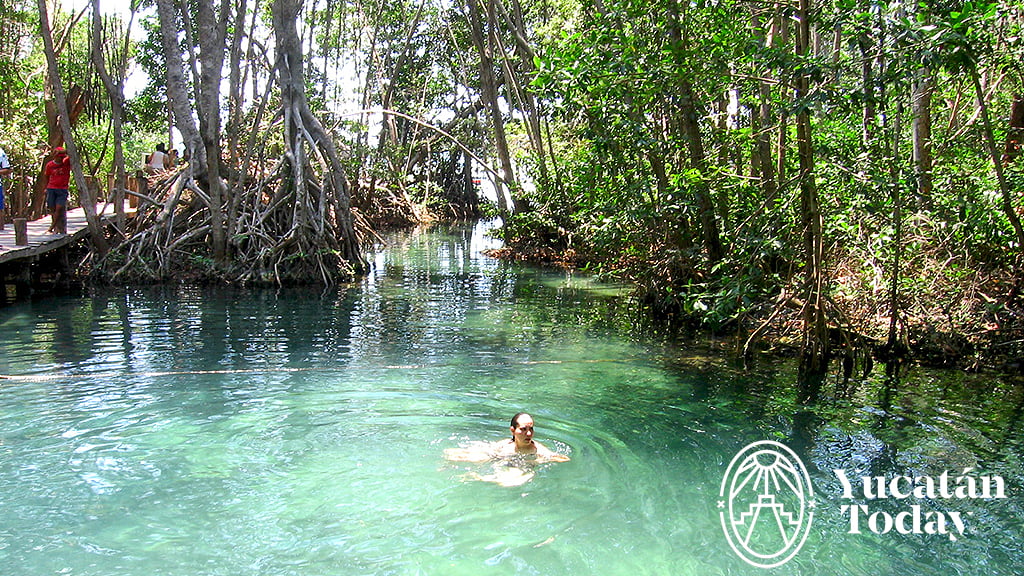
The Ría Celestún reserve's signature experience is a boat tour through the ría, often referred to simply as the flamingo tour. Motorboats depart either from the visitor dock at the entrance to the port of Celestún or directly from the beach. While departures from the beach are available, they are more likely to be offered by unaccredited operators, and the ride is usually rougher due to the open-water waves. For a quieter experience, you can also explore the mangroves by kayak, canoe, or chalana (a traditional flat-bottomed boat) through the Los Guardianes de los Manglares de Dzinitún cooperative.
Besides flamingos and countless other bird species, tours commonly include:
- A visit to the "Petrified Forest," where saltwater flooding killed the trees, leaving behind an eerie landscape seemingly frozen in time.
- A swim in Ojo de Agua Baldiosera, a freshwater spring hidden within the mangroves.
- Beach time at Celestún Beach.
More things to do in the Ría Celestún Biosphere Reserve
Beyond the mangrove tour, you can visit Jaltun Ecotourism Park, spend the day relaxing on Celestún's beach (whether swimming, enjoying fresh seafood at one of the waterfront restaurants, or both), or, if you're continuing toward Campeche, stop by Wotoch Áayin (Maya for The House of the Crocodile), a conservation center dedicated to crocodiles.
Tours in the Ría Lagartos Biosphere Reserve
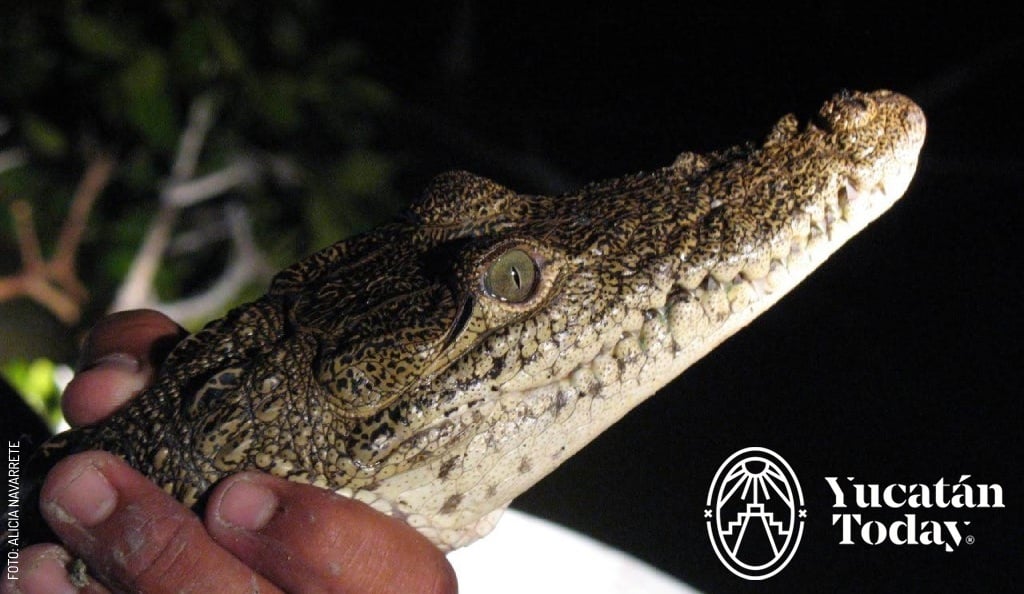
Tours of the Ría Lagartos reserve generally depart from the fishing ports of San Felipe or Río Lagartos. Both offer birdwatching and crocodile-watching excursions. Typically, birdwatching tours take place during the day—especially at sunrise—while crocodile tours are conducted after dark.
Today’s Tip
For the best birdwatching experience (and the greatest chance of spotting a wide variety of species) book a sunrise tour, when birds are the most active.
In addition to flamingos and many other bird species, tours through Ría Lagartos often include:
- A traditional Maya mud bath, using mineral-rich clay.
- Views of Isla Cerritos, a partially restored Maya archaeological site, or the nearby salt flats, where you may catch a glimpse of the famous pink lagoons.
- Beach time at Playa Bonita or Cancunito Beach.
Now let’s talk about the wildlife that call these reserves home—and which, with some luck, you might be able to encounter.
Notable wildlife of the Ría Celestún and Ría Lagartos Biosphere Reserves
Birds
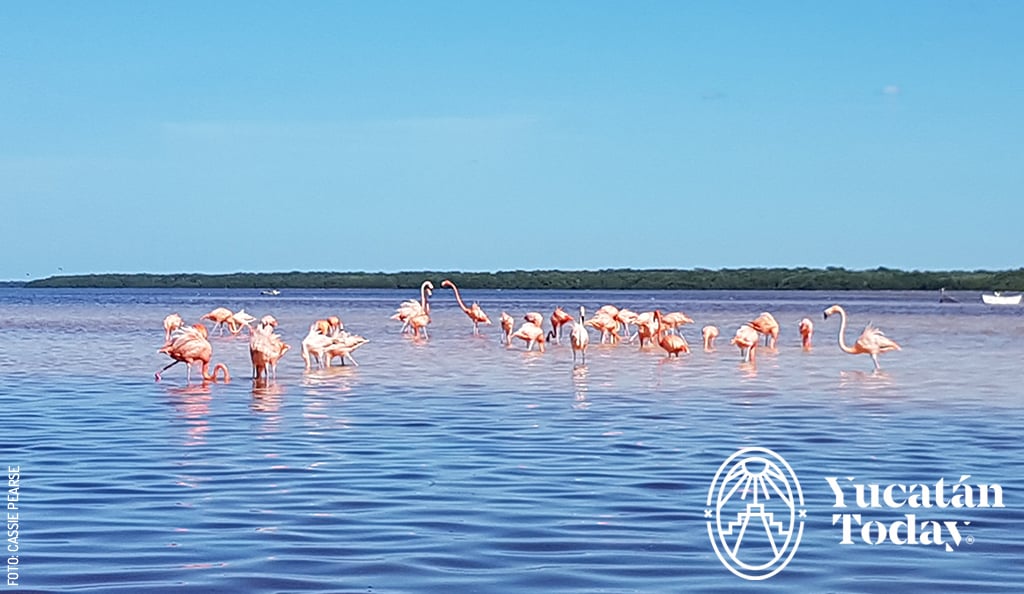
The most iconic, most sought-after, and definitely the most photographed resident of both reserves is the American flamingo (Phoenicopterus ruber). And for good reason. Beyond their striking pink plumage (unique to Yucatán), these birds gather in enormous flocks that transform entire stretches of the estuaries into brilliant shades of pink and coral.
- In Ría Celestún: Flamingos are typically at their highest numbers between November and February.
- In Ría Lagartos: Flamingos are typically at their highest numbers from March through October.
Many other bird species can also be found in both reserves, including the roseate spoonbill (Platalea ajaja), bare-throated or Mexican tiger heron (Tigrisoma mexicanum), common black hawk (Buteogallus anthracinus), osprey (Pandion haliaetus), and the distinctive boat-billed heron (Cochlearius cochlearius).
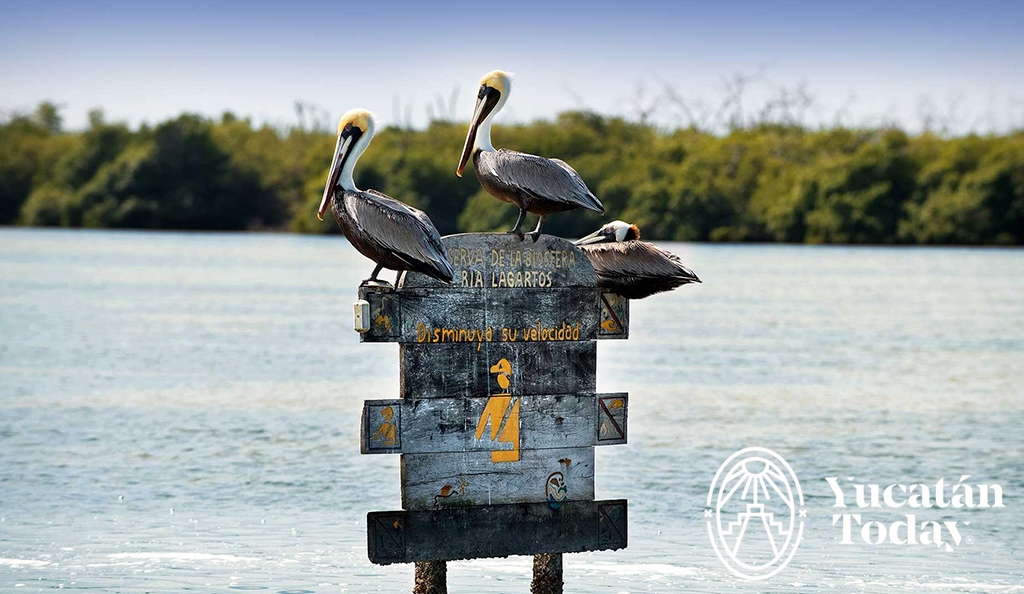
These share the wetlands with familiar coastal birds such as the brown pelican (Pelecanus occidentalis), neotropic cormorant (Nannopterum brasilianum), double-crested cormorant (Nannopterum auritum), great egret (Ardea alba), and magnificent frigatebird (Fregata magnificens), all of which are common sights along Yucatán's coastline.
Endemic birds
The following species are found only in southeastern Mexico. With a bit of luck, you may spot them somewhere within the Biosphere Reserves, though not necessarily in the mangroves themselves.
- Yucatán wren (Campylorhynchus yucatanicus)
- Mexican sheartail (Doricha eliza)
- Yucatán jay (Cyanocorax yucatanicus)
- Yucatán woodpecker (Melanerpes pygmaeus)
- Yucatán flycatcher (Myiarchus yucatanensis)
Reptiles
The most commonly spotted reptiles in both reserves are Morelet’s crocodiles (Crocodylus moreletii), but there are many other harder-to-see reptiles found here. Those include loggerhead (Caretta caretta), hawksbill (Eretmochelys imbricata), and green sea turtles (Chelonia mydas).
- In Ría Celestún: Sea turtles can occasionally be spotted, although they’re usually in transit and in relatively low numbers.
- In Ría Lagartos: Ría Lagartos, in contrast, is an important nesting sanctuary for all three sea turtle species. In addition to Morelet’s crocodiles, it is also one of the few places in Yucatán where you may encounter the American crocodile (Crocodylus acutus).
Endemic reptiles
These are some of the reptile species found only in this region that, with a bit of luck, you may spot in the tropical dry forest surrounding both Biosphere Reserves.
- The Yucatán spiny-tailed iguana (Cachryx defensor), known locally in Maya as chop, or in Yucatecan Spanish, chopito. It is also found in the coastal dune ecosystem.
- The Yucatán box turtle (Terrapene yucatana), which inhabits wetlands and seasonally flooded areas.
- The Cozumel spiny lizard (Sceloporus cozumelae).
Mammals
Both the Ría Celestún Biosphere Reserve and the Ría Lagartos Biosphere Reserve are home to an impressive diversity of mammals. Most notable is the variety of wild cats, including ocelots (Leopardus pardalis), jaguars (Panthera onca), jaguarundis (Herpailurus yagouaroundi), and margays (Leopardus wiedii). But there’s also the adorable northern tamandua or lesser anteater (Tamandua mexicana), as well as coatis (Nasua narica), commonly—but incorrectly—referred to in Yucatán as tejones ("badgers").
- In Ría Celestún: Because its waters are less saline and its vegetation is taller and denser, Ría Celestún is also home to spider monkeys (Ateles geoffroyi) and black howler monkeys (Alouatta pigra), species that are not found in Ría Lagartos.
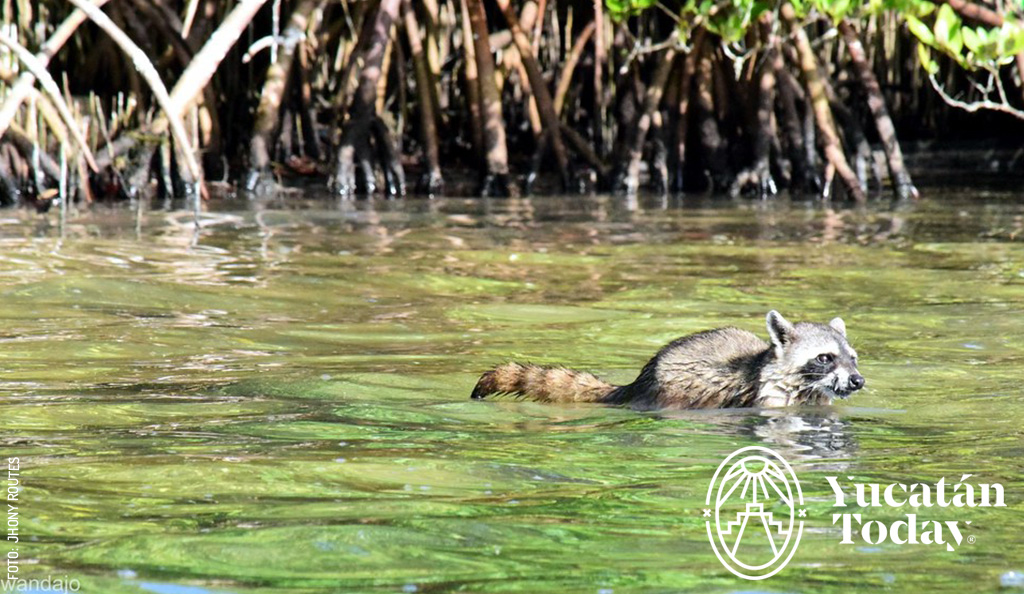
- In Ría Lagartos: Mammals such as raccoons (Procyon lotor) and gray foxes (Urocyon cinereoargenteus) have adapted to hunting in the wetlands, often venturing into flamingo nesting areas where they feed on eggs and chicks. Ría Lagartos is also notable for its population of coyotes (Canis latrans); while some researchers believe the species expanded into the region relatively recently, others argue there is evidence that coyotes have been present in Yucatán since pre-Columbian times.
Endemic mammals
Yucatán is particularly rich in endemic rodents and bats, including Gaumer's spiny pocket mouse (Heteromys gaumeri), the Yucatán yellow bat (Rhogeessa aeneus), and the Yucatán squirrel (Sciurus yucatanensis). Another remarkable species is the Yucatán brown brocket (Odocoileus pandora), which inhabits the low coastal forests, though, to be fair, its status as a true endemic species is currently debated. In any case, as is often the case with deer, spotting one remains exceptionally rare.
Do your part: You can help conserve Yucatán’s protected natural areas for all humankind
Biosphere Reserves welcome thousands of visitors every year. The only way to ensure they continue fulfilling their purpose is for each of us to leave them exactly as we found them. Here are a few simple ways you can help protect these extraordinary ecosystems.
- Choose insect repellents whose active ingredient is either oil of lemon eucalyptus or IR3535 (ethyl butylacetylaminopropionate, if you’re nasty). Although IR3535 is synthetic rather than plant-based, it is biodegradable and has low toxicity to aquatic life. Avoid products containing DEET or picaridin (icaridin).
- Be just as selective with your sunscreen. Avoid aerosol-spray sunscreens and products containing oxybenzone, octinoxate, avobenzone, homosalate, or octocrylene. The safest choice is a mineral sunscreen whose only active ingredient is (preferably non-nano) zinc oxide or titanium dioxide.
- Better yet, whenever possible, skip insect repellent and sunscreen altogether by protecting yourself with a wide-brimmed hat, lightweight long sleeves, and loose-fitting pants.
- Keep your distance from wildlife—especially flamingos. Approaching animals can cause unnecessary stress, disrupt their natural behavior, and even irreversibly harm them.
- Choose official tours operated by guides authorized by México's National Commission of Natural Protected Areas (CONANP). That way, a portion of your tour fee goes directly toward the conservation of these and other protected areas throughout the country.
- This may seem obvious, but make sure to leave no trace! Bring a bag to collect any trash you generate during your visit and dispose of it properly afterward.
Yucatán’s Biosphere Reserves await—by visiting them, you’re sure to go on an unforgettable adventure.
First published in Yucatán Today print and digital magazine no. 464, in August 2026.


Related articles


