


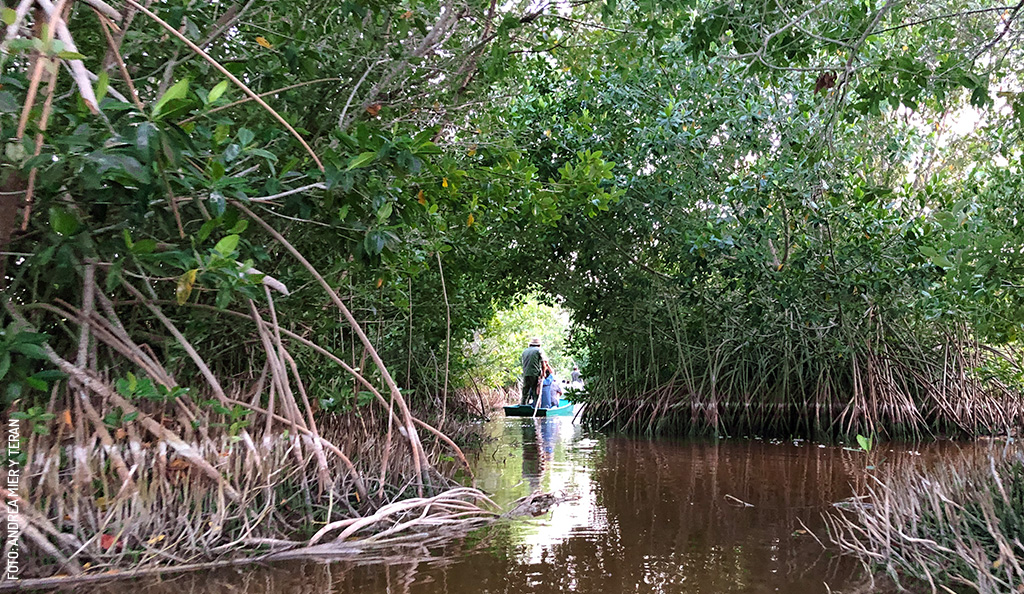
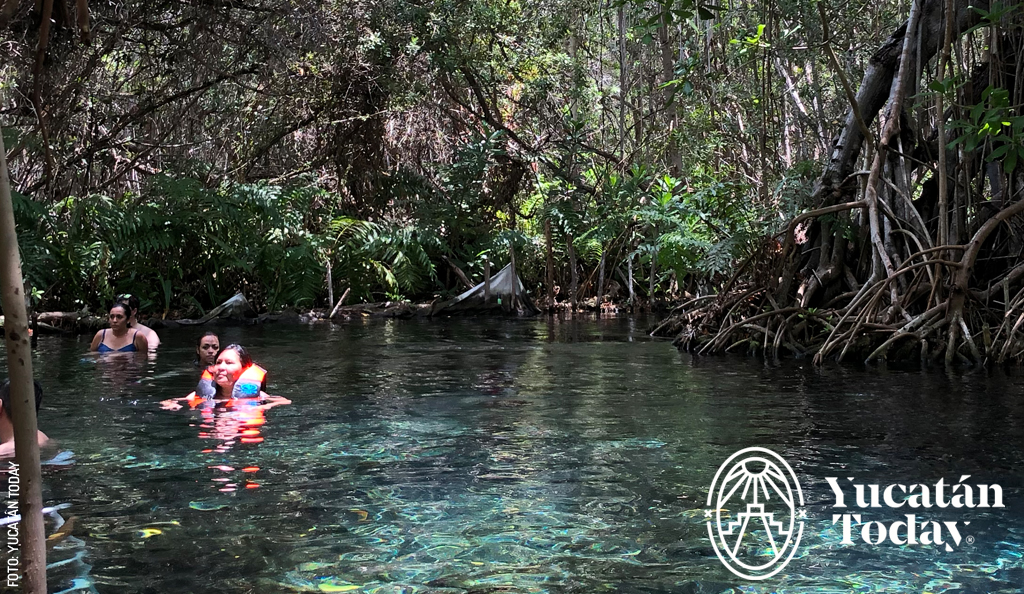
 If you’ve ever spent any time on the coast of our beautiful state of Yucatán for sure you’ll have spotted the mangroves that stand between so much of our land and the Gulf of México.
Few countries in the world have as many mangrove forests as does México and the Yucatán Peninsula is home to some 55% of all México’s mangroves.
A mangrove is a community of plants, trees, and animals that occurs in tropical areas that are inundated with saltwater. There are few ecosystems in the world that are so important to our survival, yet they are fragile and always at risk from human interference and “development.”
Why are mangroves important?
Mangroves nourish and provide shelter for flora and fauna. They are natural control systems, providing barriers from flooding, hurricanes, they help control soil erosion, and are considered to be biofilters for water.
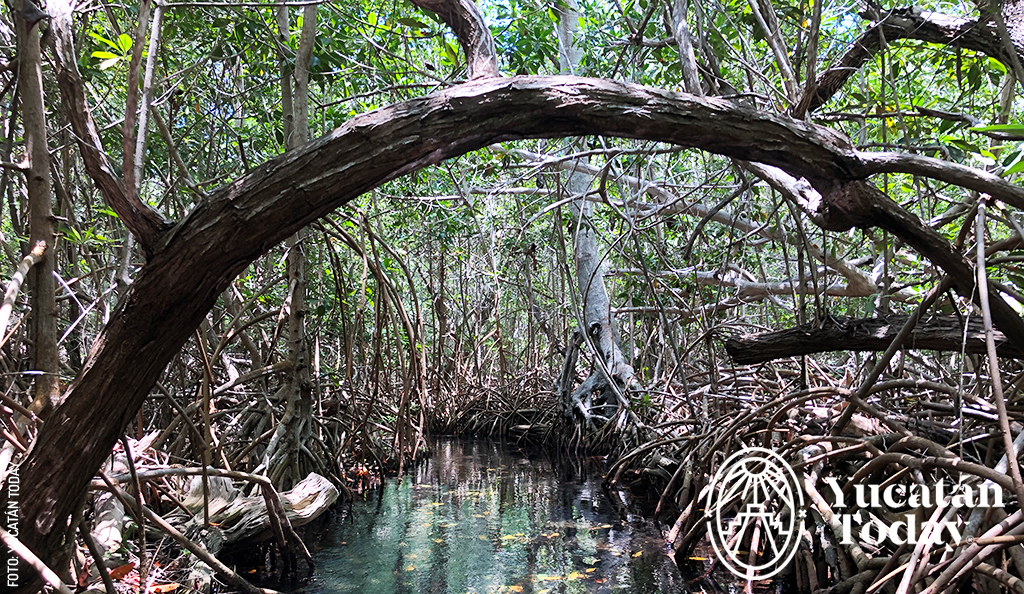 While mangroves cover just 0.1% of the planet, they store and convert more carbon than any other type of forest, so they play a vital role in helping control climate change.
Mangroves may be hardy and tough, but they actually occupy a vulnerable part of a coastal ecosystem: the land between the low tide and high tide marks. They grow here and when the big storms arrive it is our mangroves that provide us with protection. Without the peninsula’s mangroves, storm surges would reach far deeper inland, wreaking more damage than they unfortunately already do.
Mangrove roots provide nursery areas for wildlife. By protecting marine life at its most vulnerable they also attract huge numbers of migratory birds.
In Yucatán, there are four species of mangrove
![]() Red mangroves are the easiest to identify as their stilt-like roots arch in the air before entering the water. These both provide stability and collect oxygen for the plant. You’ll notice how the roots of the separate trees intertwine to form a forest of roots. Red mangroves are one of the most important woody plants on the Yucatán coast.
Red mangroves are the easiest to identify as their stilt-like roots arch in the air before entering the water. These both provide stability and collect oxygen for the plant. You’ll notice how the roots of the separate trees intertwine to form a forest of roots. Red mangroves are one of the most important woody plants on the Yucatán coast. - Unlike the red mangrove, black mangrove roots are below ground. From these roots grow pneumatophores, which collect oxygen for the submerged roots. Black mangroves tend to grow higher above the low tide mark than red or white mangroves, so they are spotted in muddy areas rather than right at the shoreline.
- The white mangrove is a flowering mangrove tree that can grow 12-18 meters. Depending on environmental conditions it can either have stilt roots or pneumatophores for oxygen collection.
- Buttonwood is generally a dense shrub of a mangrove but in the right conditions, it can also grow up to 20 meters.
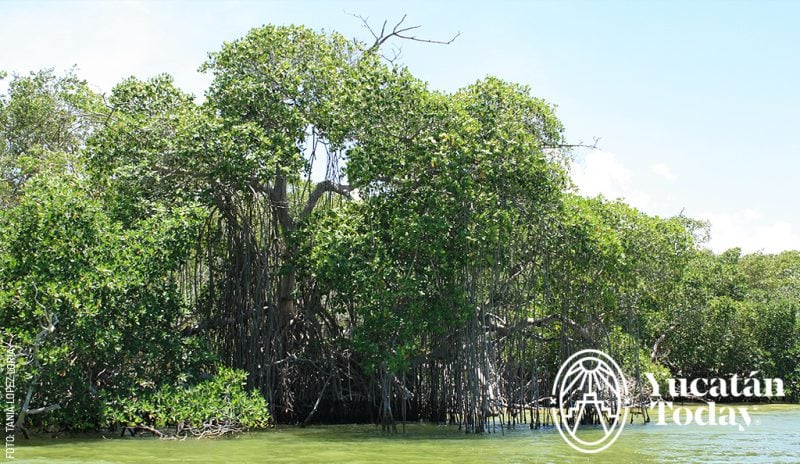 Red mangroves are the easiest to identify as their stilt-like roots arch in the air before entering the water. These both provide stability and collect oxygen for the plant. You’ll notice how the roots of the separate trees intertwine to form a forest of roots. Red mangroves are one of the most important woody plants on the Yucatán coast.
Where to visit and explore our mangroves
All around the Yucatán coast, it is easy to explore the mangroves. From Celestún and Sisal in the west of Yucatán, through Progreso in the north, to Río Lagartos and San Felipe in the east, there are opportunities to get closer to nature and learn about these magnificent forests.
Directory
Tourism Services in Progreso
- El Corchito
Libramiento s/n Progreso
Tel. (999) 158 5155 - La Ria Progreso
Tel. (999) 127 6128
Tourism Services in Telchac Puerto
- Sayachaltún Ecoturism & restaurant
Located right-hand side of road just before Telchac Puerto.
Tel. (999) 230 8119
FB: Sayachaltún
IG: sayachaltun_ecoturismo
Tourism Services in San Crisanto
- Paseos por los manglares
Tel. 999 926 0236 (Mérida)
Tel. 991 108 1461 (San Crisanto)
www.sancrisanto.org
Tourism Services in Sisal
- Ziz-Ha Ecoturismo
Spend the day of the estuary, take tours to the “Petén,” mangrove, and spring; snorkel on the reef and sunken ships. Recreational and artisanal fishing; birding and flamingo tours. Service in English and Spanish. Certified federal guide. Enrique Mex Cel. 9991 97 92 58 kikedive@gmail.com FB: Ziz-Ha Ecoturismo
- Descubre Sisal
Tours to the mangroves and natural spring, guided bike tours of the city, artisanal fishing, hiking and bird watching at dawn. Accommodation in private rooms or homes by the day or week. Leopoldo Puc Cel. 9993 63 50 14 FB: Descubre Sisal
- Motoventours
Thatched-roof motorcycle rides, kayak tours to the mangroves by day and night, bird watching, and ecotourism activities. Eduard Cruz Cel. 9992 35 10 87 FB: Motoventurs sisal
- Wilberth Chuc
Cel. 999 210 6986
- Geovani May
Cel. 999 260 6816
- Gener Dzib Esquivel
Cel. 999 101 4693
- Hostal Casa Balam
Experiencias Balam-Há (water jaguar) Excursions (one day) and expeditions (two or more days) to the coast, reefs, and shipwrecks. Artisanal fishing, tours to the mangrove, flamingo and bird watching. Hammock or camping accommodation. Services available in English and Spanish. Walter Printzen Cel. 9991 15 43 94 FB: Casa Balam Sisal


Related articles


