


Yucatán, Mexico, is home to 14 iconic landmarks that showcase its rich architectural heritage, from ancient Maya cities to colonial and contemporary monuments. Highlights include the Monumento a la Patria in Mérida, the Church of Santo Domingo in Uayma, the Ex-Convent of San Bernardino de Siena in Valladolid, El Caracol at Chichén Itzá, and the Arch of Labná along the Puuc Route. These architectural landmarks represent centuries of Yucatecan history, culture, and identity, offering visitors a unique journey through the state's remarkable heritage.
El Castillo (also known as the Pyramid of Kukulcán) at Chichén Itzá is—by far—the most famous structure in Yucatán. However, the entire state is filled with iconic buildings featuring instantly recognizable silhouettes. How many are you familiar with?
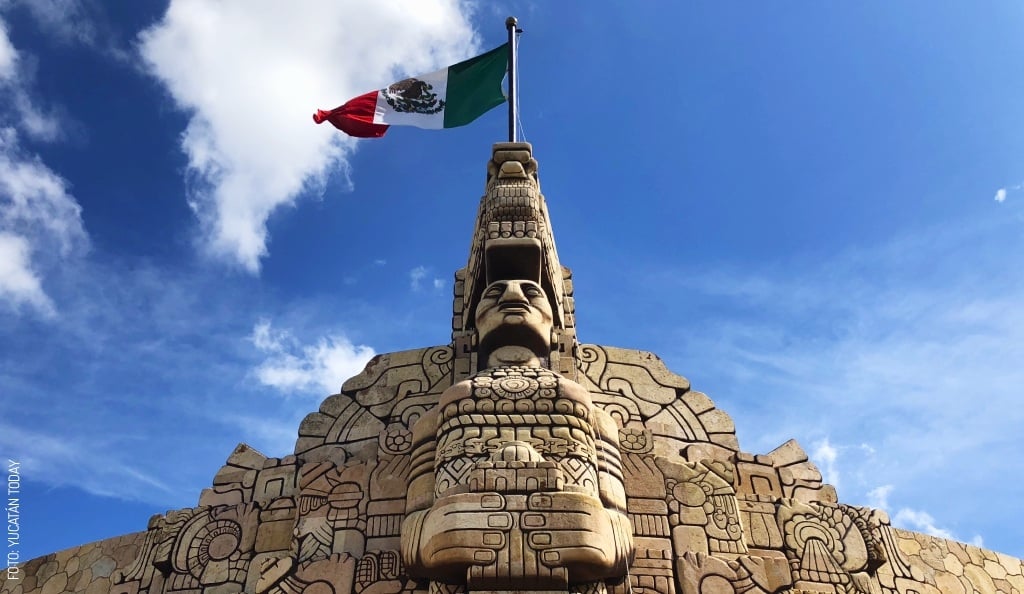
Monumento a la Patria, Mérida
Along with the Mérida Cathedral—devoted to St. Ildephonsus (San Ildefonso)—the unique silhouette of the Monument to the Homeland (Monumento a la Patria) is practically a symbol of Mérida. Located where Paseo de Montejo transitions into Prolongación Montejo, this massive hemicycle—completed in 1956 by Colombian sculptor Rómulo Rozo—presents a visual history of México from pre-Hispanic times to the modern era.
Both its front façade (centered around an Indigenous woman) and its rear view (depicting the eagle devouring a serpent atop a nopal cactus in Lake Texcoco) are instantly recognizable to anyone who has seen them, especially in person.

Church of Santo Domingo, Uayma
In Yucatán, it’s easy to be amazed by the sheer number of colonial churches you’ll come across; even in the smallest towns, you can stumble upon structures built to accommodate hundreds of churchgoers. Still, not many churches are identifiable at a single glance. As we mentioned above, the Cathedral of San Ildephonsus in Mérida, with its austere facade that doubled as a fortress, is one of them.
The Church and Former Convent of Santo Domingo de Guzmán (St. Dominic) in Uayma stands out not so much for its silhouette, but for its singular decoration. This artwork, it should be noted, remained hidden after the church suffered major damage during the Maya Social War (Caste War) in the mid-19th century; it wasn't until 2003 that the temple was meticulously restored. Ever since, its vibrant exterior—adorned with stucco rosettes and stars arranged in geometric patterns—is hard to forget... and the interior is even more breathtaking.

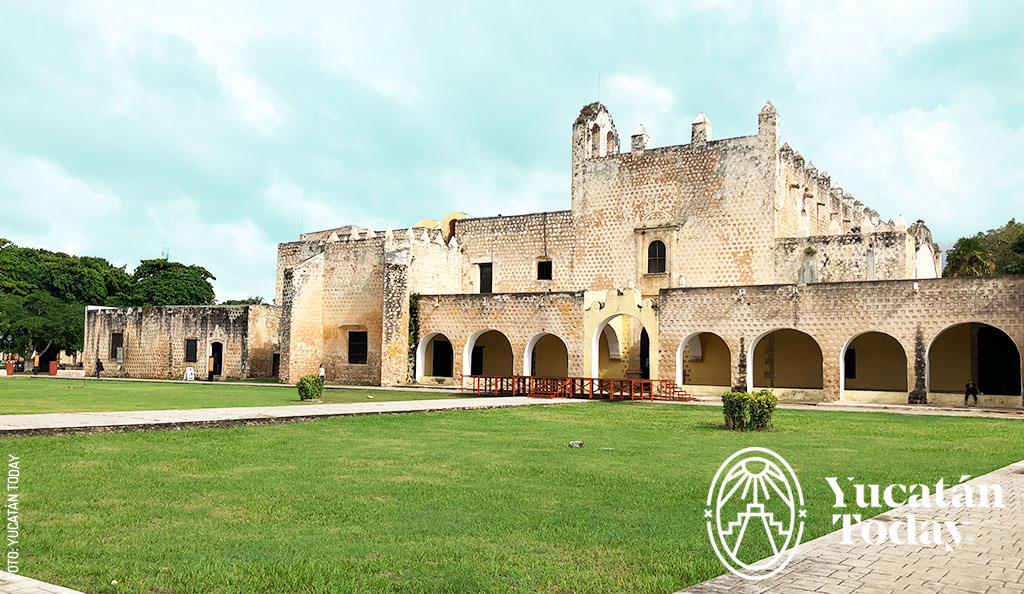
Former Convent of San Bernardino, Valladolid
It is estimated that at one point there were at least 30 monasteries scattered throughout Yucatán. Although only a handful survive today (and none still function as active convents), several remain essential stops for travelers passing through the region. San Antonio de Padua in Izamal stands out for its iconic yellow hue and massive elevated atrium; however, for its truly unique appearance, we have to highlight San Bernardino de Siena in Valladolid.
This building’s impressive dimensions are just the beginning: its façade spans 90 meters wide and nearly 15 meters high—as high as a five-story building. In addition to being colossal, this striking structure evokes a medieval fortress, while its arches invite visitors to cool off and step inside to explore both the church and the former convent's interiors. Inside lies a modest museum exhibiting Caste War artifacts retrieved from the cenote over which the structure was built. As if all that weren't enough, the former convent of San Bernardino sits across from a sprawling green where locals walk with families and pets, enjoy a quick snack, or simply catch the evening breeze while admiring the building.
El Caracol, Chichén Itzá
There is no doubt that El Castillo at Chichén Itzá is the most famous structure in Yucatán, if not all of Mexico. Perhaps that is why El Caracol has taken a backseat over time, despite being just as distinctive in appearance and ingenious in design.
El Caracol is unusual for several reasons. First, because it is a round building, but also because inside it features a spiral staircase that leads to the upper level. Although parts of the structure have been lost to time, El Caracol is believed to have functioned as an astronomical observatory, allowing the Maya to track the movements of various celestial bodies—especially Venus, the Moon, and the Sun—throughout the year.

El Parque de las Américas, Mérida
During the first half of the 20th century, Yucatecan architecture set European influences aside to focus on local heritage, giving rise to the Neo-Maya architectural movement. Mérida boasts several examples of this style, but none as grand as Parque de las Américas in the García Ginerés neighborhood.
Everyone has their favorite section, but its most iconic feature is undoubtedly its monumental fountain. With its five columns representing Kukulkán, the Feathered Serpent, at the front, and a staircase reminiscent of the Pyramid of the Magician (Pirámide del Adivino) at the back, the fountain—and the entire Parque de las Américas complex—is easily one of the most pleasant spots to spend an afternoon in Mérida.

Labná Arch, Puuc Route
We will never tire of saying that every single site along the Puuc Route is worth the visit for its own special reasons (and yes, that includes the smaller sites travelers often skip).
Of the many—truly many—structures we could include here, we unanimously chose the Labná Arch: because of its beauty, its scale, and the traces of pre-Hispanic paint that still survive in its intricate crevices. So if you're looking for an iconic (yet far less frequented) Yucatecan structure to see for yourself, this is a standout choice: discovering the arch, bathed in sunlight filtering through the canopy, and admiring it up close is an experience you’ll surely carry in your heart forever.

Love Seats (Sillas Confidentes), Statewide
Not all iconic structures are buildings, and there’s no better proof of that than the sillas confidentes (also known as "you and me" chairs or love seats) that are a very well-known symbol of Yucatán. Legend has it they were invented by a protective father concerned about his daughter's reputation as she met with possible suitors; historical records show they were first installed in Mérida around 1915. What is certain is that today, beyond gracing public squares and parks across the entire state, they also serve as a symbol of Yucatecan friendship—with installations now in Mexico City and, as of July 2026, in Mérida, Spain.

More iconic structures in Yucatán:
- Chenché de las Torres. A "medieval castle" nestled in the heart of Yucatán.

- Muelle de Progreso. So long that, from the beach, you can't see where it ends.
- Iglesia Ek Nakan. A Neo-Gothic church located near the cenotes of Homún.

- Casas Cámara (the “Twin Houses” of Paseo de Montejo): Two family residences built from the exact same architectural plans—and no, they were not built for twin sisters.

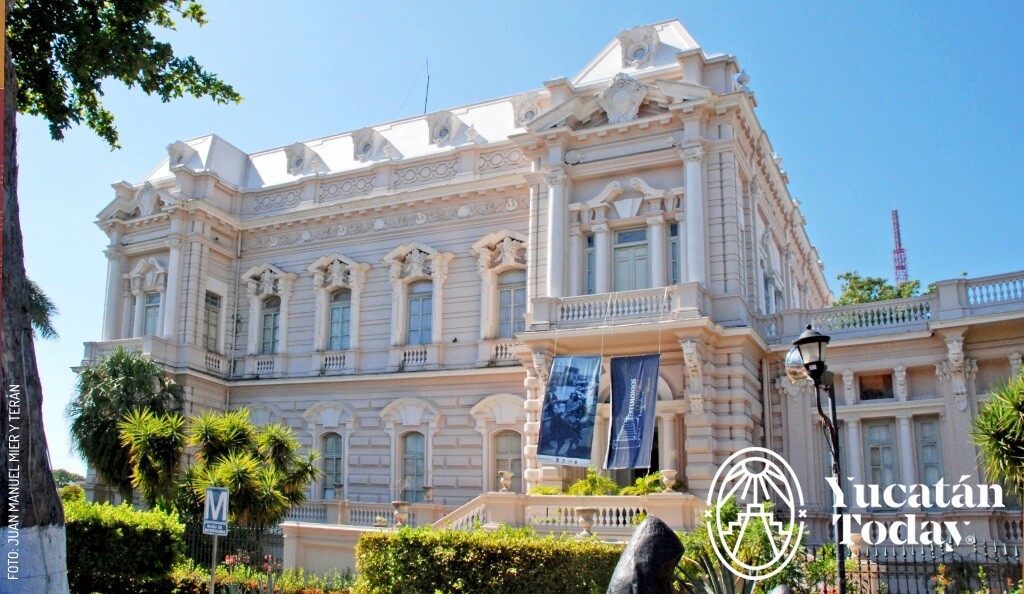
- Palacio Cantón. Currently the Regional Anthropology Museum, it was originally built as a lavish residence for the governor at the time.
- Gran Museo del Mundo Maya. (Grand Museum of the Maya World): Its striking design evokes Maya pyramids at the foot of an imposing ceiba tree.

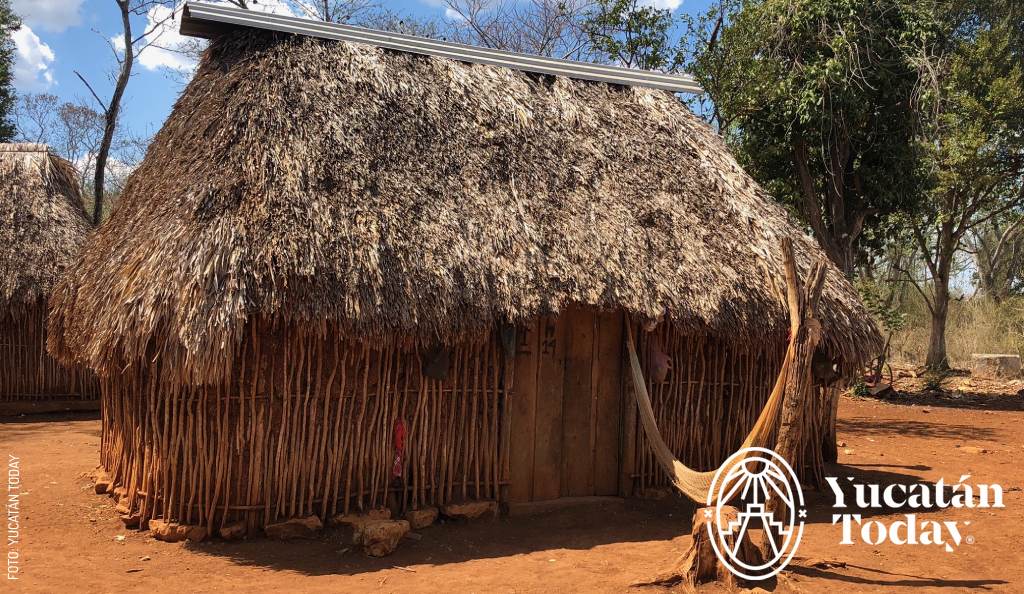
- Traditional Maya Houses: Though increasingly rare in the modern Yucatecan landscape, these traditional homes are architectural marvels—the result of centuries of knowledge passed down through generations.
First published in Yucatán Today print and digital magazine no. 468, in December 2026.


