


The Pixanes, All Across Yucatán
In October, the entire Maya region (like the rest of México, in a way) prepares to welcome the pixanes, the spirits or souls of our departed loved ones. Mérida, of course, leads the way in the number and scale of its events, but as the years go by, more and more towns and municipalities are putting together celebrations that are sure to surprise travelers.
As we publish this article, event calendars have yet to be published, but here’s an idea of what to expect and where to look, based on what has been organized in previous years. By the time you have this magazine in your hands, all the latest information will already be available on our website and social media, so be sure to check in with us there.
Strolls or Parades of Souls
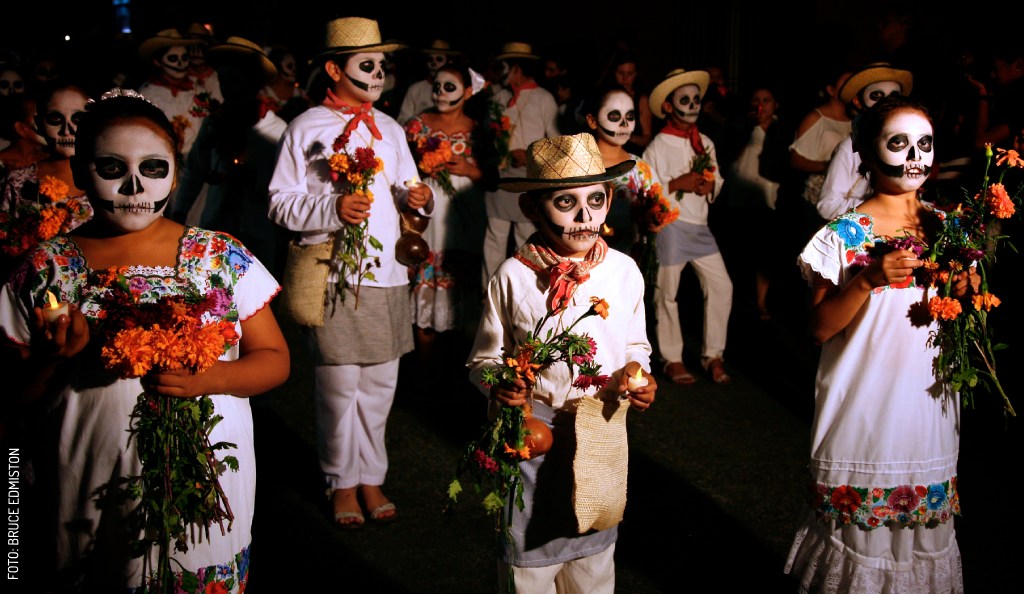
Let’s begin with one of the most anticipated events of the season, usually called either Paseo de las Ánimas or Paseo de Pixanes. These are a representation of the souls of our loved ones as they leave the underworld and return to the world of the living. Anywhere from a few dozen to hundreds of people, made up as skeletons and dressed in traditional regional clothing, illuminate the streets with the candles they carry, creating a magical and deeply evocative scene.
The atmosphere during Paseo de las Ánimas is usually solemn: the “pixanes” walk in silence, and the background music, if any, helps create an atmosphere of profound respect. Once the procession ends—and, in some cases, at stops along the route—the mood becomes more relaxed and even festive.
In several communities, including Mérida, these processions begin at the local cemetery, although this can vary depending on the organizers. Several Yucatecan ports, including Progreso, Sisal, and Río Lagartos, also hold processions on decorated boats, filling the waterways with light and color.
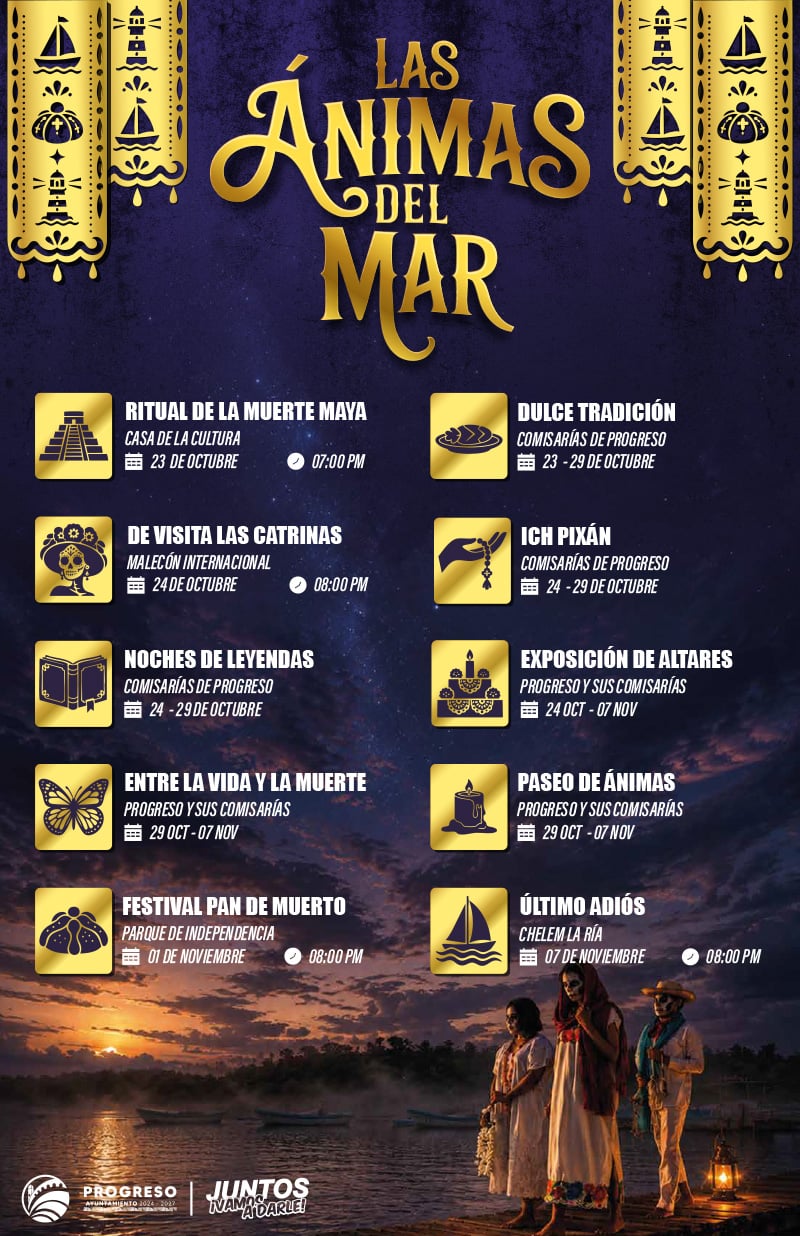
Festival de las Ánimas en Mérida 2026
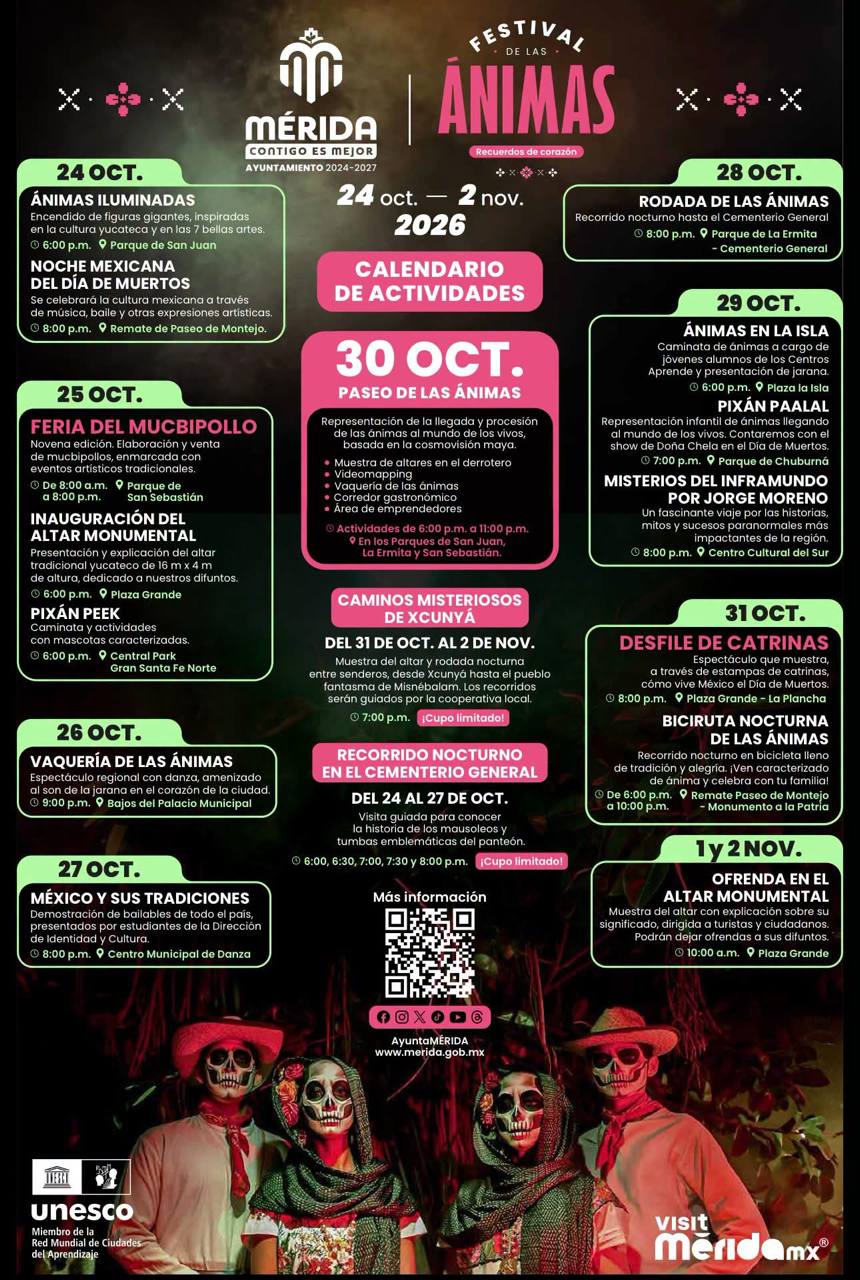
Día de Muertos in Valladolid 2026
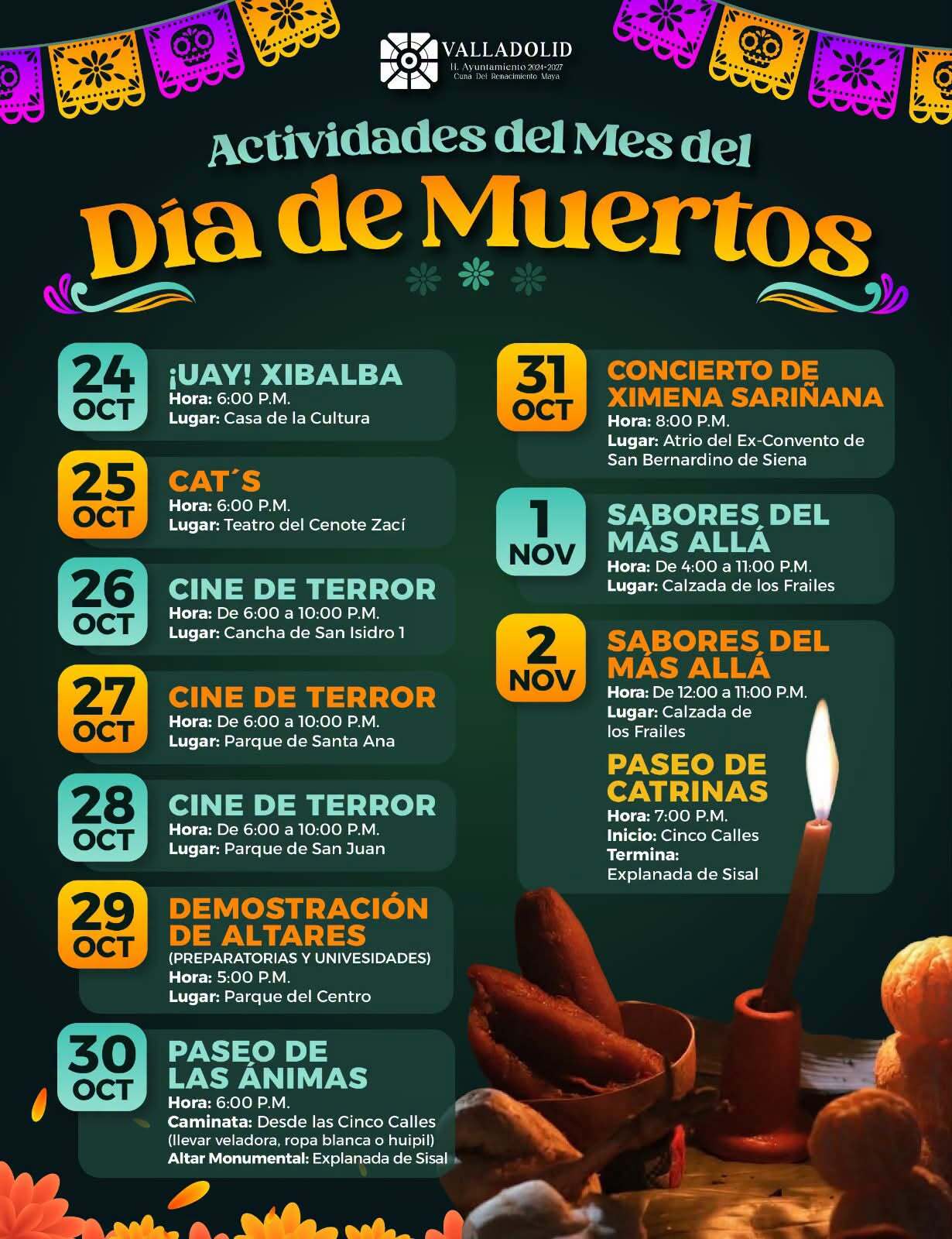
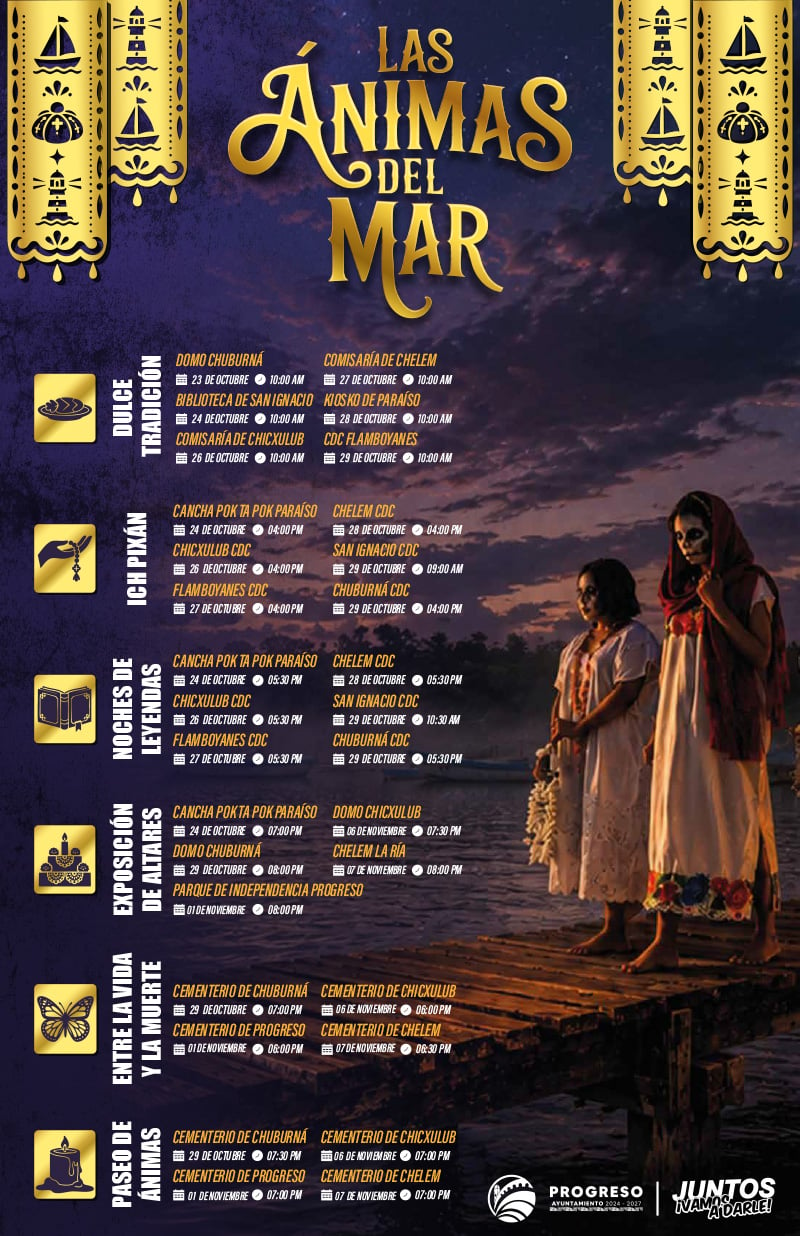
Ánimas del Mar in Progreso 2026
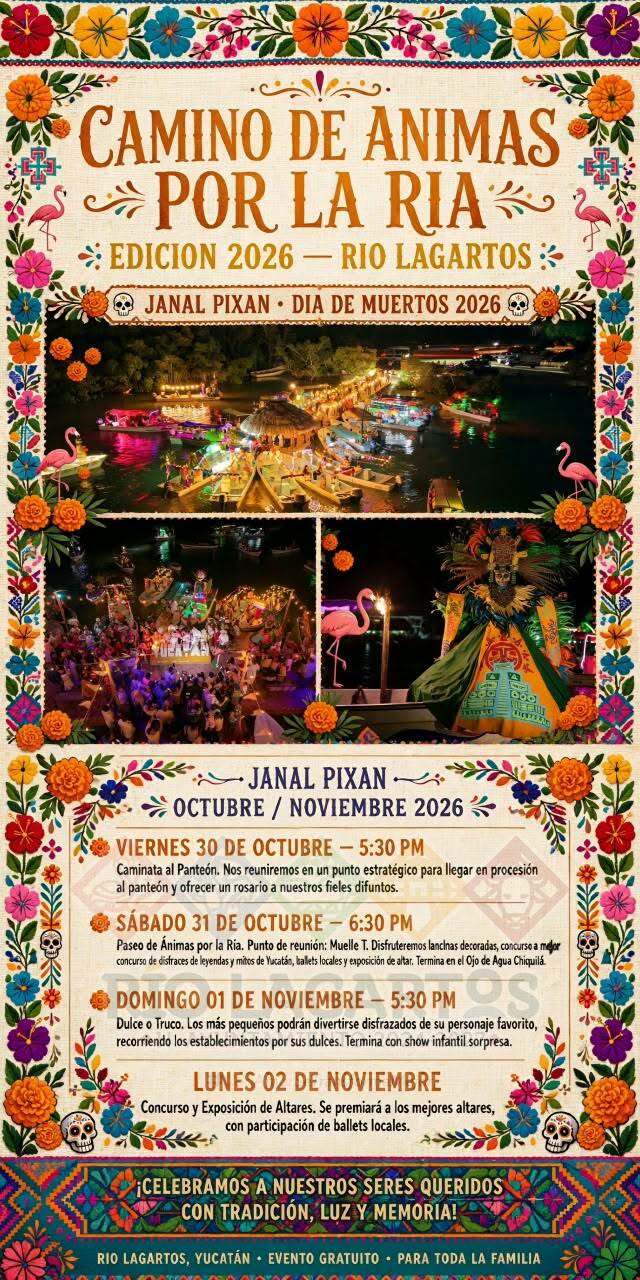
Camino de Ánimas por la Ria in Río Lagartos 2026
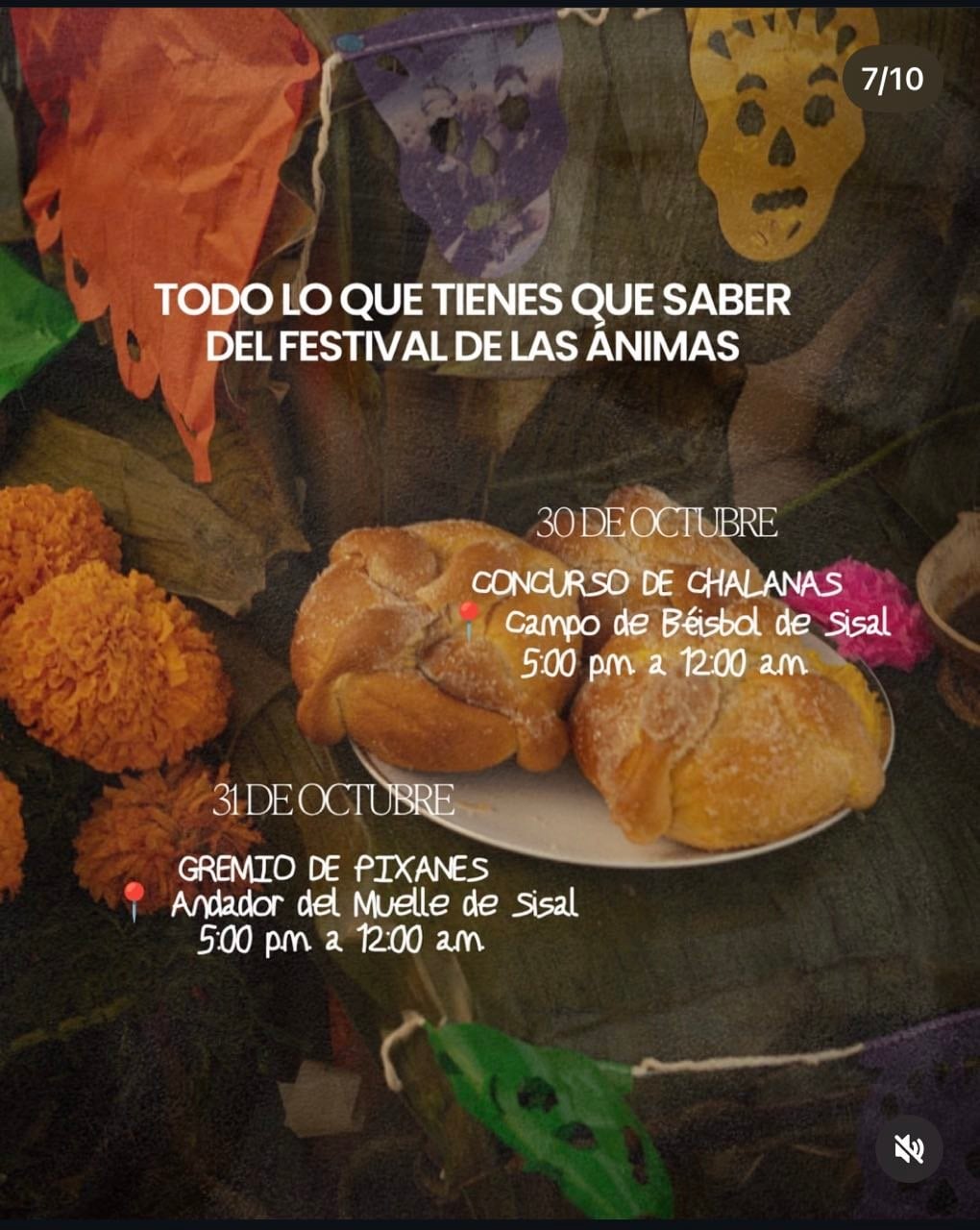
Festival de las Ánimas in Sisal 2026
Vaquerías de las Ánimas
Vaquerías are large public dances usually held as part of a patron saint festival. Hundreds of people turn out in their finest regional attire to perform Yucatán’s traditional dance, the jarana. In “authentic” vaquerías, the dancing is freestyle: although groups from different communities may organize themselves to attend and show off their skills, everyone is welcome to join in and dance in their own style.
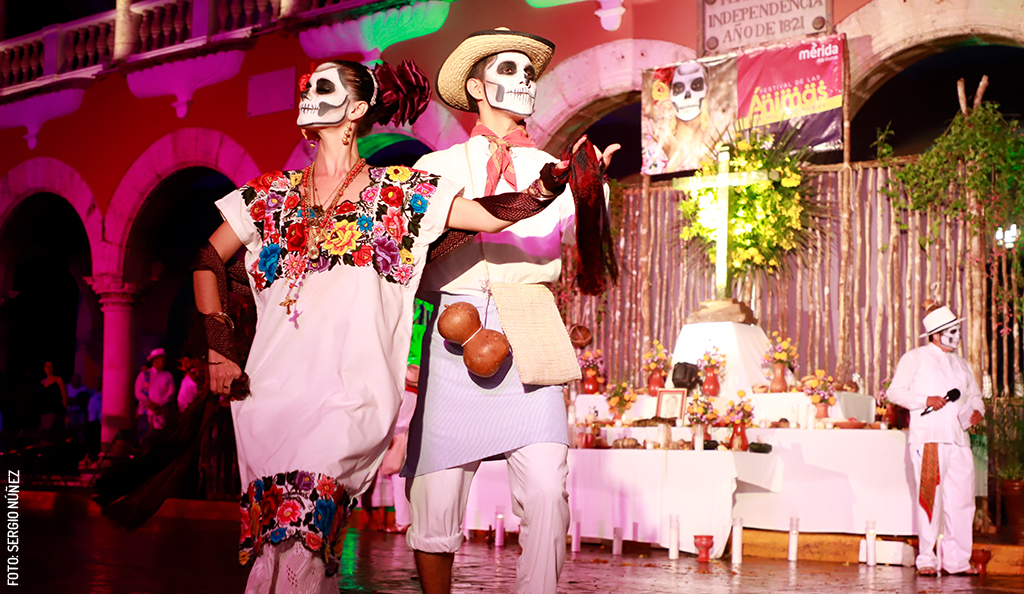
In Mérida, a jarana performance known as the Vaquería Meridana has been held every Monday evening since 1982. During the Festival de las Ánimas, dancers perform the same choreographies and suertes while dressed in traditional attire—but with their faces painted as skeletons. More recently, other communities, including Tekax and San José Tzal, have begun presenting their own versions of this lively celebration of dance, music, and local spirit.
- Mérida
- Tekax
- San José Tzal
Catrinas and calaveras
You’ve probably seen a catrina, whether you’re aware or not: the “catrina” is that iconic skeleton figure dressed in the elegant European-style fashions of the late 19th century. Although the image began as a form of social satire, it is now closely associated with Día de Muertos (Day of the Dead) celebrations in central México.
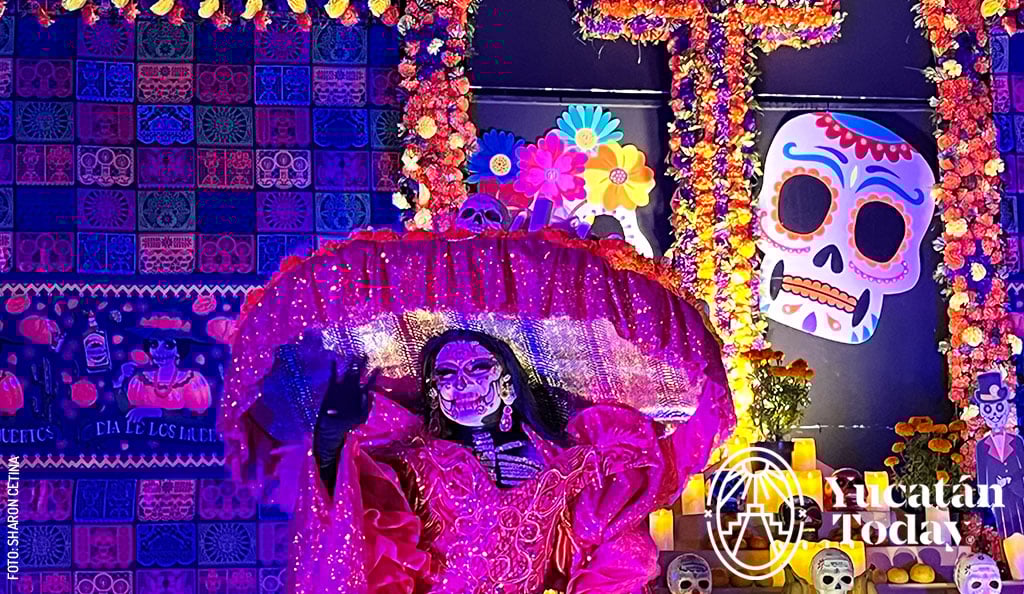
Every year, several Yucatecan communities celebrate their Mexican identity with all kinds of catrina and catrín-themed events, including dances, parades, and contests, to name a few. Like the ánimas, catrinas wear skull makeup, but their look often features more embellishments, such as bright colors, stones, and all kinds of glitter and sparkle. The most important distinction, however, is their clothing, which tends to be more elaborate, whether through color and volume or by evoking the iconic charro outfits.
In Mérida, Catrinas often take over the city as part of Noche Mexicana, but they also have their place in communities throughout the state during this time of year.
- Mérida
Altar exhibitions
Altar exhibitions are by far the most widespread activity during this time of year, with Yucatecos of all ages often taking part. Public parks, schools, workplaces, and government offices are just some of the places where you may come across a community altar. In some cases, these are independently organized initiatives; in others, different groups are invited to put one together, showcasing the rich diversity of traditions that coexist here.
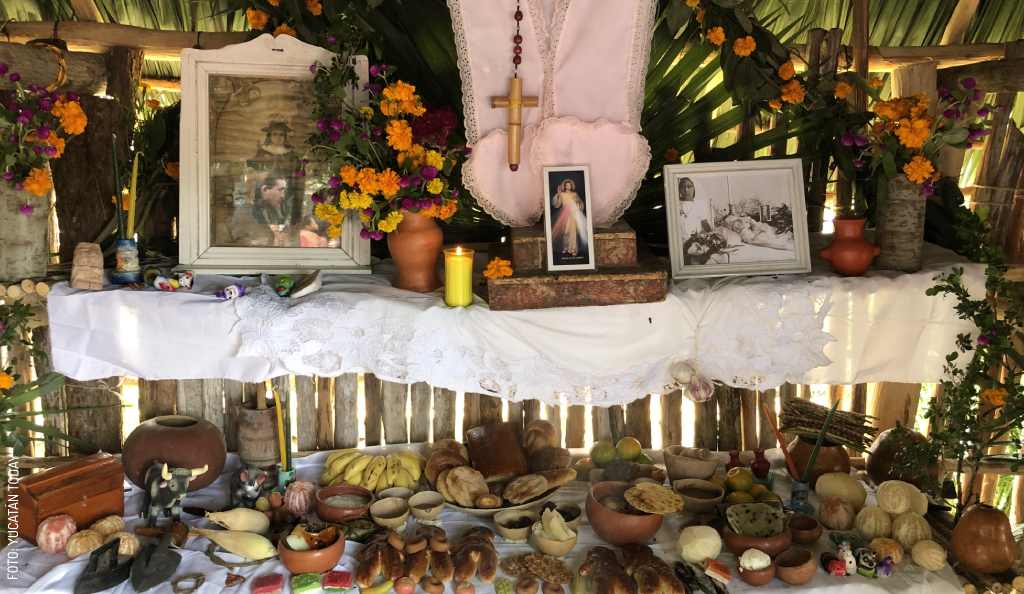
In Mérida’s Plaza Grande, in addition to the Altar Monumental, exhibitions featuring altars from different municipalities have also been set up, although usually for one day only. If you find yourself elsewhere in the state around Finados (late October and early November), don’t hesitate to ask if there’s somewhere nearby where you can see an altar exhibition.
- Mérida
- Texak
Halloween and other spooky activities
Of course, there’s also plenty of room for witches and ghouls this time of the year. Although Halloween-themed events are less common as public celebrations organized by local governments, that doesn’t mean they’re nonexistent. It is also true that, sometimes, what one person sees as a spooky activity, another may see as an opportunity to explore architecture, history, or nature…in the dark.
The lineup might include everything from costume parties to “nights of legends,” where local myths and tales of mystery and the unexplained are brought to life (though, usually, in Spanish only). You may also find visits to abandoned haciendas and guided tours of some of Yucatán’s cemeteries.
These are just some of the activities you may encounter each year. Programs and participating communities tend to change (and, usually, grow) from one edition to the next, so be sure to check back on this page for updated schedules as they are announced.
Yucatecan towns that have held Janal Pixan festivals in the past
- Conkal
- Espita
- Izamal
- Maní
- Maxcanú
- Mérida
- San José Tzal
- San Pedro Chimay
- Motul
- Progreso
- Río Lagartos
- Sisal
- Tizimín
- Valladolid
Are you planning to go to a Festival of Souls in Yucatán? Make sure to check out our guide How to Enjoy Mérida's Festival of Souls… and Live to Tell for tips that will help you make the most of the experience.
First published in Yucatán Today print and digital magazine no. 466, in October 2026.


Related articles


