


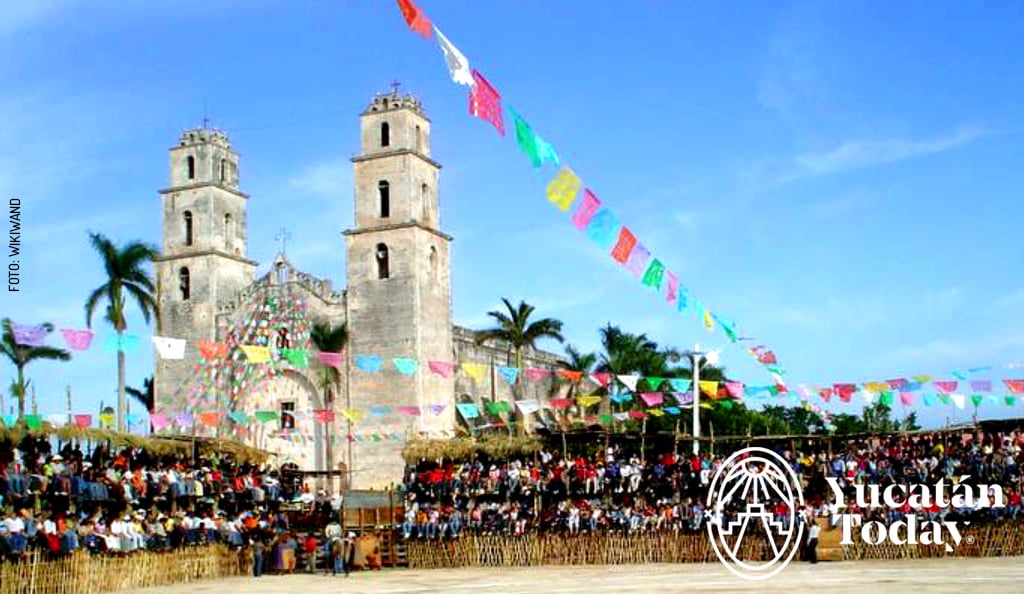
The traditional festival in the Magical Town of Espita, Yucatán, takes place every year from December 19 to 26 in honor of the Christ Child. The celebration is known for its deep blend of Maya and Catholic traditions, beginning with el convite, a procession announcing the upcoming festivities in late November, and continuing with la alborada on December 19, featuring traditional jarana dancing and ternos (traditional Yucatecan dresses). More than twenty traditional gremios (guilds) take part in the celebrations, where local specialties such as xupiik, kots’obes, and roasted lamb are served.
Espita’s Traditional Festival
Few events capture Yucatecan culture quite like traditional town festivals. More than just celebrations, these festivities are where history, faith, food, and everyday life come together in a shared rhythm. In the Magical Town of Espita, in eastern Yucatán, this experience takes on a distinctive form every December during its patron saint festival, simply known as “la fiesta (the festival)”, because no other celebration quite compares in scale. In Espita, this is more than a fair; it’s a matter of identity.
During these days, Espita transforms completely. From December 19 to 26, the town leaves its everyday routine behind and becomes a gathering place: those who moved away return home, old traditions meet new influences, and community life grows more vibrant. According to José Antonio Gutiérrez Triay, Espita’s official town chronicler, this is a deeply syncretic event, blending Maya heritage with Catholic traditions that has evolved over time without losing its essence.
The festival’s first announcement
It all begins months before the official dates, with planning and organizing efforts that unfold throughout the year to bring the celebration to life. The first spark of the festivities comes in late November with the convite, a procession announcing the upcoming festival and inviting the townspeople to join in. In the past, a charanga (traditional wind band), a couple of jarana dancers, and the explosive sound of fireworks were enough to draw people out into the streets. Today, shaped by time and new influences, the procession still sets the festival in motion.

La alborada: The dawn celebration
The official festivities begin on December 19 with la alborada, one of the most iconic vaquerías in southeastern México. From early in the day, the town fills with music and activity: women, known as mestizas, wear their embroidered ternos (traditional Yucatecan dresses), while men dress in white and sport immaculate guayaberas. The rhythms of the jarana and the festive atmosphere mark the beginning of a celebration that transforms the town for more than a week.

Faith and community
Although Espita's patron saint is Saint Joseph, popular devotion centers on the Christ Child, known as “Niño de la Salud (the Child of Health),” who is credited with numerous miracles. This is not the Divino Niño itself, but rather an image associated with the tradition of the Infant Jesus of Prague. Even so, participation isn't driven by faith alone: many people take part out of tradition, for the chance to spend time together, or simply because they are part of the Espita community.

Gremios (guilds)
At the heart of the festival are the gremios, traditional community associations that bring together religious, economic, and social life and play a central role in the town's communal activities during the festivities. More than twenty groups—some with over a century of history—including León XIII Catholic Workers, Luz Divina Bakers, Peace and Brotherhood Carpenters, and Farmers and Agricultural Workers, organize their participation according to a calendar that begins before the main festivities.
Around December 8 or 9, la “bajada del Niño” (the lowering of the Christ Child) takes place. During this ceremony, the image of the Christ Child is removed from its niche in the Church of San José to begin its journey among the gremios. From that point on, each group welcomes the image, accompanies it in a procession, and returns it to the church at the end of the day.

The festivities follow a carefully organized sequence. On the preceding evening, the gremio in charge holds its velación, a gathering that traditionally featured jarana dancing, tamales, bread, and horchata. Today, it also incorporates newer customs, including the increasingly prominent presence of beer. The following morning, that same group leads a procession to the church, accompanied by other associations. It's a continuous flow: as one group arrives, another gets ready to set out.
The festivities reach their peak on December 25, when the gremios come together for a day that captures the spirit of the celebration: devotion, food, music, and fellowship. Today, each group also builds a nativity scene that remains in the church through January 6, when it is moved to the home of the incoming president, extending the festive season well beyond December.
Celebration, entertainment, and community
Beyond its religious significance, the festival is also a spectacle and a gathering place. Visitors can enjoy regional comedy shows, live music, amusement rides, and food stalls. For older generations, this was also when new and unfamiliar treats first made their way to town. That's how Don José Antonio, along with many others as children, first discovered pancakes and hot dogs.

The flavors of the festival
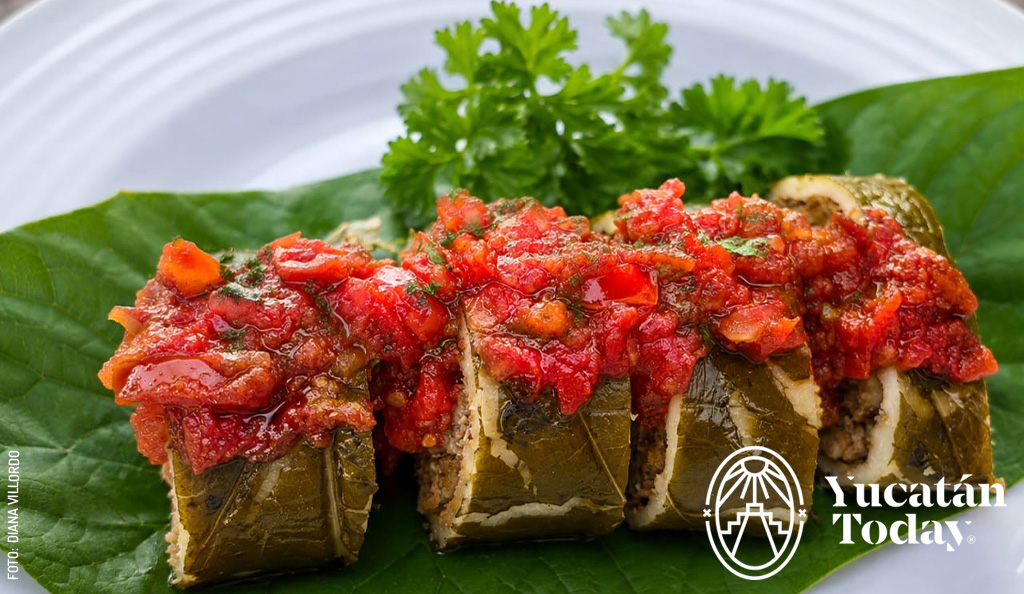
Food is an essential part of the experience. During the festivities, you’ll find cinnamon bread with almonds, perfect for dipping in hot chocolate, meat-filled hojaldrones (puff pastries), roasted lamb, kibis, xupiik, and kots’obes, the latter two being dishes unique to Espita. Recipes passed down from the days of the haciendas also survive, including turkey in mustard sauce—now prepared with chicken—and mondongo a la coronela, a traditional tripe stew.
A living tradition
Over time, the festival has grown considerably. Dances that were once held at City Hall now take place at the baseball field. Bullfights in makeshift arenas and other traditional activities continue, though they now coexist with new influences from northern México, visible, for example, in the way people dress. The busiest days are usually December 19 and 20, while the festivities continue with later events such as charlotadas (comedic bullfighting shows) and equestrian tournaments.
Yucatán Today does not promote any practice that threatens the preservation of our culture, animal welfare, or the environment. Although some towns are already moving toward animal-free celebrations, the reality is that many traditional town festivals still feature several bullfights each night.
Rituals and shared memories
Certain moments stand out on the festival calendar, such as the coronation of the Fair Queen on December 19. During the same ceremony, the Carnival Queen and Señorita Revolución are also chosen, with these titles going to the contestants who place second and third, respectively. Another highlight is “la nona”, a nighttime procession during which people sing Las Mañanitas to the Christ Child. And, as at many small-town festivals, there’s room for personal moments, too: friendships grow stronger, romances blossom, and families reunite.
At its heart, this celebration is a homecoming in many ways. It’s when the people of Espita return home, and even those who live far away maintain an emotional connection to their roots. The festival shapes identity, fosters a sense of belonging, and strengthens the bonds that hold the community together.

After the festival
When it’s all over, what remains is a shared sense of nostalgia. The town returns to its usual rhythm, but something lingers. As the town chronicler himself points out, the festival has a promising future as long as it stays true to its roots: its traditions, its traditional attire, and its essence. And for visitors, there will always be an opportunity to discover not only the fair itself, but also everything that makes this Magical Town so special.
We extend our heartfelt thanks to Espita’s town chronicler, José Antonio Gutiérrez Triay, for sharing his knowledge, memories, and time with us. This story would not have been possible without his testimony, which offers more than facts: it provides a living, personal glimpse into what “the festival” means to the people of Espita.
First published in Yucatán Today print and digital magazine no. 468, in December 2026.


Related articles


