


Yucatán is home to some of the most important archaeological sites of the Maya world: sites that allow visitors to delve into the history and legacy of one of the most fascinating civilizations of Mesoamerica. Although Chichén Itza, Dzibilchaltún, and Uxmal tend to hog travelers’ attention, the state has 18 archaeological zones (the so-called Mayan ruins) open to the public.
Five of them (Uxmal, Kabah, Sayil, Xlapak and Labná) make up the Ruta Puuc, a 40-kilometer (25-mile) route renowned for its extraordinary architecture and the rich history and culture it holds. However, few people are truly familiar with the sites it encompasses and the legacy they preserve.
The new Puuc Archaeological Museum was created with that very purpose in mind. This museum houses 251 archaeological artifacts and brings together the results of two decades of research into the Puuc region. Located just 800 meters (half a mile) from the archaeological site of Kabah, the museum takes its architectural inspiration from Uxmal's Nunnery Quadrangle. Its layout also reflects the Maya worldview, with each hall representing one of the four cardinal directions and its associated color, illustrating the way the ancient Maya understood the universe.
As soon as you step inside, you'll find an introductory space that provides the context you need to fully appreciate the museum. From there, the experience is entirely yours: there is no prescribed route, allowing you to explore the four galleries at your own pace.
Tsikbal Hall: “The Power of Man”
Cardinal Direction: West
Color: Blue
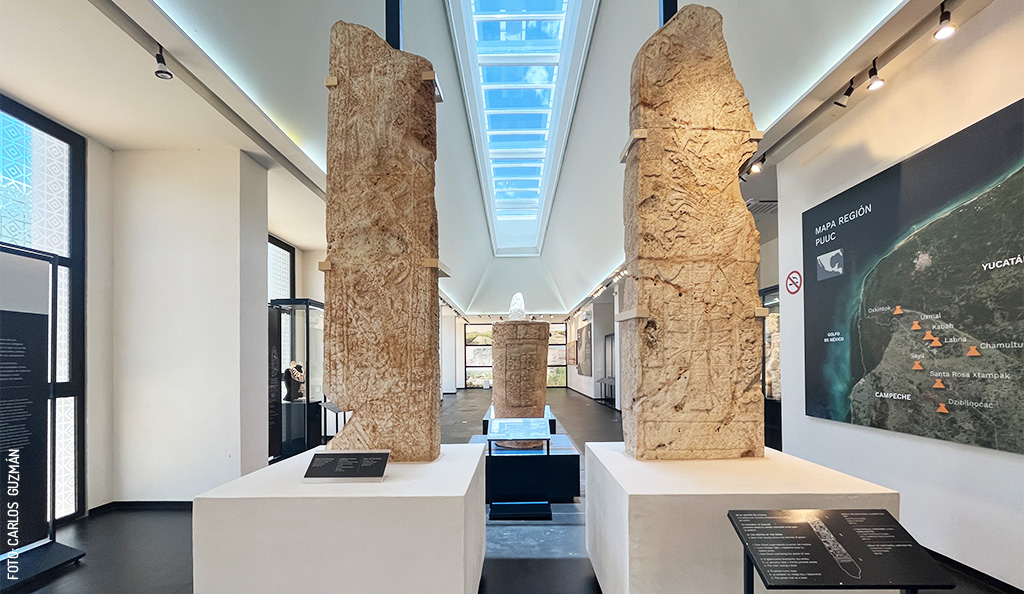
Personally, this was one of the galleries that impressed me the most. The moment you enter, you're greeted by an extraordinary collection of monumental stone stelae recovered from archaeological sites across the Puuc region. Carved with images of rulers, Maya deities, and other symbolic figures, they offer a striking glimpse into the sophistication and power of this ancient civilization.
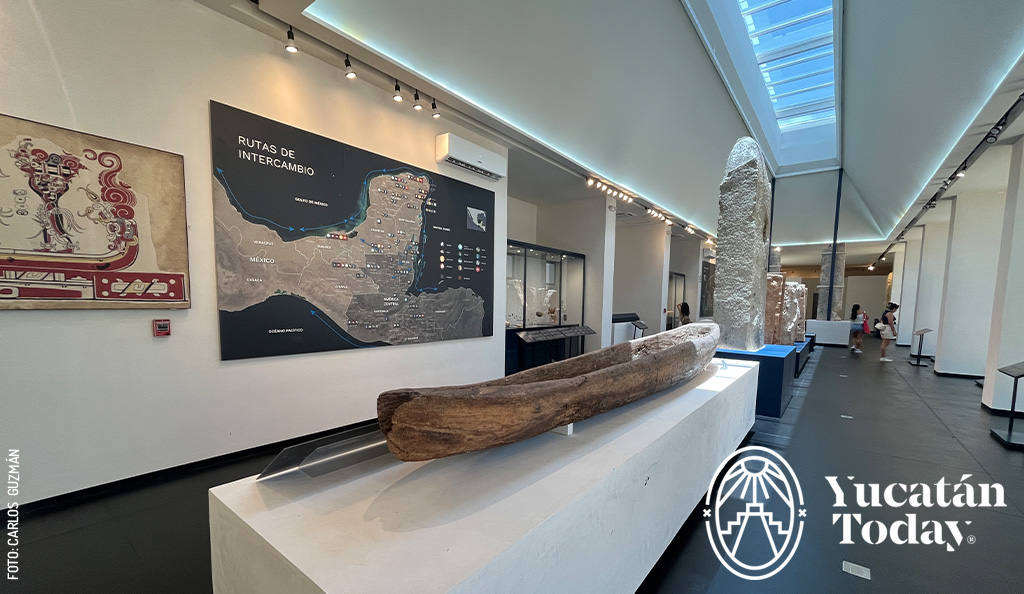
Like each of the halls in the Puuc Archaeological Museum, this space revolves around a central theme supported by several complementary topics. The Tsikbal Hall explores the political and religious authority of Maya rulers, who were regarded as the earthly representatives of the gods. Through the artifacts on display, you'll gain a deeper understanding of their theocratic system of government, the importance of social hierarchy, and the role the elite played within their cities.
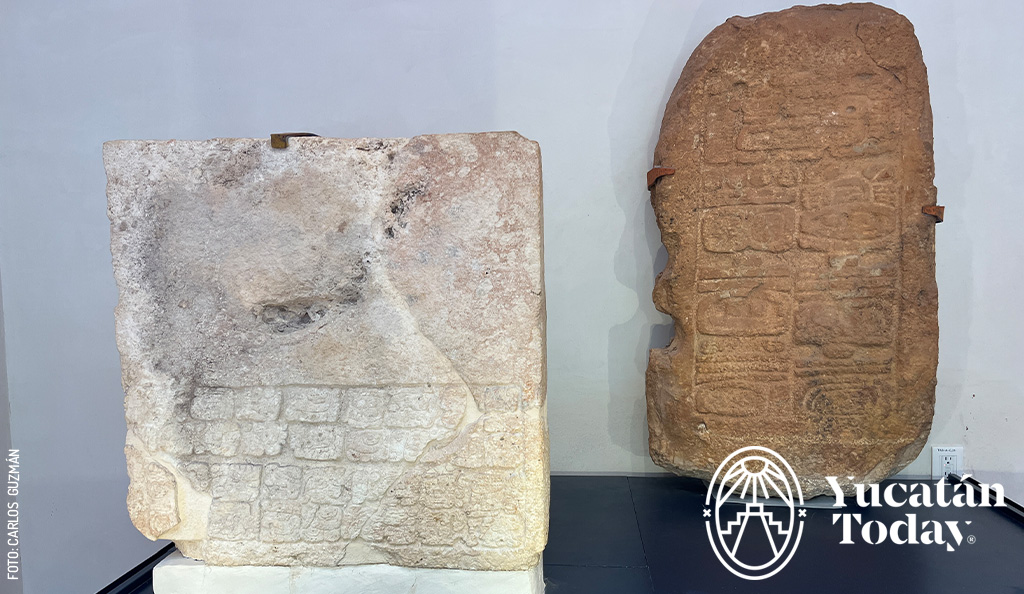
Among the gallery's highlights are two exceptional archaeological treasures. The first is Uxmal Stela 14, depicting Chan Chaak, one of the most influential rulers during the height of the Puuc civilization. The second is a remarkable pectoral ornament crafted from shell, conch, and deer bone that once belonged to a figure named Sak Nikté. We know the owner's name because it is inscribed on the bone itself. The inscription also identifies him as a pakam, an official responsible for presenting offerings to the Maya deities.
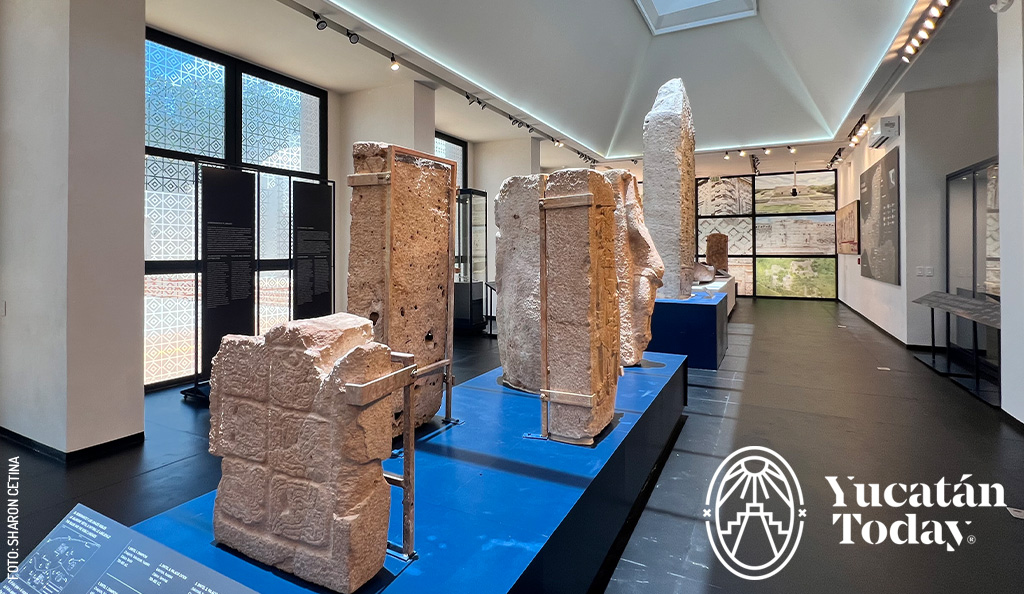
The gallery also examines trade and navigation, two activities that were fundamental to the prosperity of Maya cities. While overland routes are often the first to come to mind, maritime commerce played an even more significant role in connecting communities across the region. This story unfolds through maps of ancient trade networks and culminates with one of the gallery's most eye-catching pieces: an outstanding Maya canoe.
K'in Hall: "Measuring Time"
Cardinal Direction: East
Color: Red
This is probably the museum's most complex gallery, but also one of its most fascinating. Its central theme is the Maya concept of time and the remarkably sophisticated system they developed to measure it—one of the civilization's most extraordinary achievements.
The gallery is divided into two main sections. One explains how the Maya calendars worked, the role they played in daily life, and the way they organized the passage of time. The other showcases the archaeological artifacts that help illustrate and contextualize everything you've learned in the interpretive displays.
One of the gallery's most captivating features stands at its very center: The Fold (Curvature) of Time. This installation consists of accordion-like panels representing the Haab or Maya solar calendar. For the ancient Maya, a day was defined by the journey of the sun god K'inich Ajaw across the sky. Days were grouped into recurring cycles, and when one cycle came to an end, the count simply began again—in other words, time "folded" back onto itself. The installation's distinctive design is a visual expression of this concept.
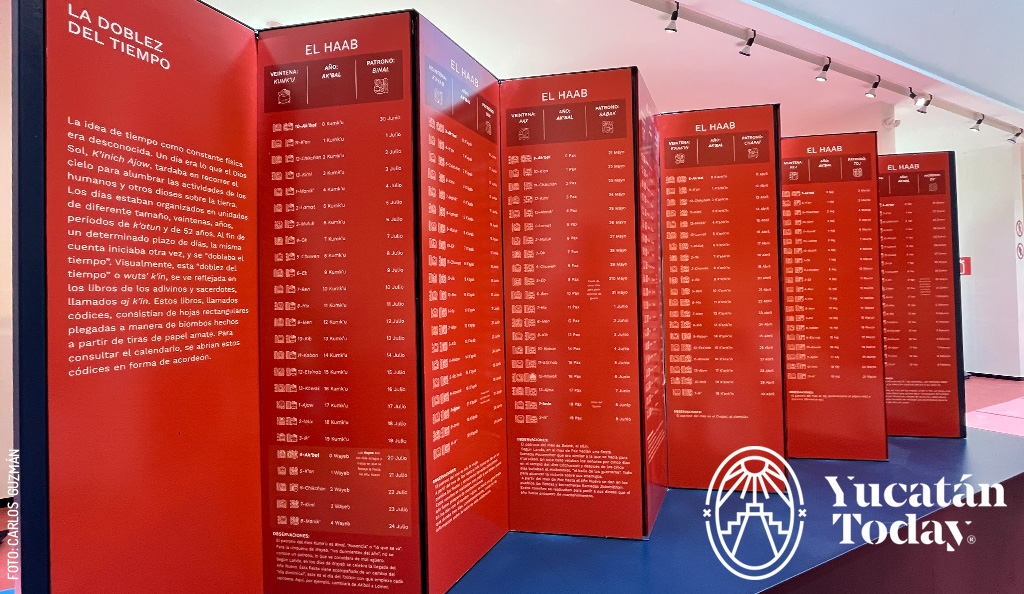
The Haab, however, was only one of the calendars the Maya used. They also relied on the Tzolk'in, the sacred calendar, sometimes described as the "oracle of destinies." It identified the deity accompanying the sun god on each day, and those divine associations were used to interpret the energy or destiny of that particular date. Some days were considered especially fortunate, while others... less so.
One of the most enjoyable parts of this gallery is that the full Tzolk'in calendar is displayed, allowing you to look up your own birthday and discover which deity presided over the day you were born, along with some of the traditional beliefs associated with people born under that sign. The interpretive section also introduces the calendar's twenty day signs—each represented by a different deity—and offers a glimpse into the numerical system developed by the ancient Maya.
The journey continues with some of the museum's most significant artifacts. Among them is an exhibit explaining the Ritual of Dedication, a ceremony in which offerings were placed within newly constructed buildings to “give them life.” For the Maya, not only living beings possessed a spirit; buildings did as well.
As a counterpart, you'll also learn about the Rituals of Abandonment. When a city or structure was no longer in use, ceremonies were performed to ceremonially "close" its life cycle. Rather than demolishing buildings outright, the Maya deliberately altered selected architectural or decorative elements as part of a deeply symbolic act. Several examples of these ritual interventions are displayed throughout the gallery.
Before leaving, take a moment to visit the space dedicated to the archaeologists whose work made the recovery, conservation, and study of these artifacts possible. It serves as a fitting tribute, reminding visitors that behind every object on display lie years of research, painstaking excavations, and an enduring commitment to preserving the legacy of Maya civilization for future generations.
Yotoch Hall:"The Maya Home"
Cardinal Direction: South
Color: Yellow
This gallery explores the yotoch or yotot—the home of the ancient Maya who inhabited the Puuc region. Here you'll learn how they chose where to build their houses and establish their communities, while gaining insight into their daily lives through the objects, tools, and customs that shaped everyday life.
One of the gallery's most fascinating topics is the ingenuity with which the Maya collected, stored, and managed water. The exhibits explain the function of different kinds of water deposits and hydraulic systems, complemented by reconstructions that make it easy to understand how these sophisticated water-management systems worked.
The gallery also examines the organization of Maya communities, known as otoch or otot, along with their economy, agricultural practices, and the exchange of products such as stingless bee honey. Visitors will also discover the different types of Maya houses (naj), the layout of domestic spaces, and the roles played by each member of the household.
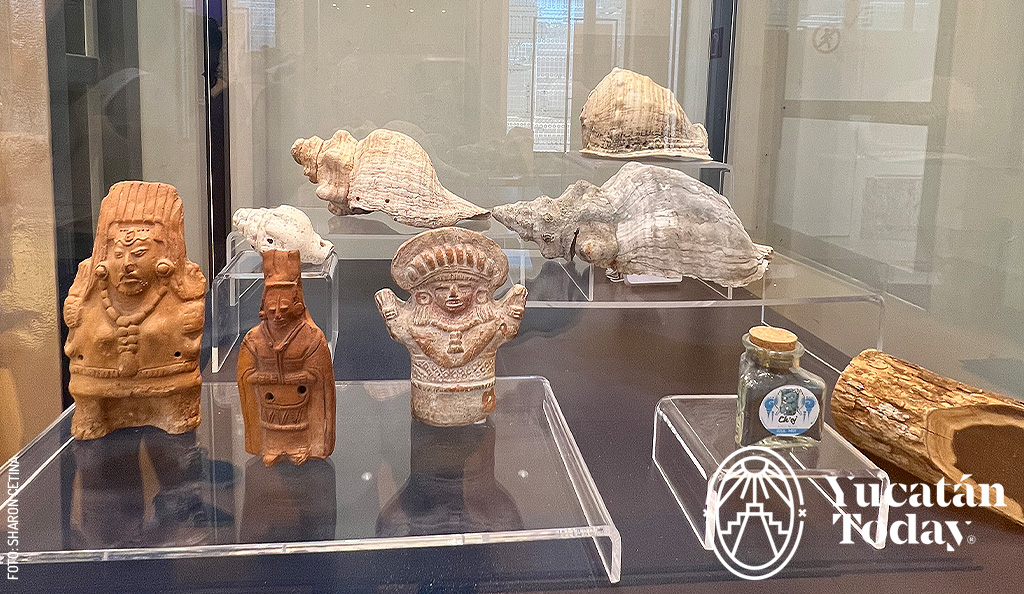
One of the least discussed—but most revealing—aspects of Maya life is how people obtained, prepared, and stored their food. To illustrate this, the gallery displays an impressive collection of ceramic vessels, including plates, pots, bowls, jars, and cooking vessels, alongside jobones—hollow wooden logs used to raise stingless bees—as well as a variety of stone tools and utensils.
The undisputed centerpiece of the gallery, however, is the reconstruction of the Royal Kitchen of Kabah, one of the archaeological discoveries that best illustrates the organization and sophistication of daily life among the Maya elite. The exhibit reveals how this remarkable space was laid out, the purpose of each area, and some of the artifacts recovered during excavations, offering an exceptional glimpse into domestic life within one of the ancient Maya world's most important cities.
Wintenaj Hall: "The House of Images"
Cardinal Direction: North
Color: White
Reaching this gallery may mean your visit is drawing to a close, but it also marks one of the museum's most memorable moments. Here you'll find some of the largest and most iconic pieces in the entire Puuc Archaeological Museum.
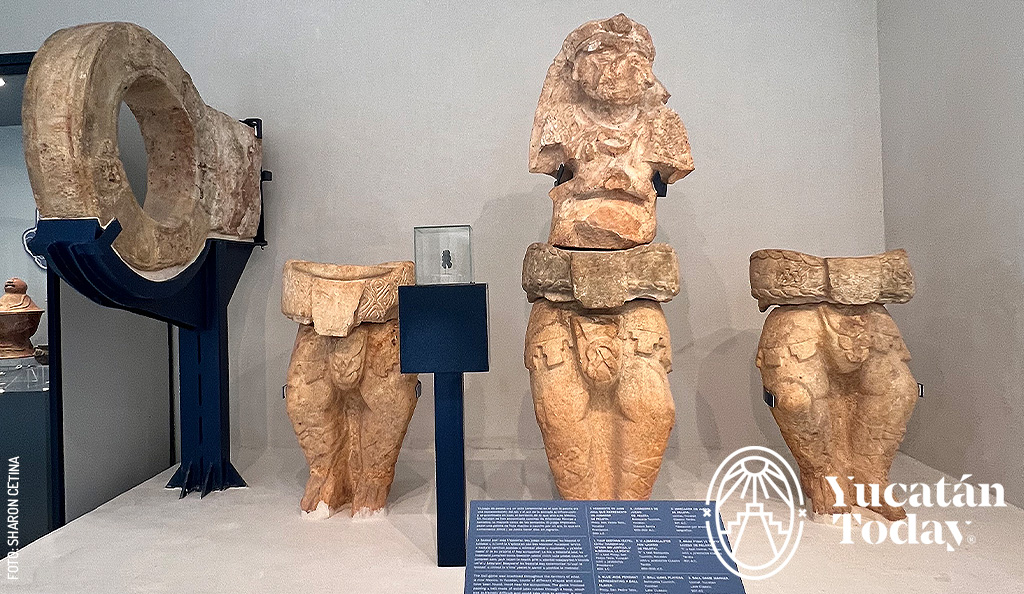
Its name comes from Wintenaj, meaning "the House of Images," a concept that, for the ancient Maya, referred to a space where thought, the gods, the ancestors, and death converged as part of a single worldview.
For that reason, the gallery is devoted to objects associated with symbolism, power, and Maya beliefs. Highlights include reproductions of Maya warrior attire, stelae, murals, figurines, tools, and original stone jambs recovered from Kabah.
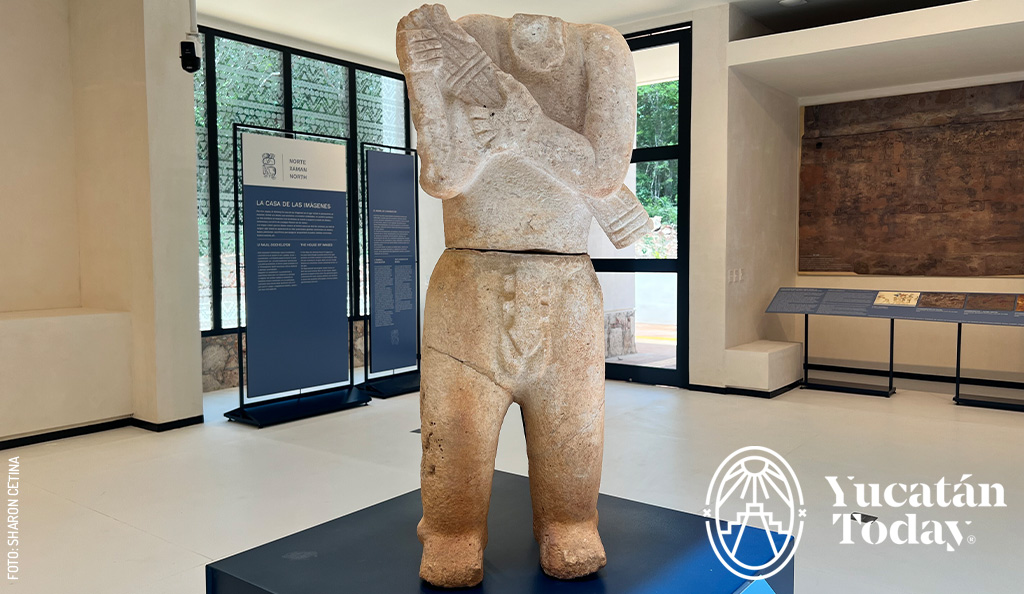
Unlike the other galleries, this space is more open, allowing visitors to move comfortably through the exhibition and appreciate each artifact at their own pace. Several interactive displays also invite hands-on exploration—from assembling a replica Maya façade mask to touching a reproduction of a stela to better appreciate its carvings, shapes, and textures. These experiences transform the visit from simple observation into active discovery.
Before leaving, be sure to stop in front of Uxmal Stela 18, a recently discovered monument. It depicts two deities associated with the underworld and is displayed in a circular arrangement that recreates the position in which it was unearthed—a presentation unique within the museum.
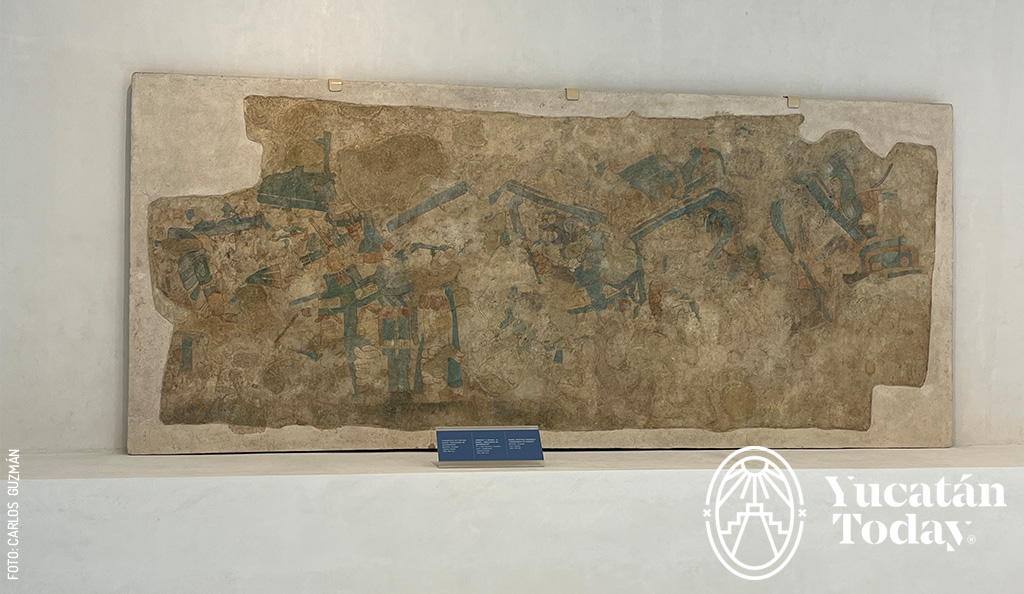
Another highlight is the replica of the Chacmultún Mural, one of the archaeological site's most important works. Its painted scenes shed light on Kabah's role during a time of warfare while showcasing the extraordinary richness of its details and the monumental scale of its composition.
Central Space: Maya Space and Time
The Center of the Universe
The Maya House
At the heart of the museum's four galleries stands an authentic Maya house, built from the ground up using the same ancestral techniques employed by the ancient Maya to construct their homes. Step inside and you'll find an interpretive panel explaining the materials and construction process, offering a fascinating look at the knowledge and engineering behind these traditional dwellings.
Its location is no coincidence. As you read above, the Puuc Archaeological Museum was designed to reflect the Maya understanding of the universe, with the house occupying the very center of the building to symbolize the home as the point from which space is organized and ordered.
And if you're the kind of visitor who enjoys uncovering hidden details, keep an eye out for a small "Easter egg." In one section of the walls, behind the interpretive panels, the builders intentionally left part of the original structure exposed. This allows visitors to see the traditional construction technique up close, revealing the woven vines and vertical wooden poles that form the framework of the house.
Museo Arqueológico del Puuc
Carr. 261, 140 km south of Mérida and 20 km southeast of Uxmal
Location: Google Maps
Tuesday to Sunday: 8 am - 5 pm
Publicado por primera vez en el sitio web de Yucatán Today en agosto del 2026.


Related articles


