


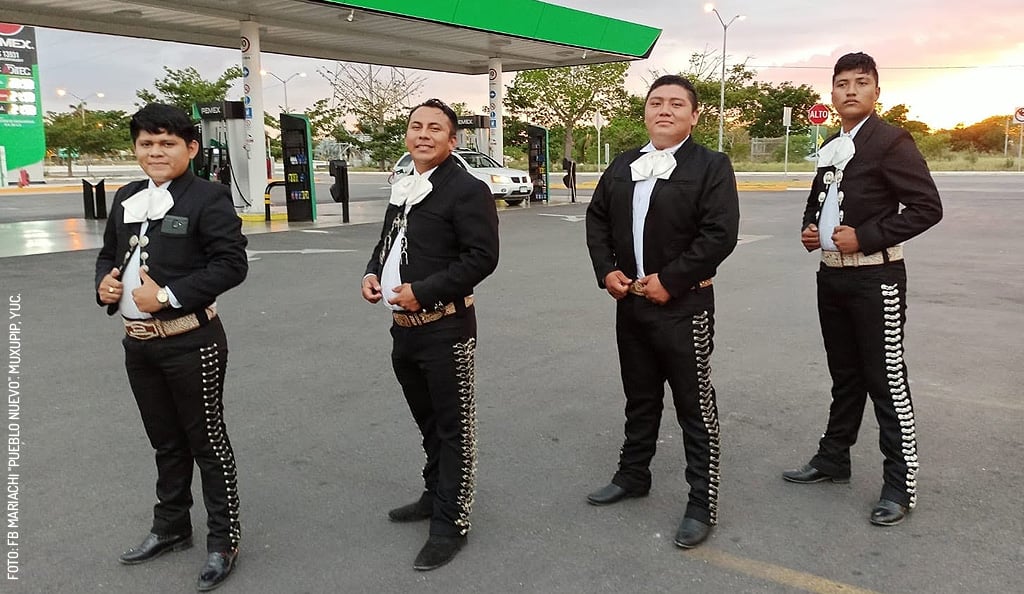
When people think of Yucatán, they often imagine the romantic melodies of trova or the lively rhythm of the jarana dance. Yet, about 30 km (19 mi) northeast of Mérida, between Motul and Tixkokob, lies a small town where another musical tradition has found a home. Here, the sounds of guitars, violins, trumpets, and vihuelas fill the air, proudly proclaiming the unmistakable spirit of mariachi.
 At the entrance to the town, an arch welcomes visitors with the words "Muxupip, Tierra del Mariachi" (Muxupip, Land of Mariachi), accompanied by the silhouette of a musician. In this community of just over 3,000 residents, generations of mariachi musicians have transformed their passion into both a livelihood and a defining part of the town's identity.
The legacy of Don Chinobel
The story of mariachi in Yucatán began more than fifty years ago with the region's pioneer of the genre: Félix Méndez, affectionately known as Don Chinobel. Originally from Muxupip, Don Chinobel regularly traveled to Mérida to perform with a mariachi ensemble made up of musicians from Jalisco and Tabasco, where he deepened his knowledge of the genre. Upon returning home, he dedicated himself to teaching local children, passing on both his skills and his love for mariachi. Among those who followed in his footsteps was Josué Martín.
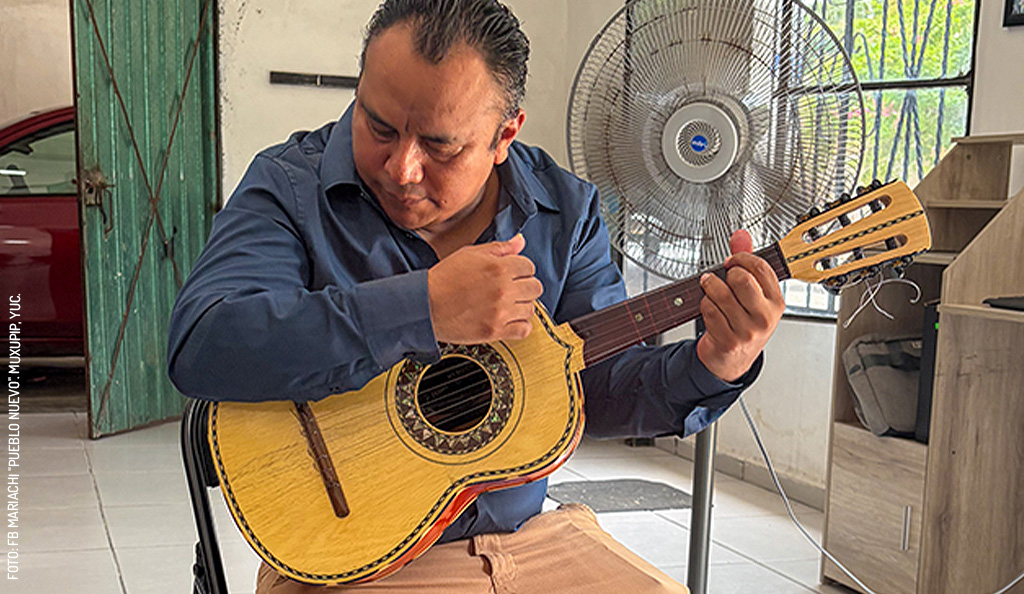
Encouraged by his parents, Josué spent countless afternoons at Don Chinobel's home learning to play the vihuela, a small, rounded guitar that is one of mariachi's signature instruments. Day after day, he practiced until his fingers moved effortlessly across the strings and he achieved the sound he had been searching for.
Years later, following his teacher's example, Josué began traveling to Mérida on weekends. In the city's Bojórquez neighborhood, Calle 59 is known as the "Street of the Mariachis," a gathering place where musicians from Tabasco, Oaxaca, Chiapas, and Muxupip meet to find work and make a living through their music.
The life of a Yucatecan mariachi
A mariachi ensemble may be made up of friends, relatives, or neighbors. Whether they perform professionally or simply out of passion, success depends on discipline: being dependable, staying prepared, and remaining available whenever a performance opportunity arises, all coordinated by the group's manager.
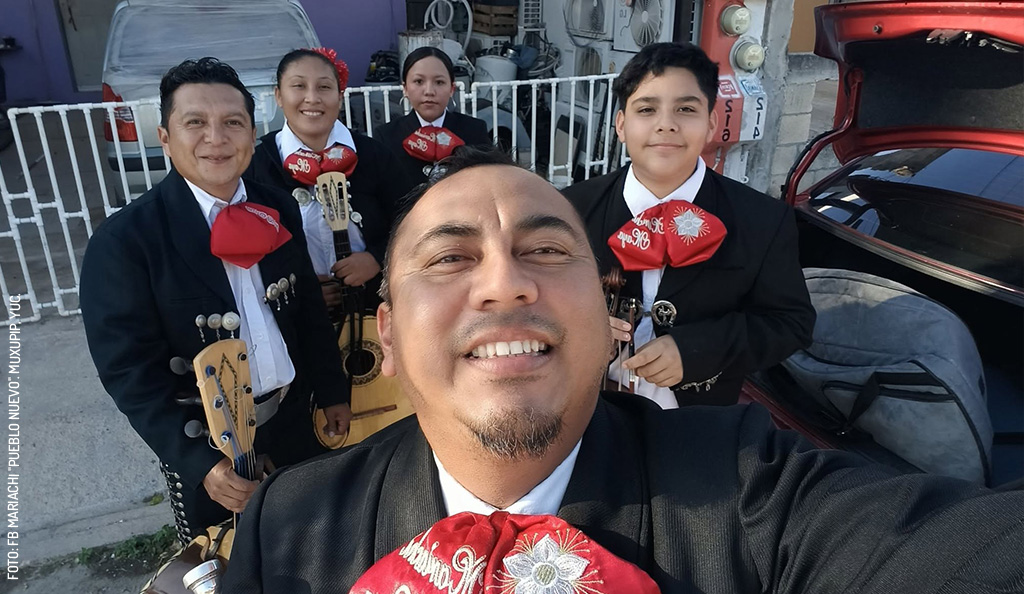
A traditional mariachi band typically includes two trumpets, a vihuela, a guitarrón (the large Mexican bass guitar), a guitar, and three violins. The larger the ensemble, the richer and more powerful the sound. Performance fees generally range between $3,000 and $5,000 pesos, depending on the number of musicians and the length of the performance (measured in songs).
If there is one thing that defines a mariachi as much as the music itself, it’s their outfit, sometimes referred to as charro suit. Elegant, meticulously decorated, and custom-made, each outfit represents one of the musician's greatest professional investments. Although Muxupip has its own local tailor specializing in these suits, every musician chooses where to have theirs made according to their personal style. Including the jacket, shirt, trousers adorned with metal ornaments, and bow tie, a complete outfit typically costs between $7,000 and $8,000 pesos.
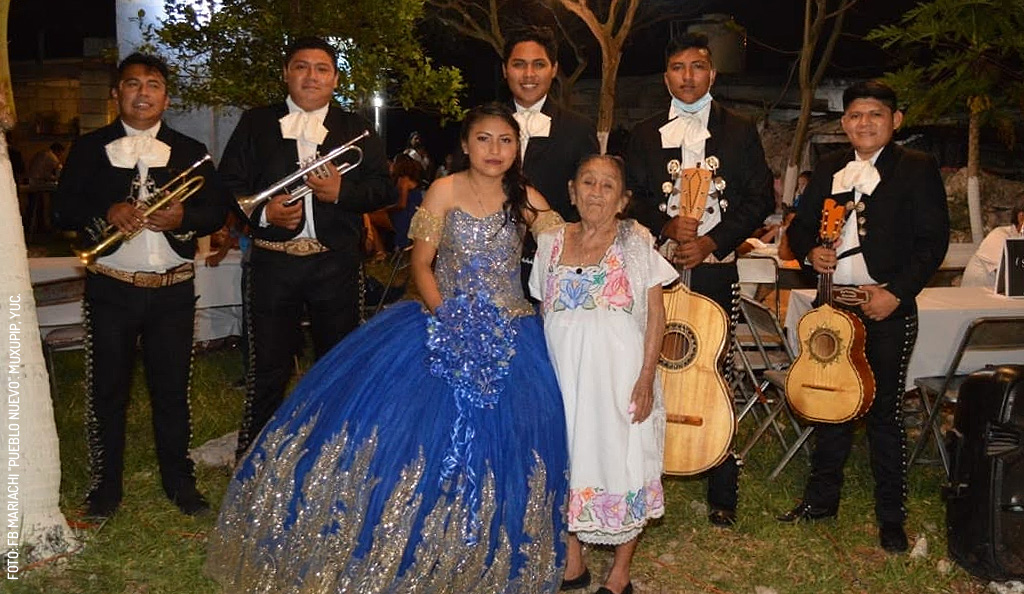
Versatility is another hallmark of mariachi music. Before every performance, musicians ask about the occasion so they can tailor their repertoire accordingly. They perform at weddings, funerals, marriage proposals, quinceañeras, and even more unusual celebrations—such as birthday parties for beloved dogs or horses. Their repertoire extends far beyond rancheras, embracing boleros, sones, banda music, pasodobles, polkas, waltzes, and even cumbias.
From musician to teacher
Driven by his passion, Josué Martín eventually founded his own ensemble, Mariachi Pueblo Nuevo Muxupip. He also pursued formal musical training, graduating from the University of the Arts of Yucatán (UNAY) in 2019.
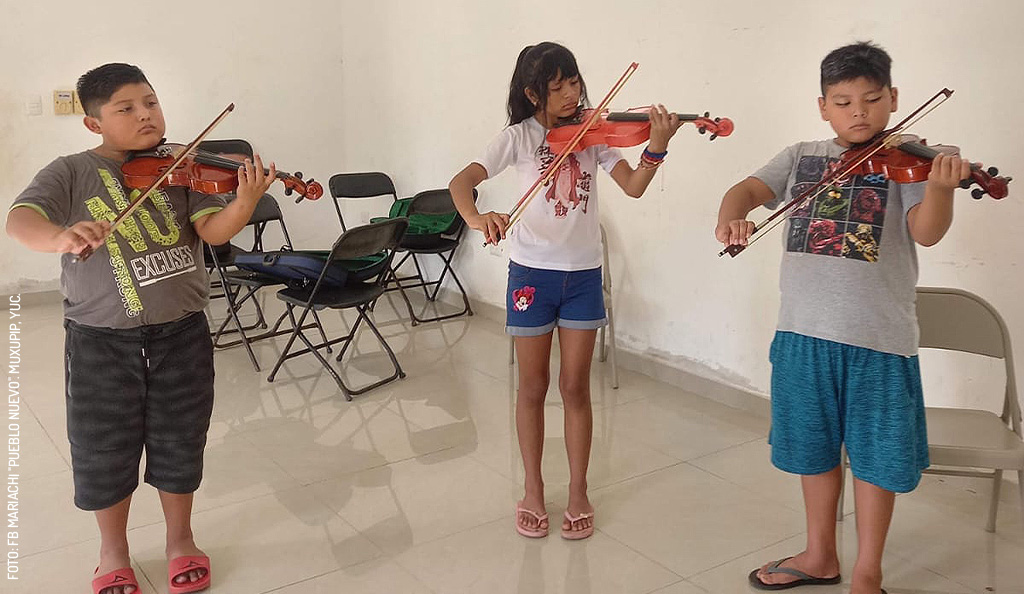
That same year, with support from Yucatán's Secretariat of Culture and the Arts (SEDECULTA), he launched a mariachi music program at Muxupip's House of Culture, where he teaches children and young adults between the ages of seven and twenty-one.
Through these classes, Josué does much more than teach students how to play an instrument. He introduces them to music theory, sight-reading, and the language of professional musicianship, hoping to inspire new generations to overcome prejudice, pursue their artistic ambitions, and discover that it is possible to build a career through music.
In Muxupip, the mariachi suit and the vihuela are worn with the same pride as the guayabera and the jarana. Mariachi has become much more than an economic opportunity or a creative outlet for local youth—it has become an essential part of the community's identity, proving that musical traditions are never confined by geography.
Mariachi Pueblo Nuevo Muxupip
Cel. 999 158 2788
First published in Yucatán Today print and digital magazine no. 465, in September 2026.


Related articles


