


Elegance is a key element of Yucatecan culture. It comes across through the big houses adorning Paseo de Montejo, through the dishes served at the best restaurants in the Península, and through the fine guayaberas worn by southeastern Mexican men.
True, guayaberas are popular in different parts of Latin America and the Caribbean; their name changes from region to region. According to a paper by the HistoryMiami Museum, in the Dominican Republic they’re known as “Chabacanas”; in Trinidad and Tobago, “Shirt-Jacs”; and in Haiti, “Guayabela.” In spite of their many versions, guayaberas are one of Yucatán’s most visible icons, as there’s no Vaquería or important event without it. 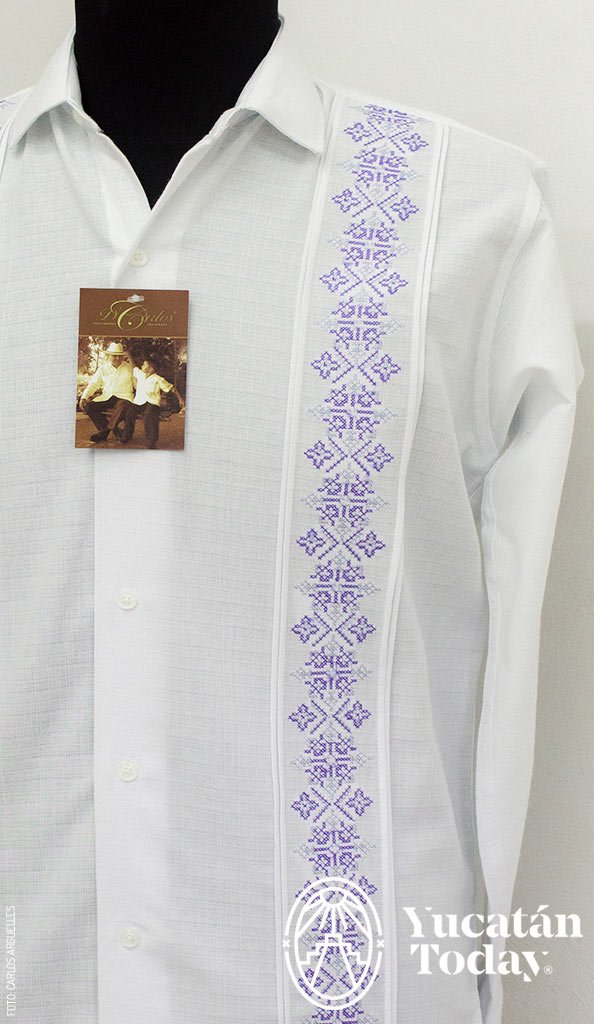
Guayaberas, as we wrote in our article on Tekit, differ from other types of men’s shirts due to their four front pockets and Alforzas: small tubular pleats that run vertically across the garment. The wiser Yucatecan grandparents preach that the more (and narrower) Alforzas there are, the finer the guayabera.
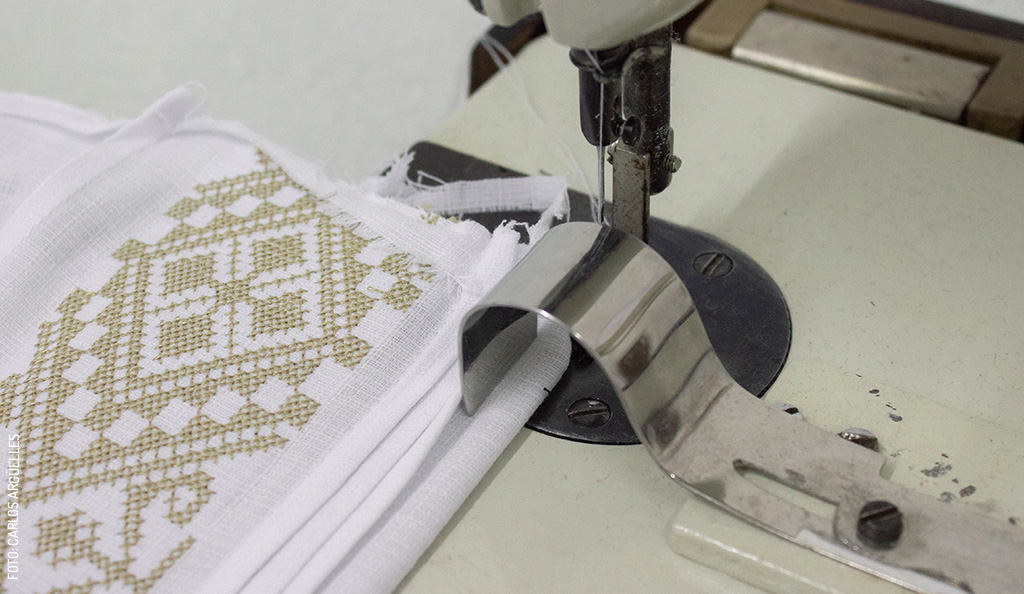
But…how are the Alforzas made? There exist different methods to create them depending on the ability and tradition of each tailor. Younger tailors and designers, who possess less equipment, often use a high and low presser foot, which is a metal accessory that can be added to any sewing machine. The high and low presser feet were originally created to sew hems on thick fabrics, but Yucatecos, clever as always, realized that they could use them to make Alforzas faster and more easily. Nonetheless, the most traditional way to create Alforzas is using “Alforzadoras.” What are those? Industrial machines for straight stitches, modified with metal sheets and a mechanic arm for the fabric. When working with this machine, tailors use the metallic arm to hold the fabric between the metal sheets to create folds that, after being sewn, become Alforzas. This mechanism, used properly, delivers the finest Alforzas on the market, with a very sophisticated look.
In recent years, bigger businesses have developed automatic sewing methods to create Alforzas. Even so, tradition isn’t dying. Just visit any town to find old pedal-powered machines to make Alforzas. They’re still used today by men and women to create guayaberas of all colors and sizes, maintaining Yucatán’s textile legacy alive.
We would like to thank the Wortex family business for letting us into their workshop to take pictures of their machinery.
First published in Yucatán Today print and digital magazine no. 414, in July 2022.
Photography by Carlos Argüelles for its use in Yucatán Today.


Related articles


