


Maní is one of the most iconic Pueblos Mágicos (Magical Towns) in Yucatán, located about 90 km (56 mi) southeast of Mérida. It is a cornerstone of cultural tourism in México, where history, legends, and craftsmanship turn every visit into a unique journey, spiritual and otherwise. Its Maya name has been given quite a poetic meaning: “the place where everything happened.”
Discover Maní: Click here to find out more about everything this Magical Town has to offer.
Lent and Holy Week
For Christians of many denominations, Lent is a profound period of reflection, marked by prayer, and, for some, even fasting, in preparation for the Holy Week—the time leading up to the crucifixion of Jesus. This period culminates with Easter, perhaps the most important date on the Christian calendar.
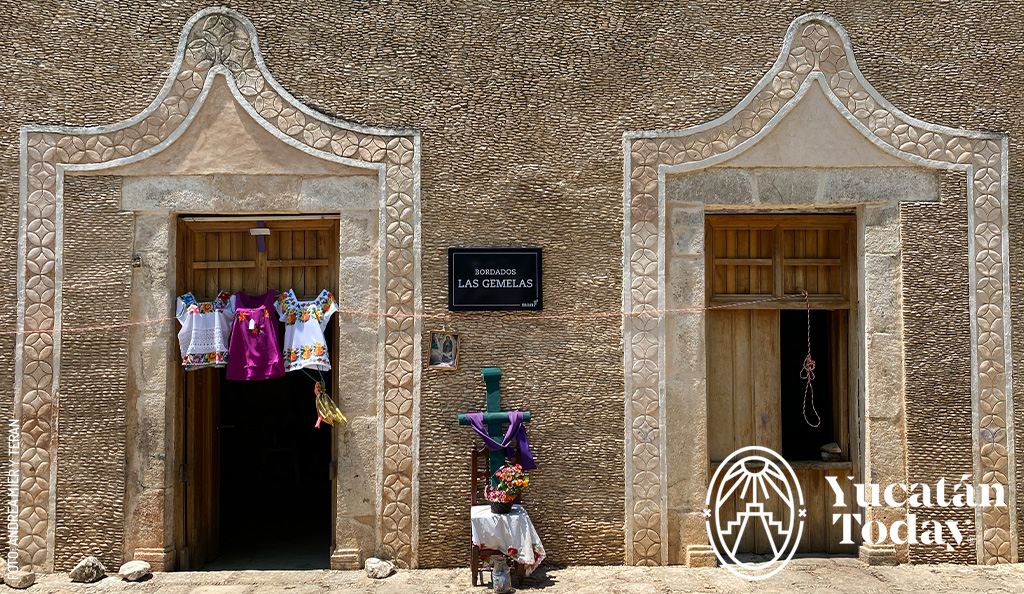
This is especially visible in Maní. Here, when Lent begins with Ash Wednesday, families place altars outside their homes adorned with crucifixes, purple and white linens, fresh flowers, and candles.
In 1957, writer Ermilo Abreu Gómez captured the intensity of these days in a way that still resonates with the current practices in Maya villages: “During Holy Week, no lies or bad words can be spoken, for everything offends Our Lord. The devils are loose, and the angels are hidden. The gates of heaven are closed, and those of hell are open.”
![Mani-convento-Kuuch-Kruus-cruz-semana-santa-by-Leobardo-Cox-Tec]() The Kuuch Kruus: Identity and penance
The Kuuch Kruus: Identity and penance
 The
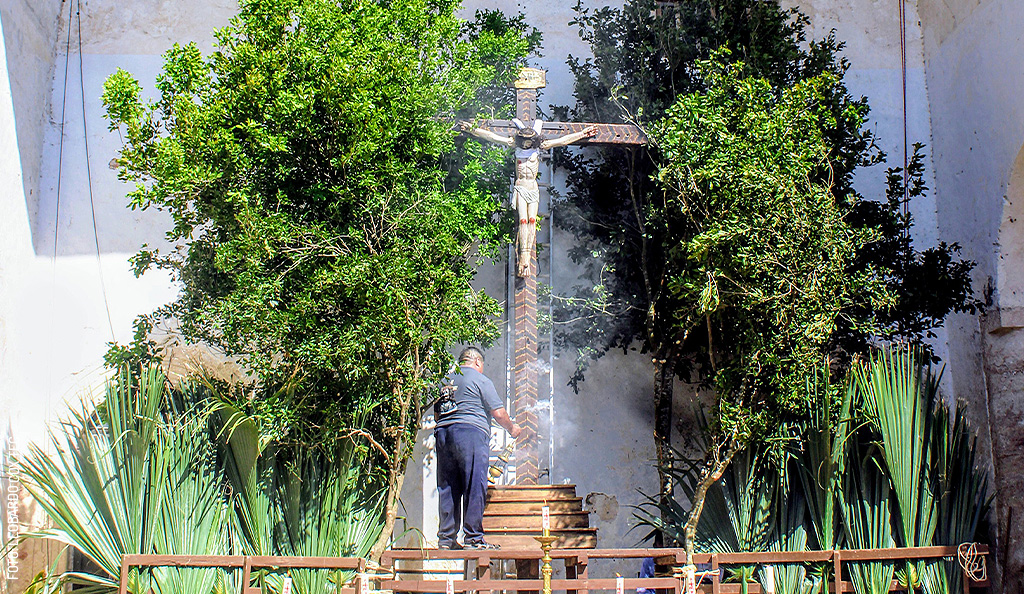
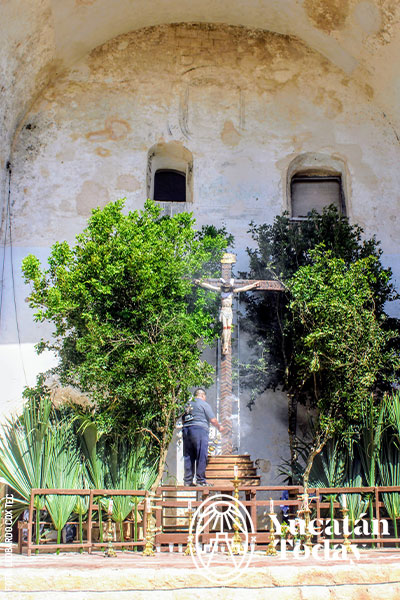
The On Good Friday, the community commemorates the death of Jesus through rituals unlike any other. In the morning, the open chapel next to the Church of Saint Michael is transformed: a massive wooden cross is erected, decorated with local branches and huano palms to represent Mount Calvary. In this moment, the space shifts from strictly Christian to deeply Maya.
The most striking part of the ceremony is the Kuuch Kruus, a hybrid name combining the Maya word kuuch (to carry) and the Mayanization of cruz, the Spanish word for "cross." Twelve young men, acting as public penitents representing the apostles (numo’ob), are summoned for this tradition. They walk barefoot and shirtless, their faces covered by red bandanas. With wrists and ankles bound by henequén ropes, they heave a 10-meter-long (32 ft), 90-kilo (198 lb) cross onto their shoulders, literally carrying the weight of their sins as they march.
The Procession of Maní
Community elders lead the apostles through the main streets of Maní. At every corner, a Station of the Cross is read while the ritual "rattle of darkness" (tak’ach or bojolche’) echoes through the air. In this somber moment, the priest scourges the bare backs of the penitents.
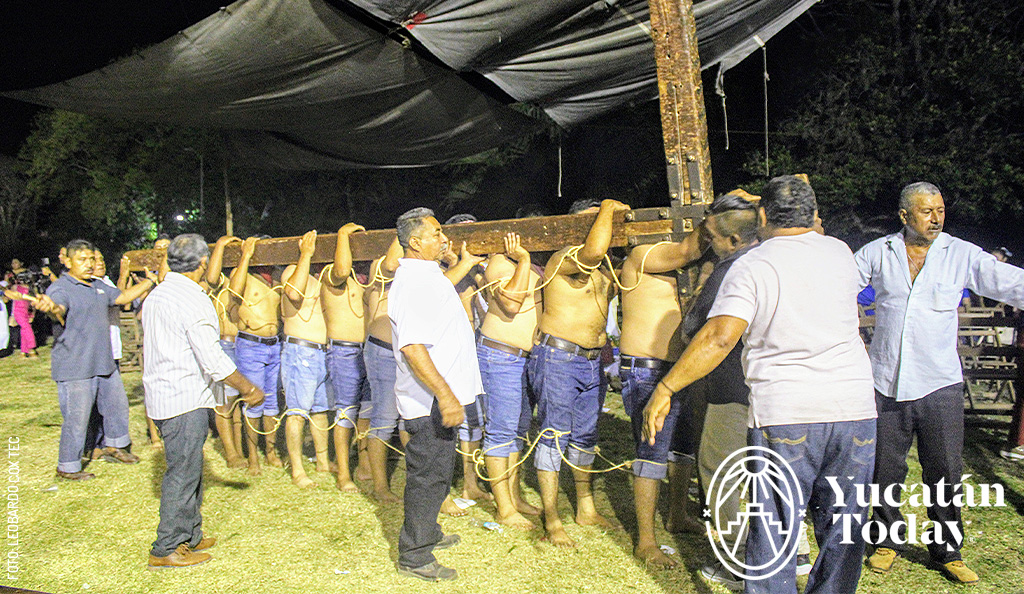
The cross-bearers are forbidden from speaking and accept their atonement with resolve, as this physical expiation is the very purpose of the ritual. In recent years, a second group, comprised of teenagers, carries a smaller cross, learning the weight of their heritage from a young age.
While the exact origins of the Kuuch Kruus are debated, the ritual undoubtedly echoes the colonial era, when the Maya people faced public punishment for honoring their ancestral deities. Today, the custom has been reclaimed as a symbol of identity, and is part of the identity of the Maya people of Maní.
Editor’s Note: If you visit Maní during Holy Week and wish to approach the procession, remember that this isn’t an artistic performance, but a living tradition and an act of profound devotion for those involved. Please be respectful at all times.
First published in Yucatán Today print and digital magazine no. 459, in marzo 2026.



Related articles


