

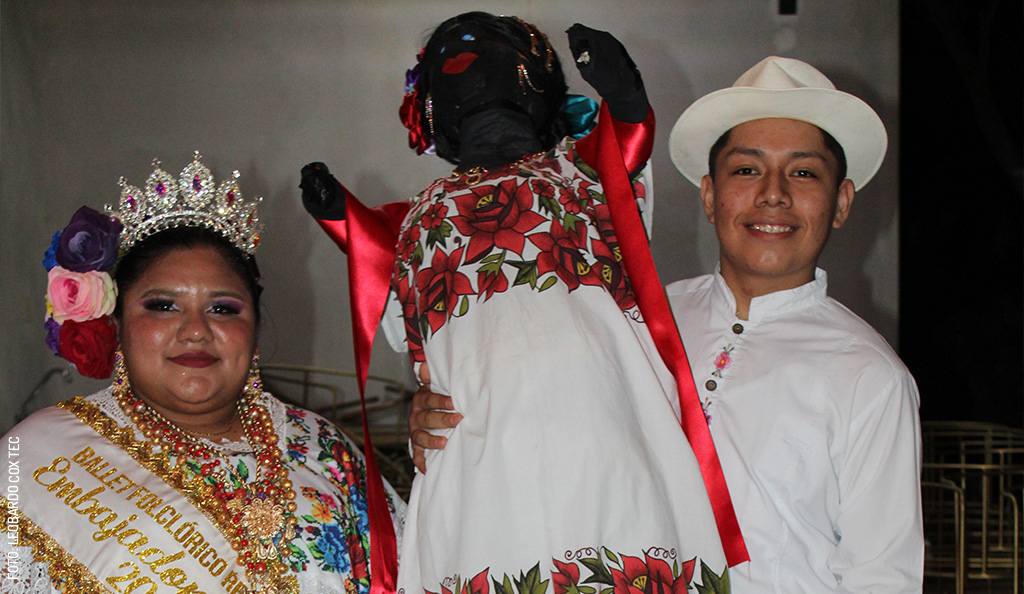
Hunucmá is a small city located just a few kilometers from Mérida, where the streets breathe tranquility and the warmth of its people. Its history holds hidden secrets, one of the most profound being an Afro-descendant heritage that manifests in the features of its inhabitants and in one of its most colorful festivities: the dance and burning of La Boxita.
![Boxita-de-Hunucma-mestiza-2-by-Leobardo-Cox-Tec]() Who is La Boxita?
Who is La Boxita?
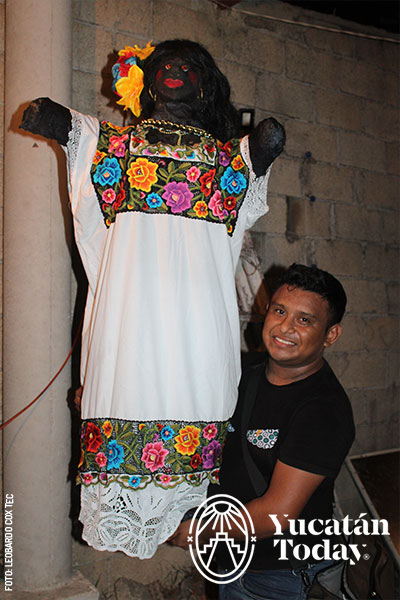 Who is La Boxita?
During the month of June, as part of the Corpus Christi Catholic festivities, a local family constructs a figure or doll out of wood and paper. This effigy represents a woman with African phenotypical traits but a Maya identity, as she is dressed in both a traditional hipil and a ruffled skirt. The figure is filled with firecrackers and explosives to be incinerated in front of the church on Corpus Sunday. Her name, "La Boxita," is a Hispanicization of the Maya word boox (black), essentially meaning "the little black woman."
There are many versions of her origin. The most widely accepted story tells of Father Lorenzo Mateo Caldera, who had an enslaved Afro-descendant woman named Antonina as his lover. Upon his death, he left her all his property. Outraged and envious, the townspeople created an effigy of Antonina and burned it publicly. Other legends suggest the figure represents a "witch" from another land, and burning her in front of the church served as a ritual of protection.
The Dance of La Boxita
On the Saturday before the burning, La Boxita parades through the streets of Hunucmá, visiting her "godmothers"—the women who donated materials for her creation. At night, jarana dancers gather at the main godmother's house to escort the figure to the church. This procession is a complete ritual dance, performed to establish spiritual bonds through movement, accompanied by a traditional charanga jaranera band.
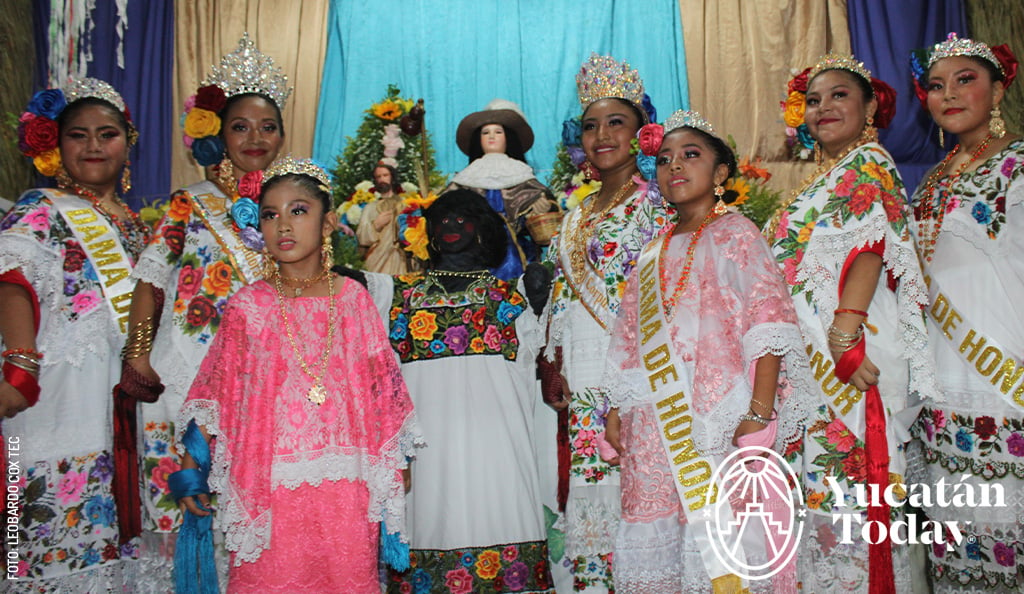
The townspeople receive the dancers and La Boxita with great enthusiasm. Many stop to take photos, while others ask her to protect their families or to take their illnesses and sorrows with her when she is eventually burned. After a solemn procession with the Blessed Sacrament, the dancers carry the figure back to the main godmother’s house, where a free public dance with tropical music lasts all night long.
![Boxita-de-Hunucma-mestiza-quema-by-Leobardo-Cox-Tec]() The Burning: A Symbol of Purification
The Burning: A Symbol of Purification
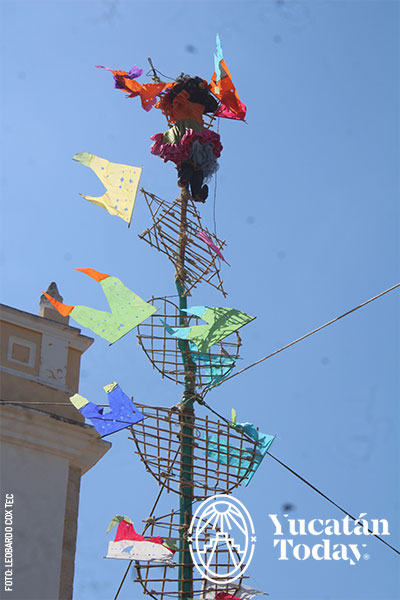 The Burning: A Symbol of Purification
At 7 am on Sunday, local men gather to lift an 8-meter wooden pole decorated with paper flags and esoteric symbols, with La Boxita perched at the very top. Following a mass and a religious procession, the figure is set ablaze, representing the destruction of evil. Hundreds of people gather to witness this ritual, which is one of the most anticipated moments for the residents of Hunucmá. Once the fire dies down, organizers immediately begin preparing for the following year.
A deeper analysis of this tradition might reveal further information to confirm it to be a powerful piece of Afro-Yucatecan heritage—a living testament to the diverse roots that shape the identity of the Yucatán Peninsula. I, a proud Afro-Maya descendant myself, am convinced it is.
First published in Yucatán Today website in May 2026.



Related articles


