


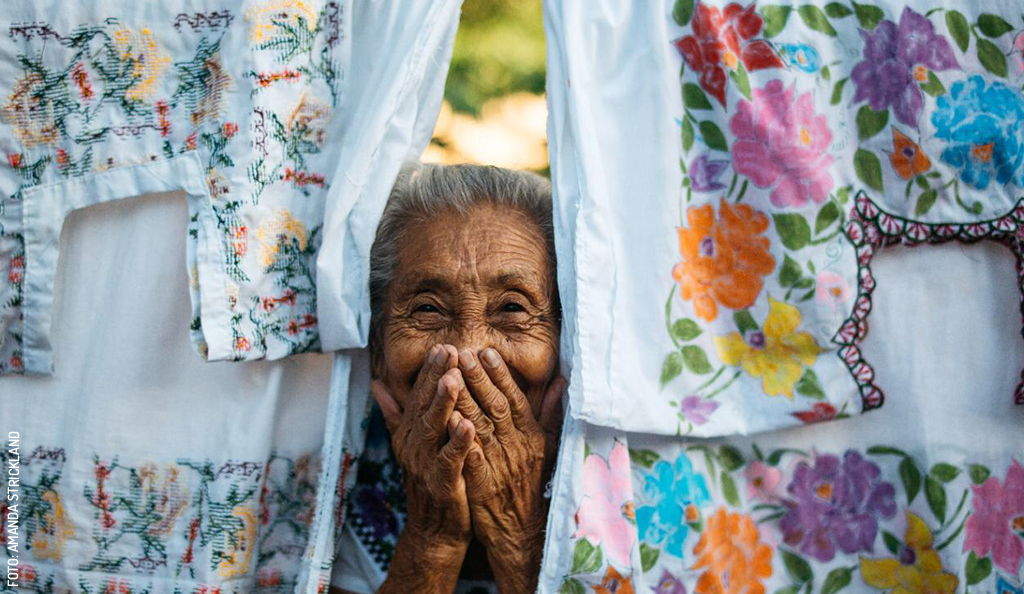
Bacila Tzek Uc
(May 20, 1928 – December 10, 2025)
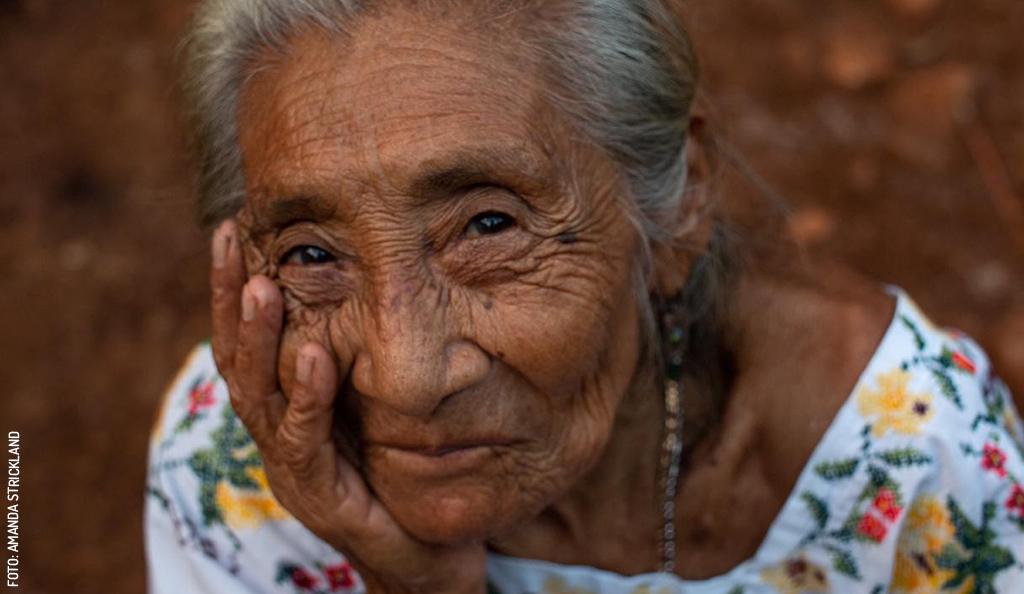
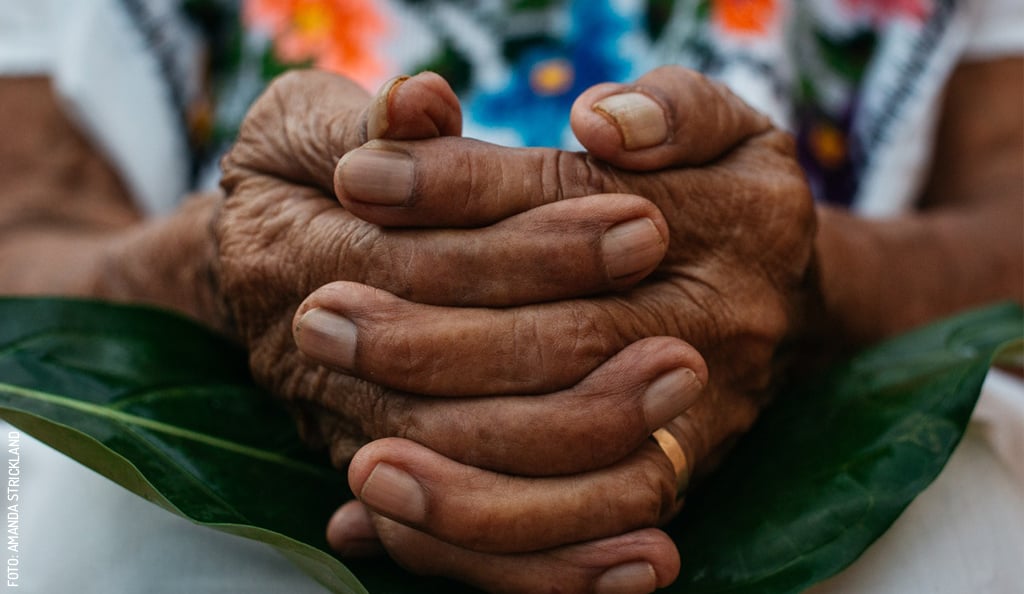
Her strong, ridged hands—unforgettable to all those she touched—acted as a gateway between worlds, easing mothers into calm throughout pregnancy and into delivery. Maya midwife, herbalist, and certified chingona (badass), Bacila Tzek Uc delivered at least 2,000 babies over six decades—never losing a mother or child. She received her last baby in November of 2024, and she gave her last prenatal massage just two days before her death.
Maybe it's not sight or sound that connects us most deeply to our ancestors, but the softer senses—especially touch, in the case of Bacila. She carried knowledge in her hands that predates written language, passed down through bodies, not books. When she touched a pregnant woman's belly, she was performing a ritual unchanged for generations. Her hands knew things that language struggles to embody.
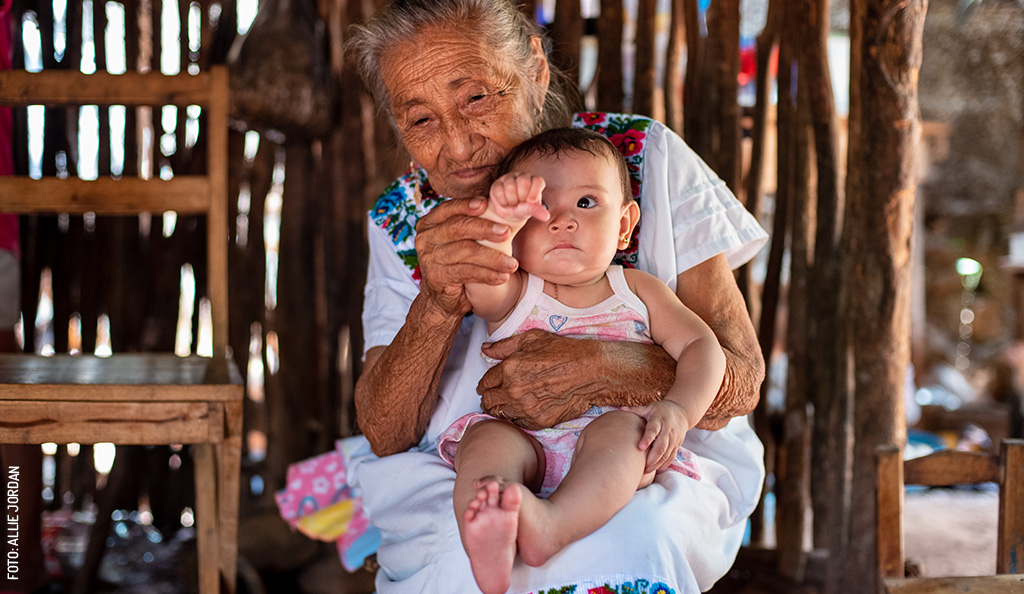 Bacila was born in Dzán, Yucatán on May 20, 1928. The cyclical rhythm of sun-and-moon-rises-and-sets defined her early childhood—a hazy time, caused by a locust plague that wiped out her family's corn crop, rendering them yield-less. They were forced into the wilderness, hunting and gathering to survive, amidst the grief of losing multiple siblings. She wore trees for shoes.
The forest transformed from a blur, foggy and cloudy in her memory, into a catalog of medicines. She used a machete to hack into the bark of trees for ingredients. She mixed remedies. She wove huano into hats and baskets. Although she didn't get the opportunity to pursue a traditional education, the weather, plants, and the cycles of sun and moon became her teachers. Eventually, the family settled in Yaxhachén, Oxkutzcab, where she would reside until her death.
At 15, she "ran away" with Laureano May Us—on her way to fetch water from the well, she left the jug on the street and went home with him. The union followed the confines of cultural machismo. Her husband was forceful, unhappy when she needed to leave the house for work, but Bacila endured with a faith that would define her character. She had 12 children and outlived six of them, as well as her husband, who died in 1995.
At 30, she was called to midwifery, following in the footsteps of both her mother and father. Over more than 65 years, she handled emergencies other midwives couldn't—umbilical cords wrapped around necks, twins, complicated deliveries.
The most important thing to take away from her work is the practice of the prenatal massage, which she performed weekly. In each massage, she would empower the woman by teaching her how to feel the way that the baby is positioned inside of her. The key to a natural birth is to ensure that the baby is positioned correctly throughout the pregnancy, so when the time comes, the baby is ready.
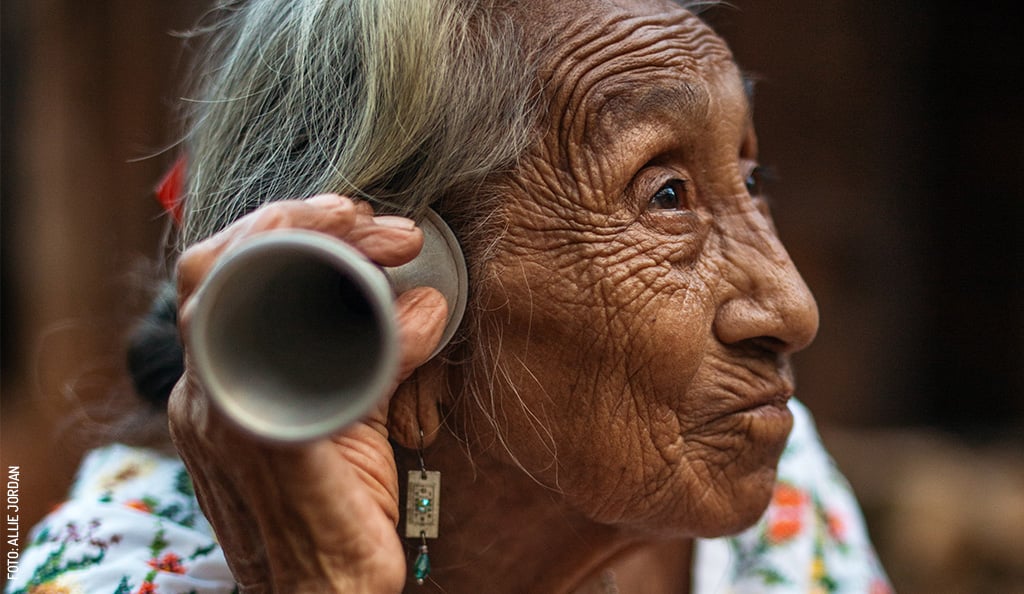 But Bacila's legacy extends beyond the births she attended. Despite life’s hardships, her resilient spirit was playful, hilarious, and lighthearted. She taught those around her to let go of anger and stress, to plant love instead. Her resilience was not grim survival but joyful persistence—a woman who, at 97, was still making plans.
On Monday, December 8, she and her son ate mondongo—her favorite—at the Oxkutzcab market, on her way to renew her ID at the age of 97. On Sunday, though tired, she had given a prenatal massage. She had another on the books for the following week. She wasn't sick. She didn't suffer. It had been a year of abundant rains and a successful harvest—plenty all around her.
On December 10, 2025, the hot, masculine, Yucatecan sun set, and Mother Moon rose in the East. A waning gibbous moon—symbolic of Ixchel, the ancient Maya goddess of midwifery, in her mature form—hovered low in the sky. Bacila died at 7:30 pm in the cocoon of her pink nylon hammock in Yaxhachén, holding hands with her dear friend and daughter-in-law, Veronica Dzul May. Veronica cried as she rubbed Bacila's hand, telling her it was okay to let go. So she did, chanting "Gracias a Dios" (thank you, God), as the moon, also burning out, shined above her.
 In the last decade of her life, Bacila became an icon of feminine mysticism, inspiring women and men from all over México and beyond to make pilgrimages to her, to create artworks of her, to acknowledge her ancestral wisdom with humble awe. Her story is preserved in the documentary Jats'uts Meyah—"beautiful labor." She told me clearly: "I never had the opportunity to learn to read and write, but you did. Now it's up to you to save my knowledge." I thought about it and realized that it would be much better if she told it herself. And so the film was born.
For more than a decade, I've had the most dignified honor of living up to her challenge. She placed a responsibility on all of us: tell my story.
There is a border between life and death, just as there is a border between north and south. Both hold the promise of something beyond and the grief of those left behind. Calixto Us May, her great-grandson, unable to cross back into México, urged me by phone to make the trip he couldn't take—to say goodbye to la abuela. The migrant's path and the soul's journey share the same symbol: the white dove, the one who always returns.
Her name and her story have been embroidered deep into the heart of humankind, just like she wanted.
Rest easy, mamita. Ya tso' ki'. We will keep our eye out for the white dove.
Photos by Allie Jordan and Amanda Strickland
Jats’uts Meyah Documentary: Jats'uts Meyah (2020) | Maya Midwife Eternal


Related articles


