


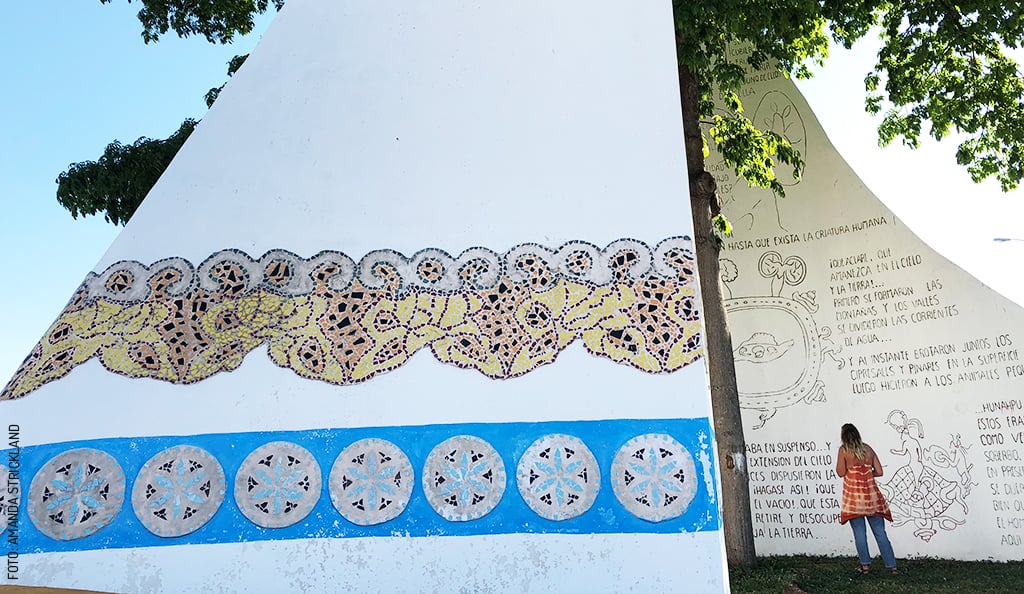
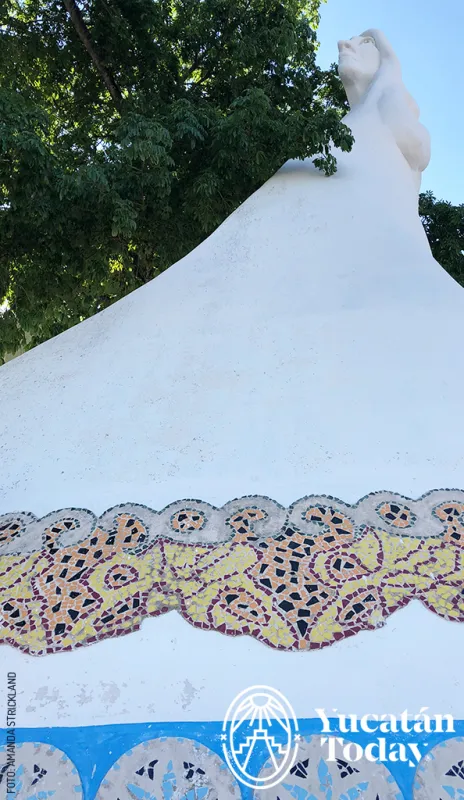
There aren’t many Yucatecan legends as well-known as the one involving la Xtabay (pronounced shh-ta-BYE). La Xtabay is a beautiful woman with long dark hair, dressed in white. Akin to a mermaid, the Xtabay floats between the spiky thorns of a ceiba grove. There, she brushes her hair and waits for drunk, lost men, who find themselves stumbling through the night.
In the man’s altered state, she seduces him, bringing him to endure curious methods of torture, sometimes ending in death: she’s said to sometimes throw her victims into water wells, into the underworld; some others, she lures into the thorns of the ceiba tree. Still today, men throughout Yucatán report encounters with the mystifying Xtabay, who comes hunting during times of delusion and blurry vision.
![Xtabay-3]() The origin of the Yucatecan legend of la Xtabay
The origin of the Yucatecan legend of la Xtabay
 The origin of the Yucatecan legend of la Xtabay
The origin of la Xtabay comes from the Maya legend of two sisters: Xkeban y Utz-Colel. While equally attractive, their personalities could not differ more. Xkeban was doting and loving. She was known for her humility and generosity, as she would give away her own belongings to stray animals and homeless people; however, because she had many lovers, she was considered a sinner.
Utz-Colel, on the other hand, was a woman of rigid purity, considered upright by social standards. She was as beautiful as her sister, but felt morally superior to her, by far.
One day, a sweet, delicious perfume filled the air of the entire pueblo: Xkeban had died. A small group of villagers who knew her kindness buried her in a modest grave; in a matter of hours, from it had grown fragrant flowers, including the flower of xtabentún, which is used to make an alcoholic drink that’s traditional to this day.
Utz-Colel was surprised by this beauty that the death of her sister left behind. Haughtily, she thought that her own death would be more celebrated, and the flowers even more exquisite. When she died, the entire pueblo went to her funeral, but there was a wicked stench in the air, and from her grave grew a spiky, cactus plant called “tzacam.” Unhappy with this, Utz-Colel made a deal with death, so she was allowed to come back to the land of the living as Xtabay, dedicated to seduce and punish wayward men.
![Xtabay-1]() Xtabay, a mestizo legend
Xtabay, a mestizo legend
 Xtabay, a mestizo legend
Local high school teacher Edgar Pérez Aguilar explained to me that the legend was modified by the priests of the colonization in order to create order. Using the original Maya symbols, the priests manipulated the legends in order to promote the agenda of the colonization. For example, in this legend, the sacred ceiba tree takes on a shade of darkness, a symbol of mysterious evil. By transforming the connotation of the tree from good to bad, the colonizers could promote Christianity as salvation. As a result, the legend is considered “mestizo,” a combination of indigenous and Spanish culture.
La Xtabay roundabout in Mérida
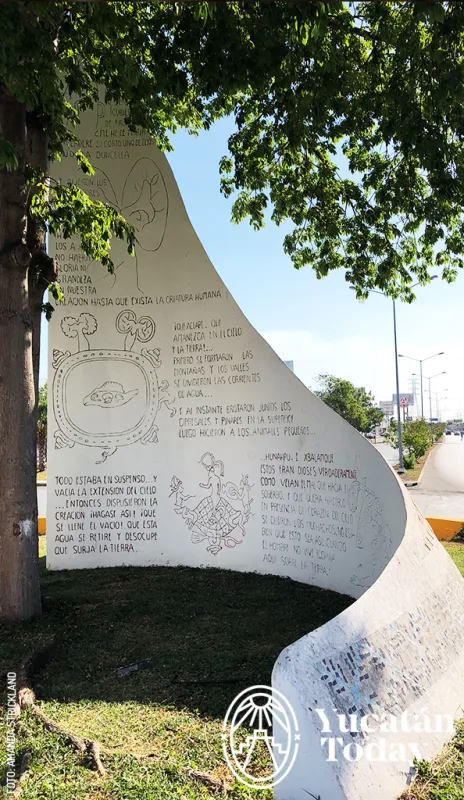
Mérida boasts a monument that honors the legend of La Xtabay: a huge statue where she is wrapped around a majestic ceiba tree. You can see it yourself at the intersection of avenues Elvia Carrillo Puerto and Rosa Torre González with Polígono 108’s Calle 20. If you venture inside, you’ll find inscriptions alluding to the centuries-old legend.
Editorial and Photography by Amanda Strickland for use in Yucatán Today


Related articles


