


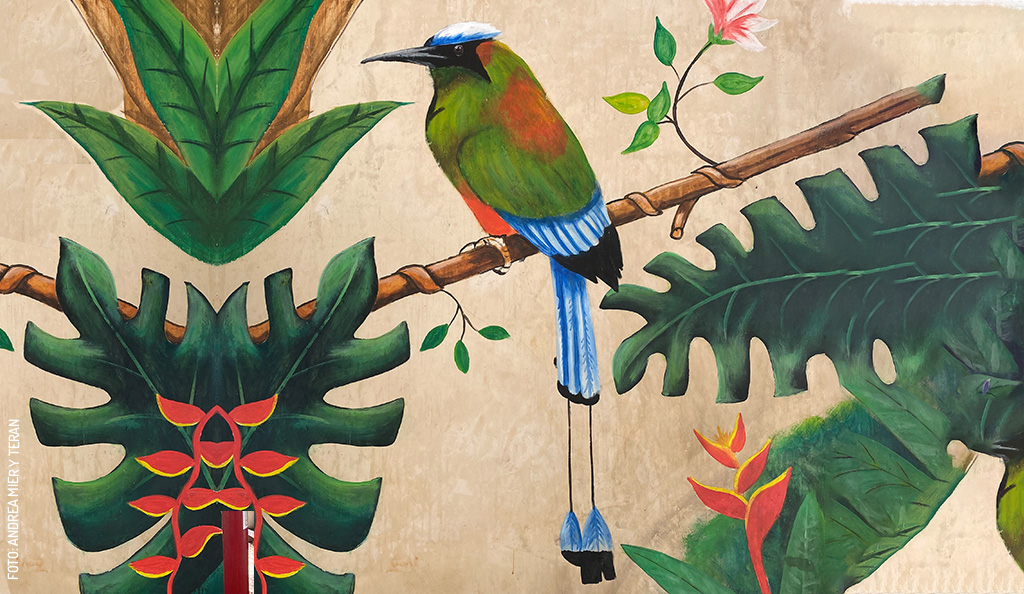
Of the more than 500 bird species that inhabit Yucatán, one of the most striking, legendary, and easily recognizable is the motmot. In Spanish, the motmot is called “pájaro reloj” or “clock bird”, but here in Yucatán it is widely known by its Maya name, toh. Its breathtaking looks and long tails are so stunning that they’re featured in a Maya legend (or fable, rather) warning us of the dangers of arrogance.
An unforgettable encounter
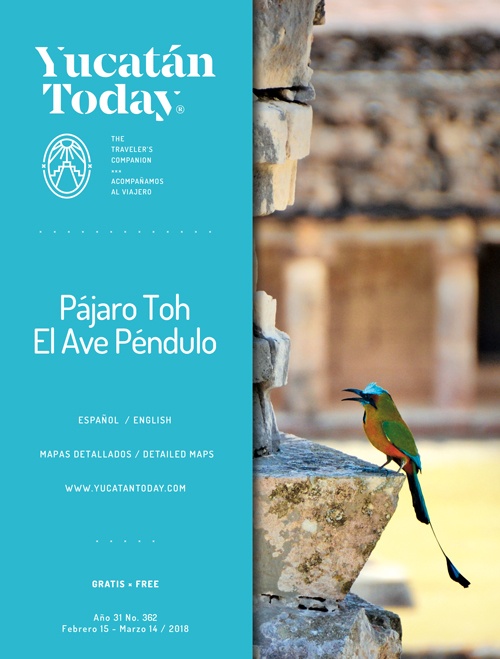
It’s impossible to be near a toh bird without being amazed. Hearing its peculiar call and catching a glimpse of its colorful plumage and long, distinctive tail serves as a reminder of the marvelous world hidden within the "monte" (the wild), just beyond the limits of Yucatán’s cities and towns.
The toh's body combines shades of green, ochre yellow, turquoise, and black. Aside from its turquoise brows, black mask, and a small ochre patch near its ears, its head and the upper part of its wings are green. Its back and chest are ochre yellow, while the tips of its wings and tail are a deep turquoise. However, its most standout feature is its tail, composed of two long feathers ending in a very distinctive shape, much like the pendulum of a clock.
And while the motmot’s tail is definitely its most eye-catching feature, we can’t leave out its impressive, specialized beak. You’re not likely to catch this detail out in nature, but the toh’s upper mandible is serrated, like a tiny steak knife; this gives the motmot an important advantage when hunting for slippery prey, and also allows it to easily crack the exoskeletons of hard-shelled insects. The toh’s beak is also thick and strong, so both males and females use it to burrow in the ground and even in limestone, where their eggs will be best protected.
The toh feeds mainly on insects, though it also hunts small reptiles. It remains motionless on a branch until it spots its prey, then darts to catch it in a swift, precise flight.
How do toh birds feed?
The toh is a patient hunter. Its diet is both carnivorous and insectivorous, consisting primarily of insects like beetles, ants, and dragonflies. It is also known to hunt small reptiles such as lizards and, occasionally, small snakes or frogs.
Its hunting technique is fascinating: it remains motionless on a branch for long periods, carefully observing its surroundings. Once it spots its prey, it dives with a quick, precise flight to catch it. If the prey is large, it will often strike it against a branch before eating.
A few fun facts about the motmots in Yucatán
- Why does its tail look like that? Motmots’ tail feathers aren’t born that way: they start out as regular feathers, but because their rachis (central shaft) is very weak in the middle, the barbs break off naturally over time, leaving only the "racket" shapes at the tips.
- The motmot’s pendulum. The peculiar shape of the toh bird’s tail isn’t the only reason why it is called the “clock bird;” this beautiful bird moves its tail side to side, exactly like a pendulum. They apparently do this when they spot a possible predator, to warn it that it’s been spotted and has little chance of surprising the birds.
- The guardian of the cenotes. As you read above, motmots burrow, rather than nest, and a great place to do that are cenote walls. It is very common, especially in the spring, to come across motmots in and around cenotes, even those that are fully underground.
What’s the best spot in Yucatán to catch a motmot or toh bird?
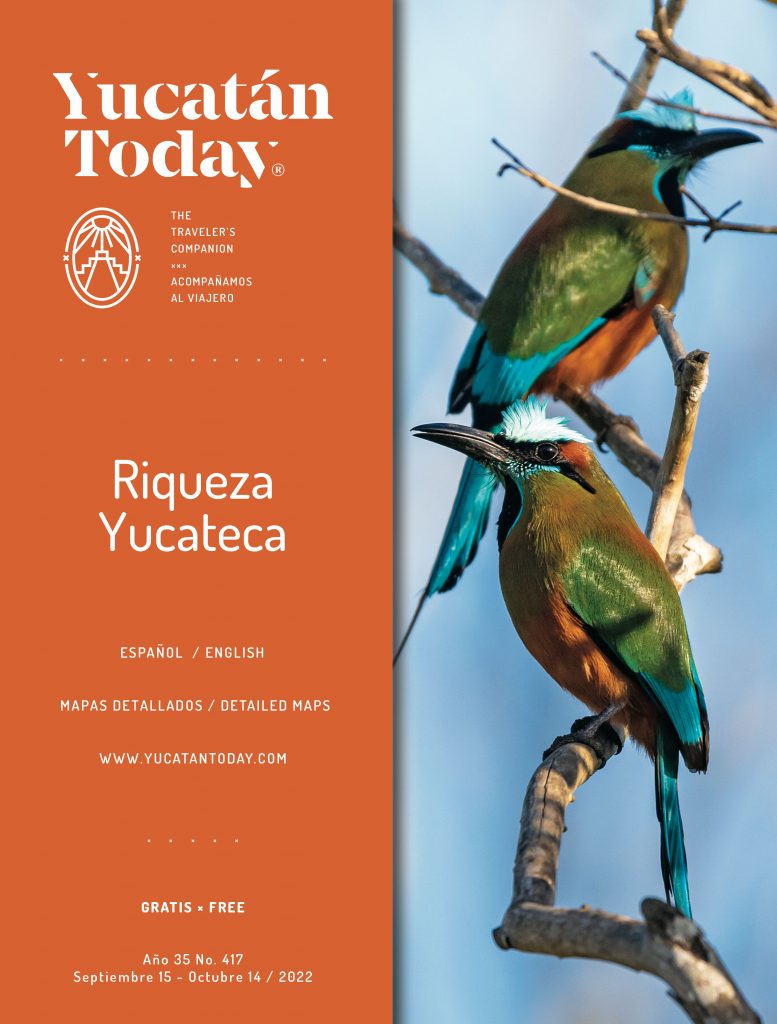
Motmots are most frequently spotted between March and August (especially in April and May), but they are permanent residents of Yucatán. And while they’re definitely most commonly found in cenotes and their surroundings, it isn’t unusual to spot them anywhere in the state, from the beach to the city’s power lines.
What does a motmot sound like?
The song of a motmot is unmistakable. It’s sort of a hoop-hoop, though others said it’s more like a mot-mot, and that’s where its name comes from.
While there’s nothing like hearing it in nature, this recording should help you identify it when you do:
First published in Yucatán Today print and digital magazine no. 460, in April 2026.



Related articles


