


The Guardian of Izamal's Legends
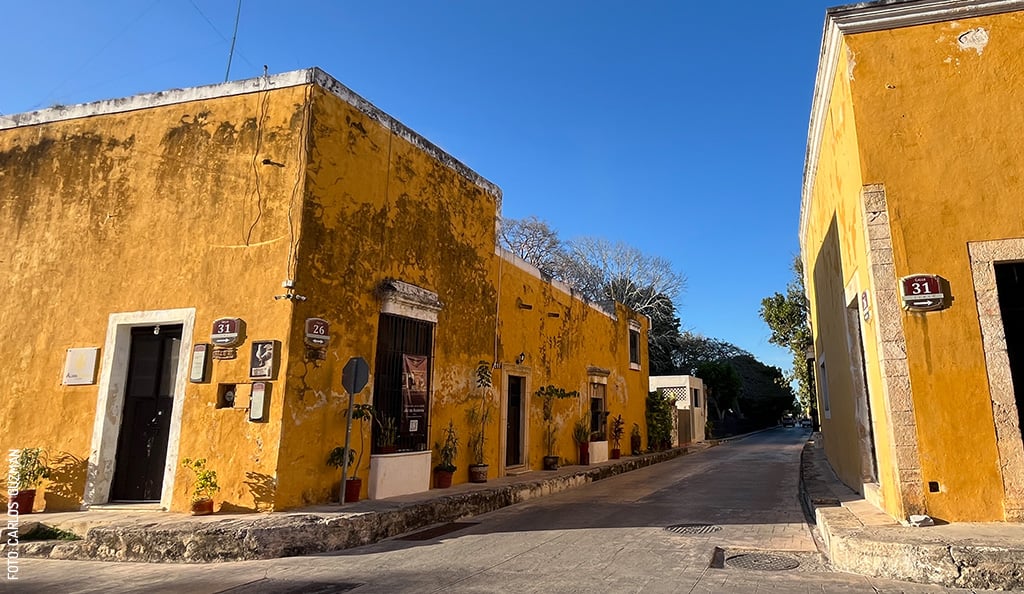
As you stroll through the streets of the Magical Town of Izamal, you've probably noticed there are plaques mounted on plazas, street corners, and historic homes. Each one marks the exact spot where, according to local tradition, a legend unfolded—stories that remain alive in the town's collective memory.
The illustrations and accompanying texts are largely based on the work of one remarkable Izamal native: Florencio Ramiro Briceño López, widely regarded as one of the most influential cultural promoters in the history of the City of Hills.
The keeper of Izamal's legends
Florencio Ramiro Briceño López was born on September 29, 1916, and passed away in Izamal on October 20, 1984. For years, he devoted himself to interviewing the town's elders and searching through public and private libraries for old manuscripts, determined to preserve Izamal's rich oral tradition. Thanks to his research and writings, many of the town's legends have survived from one generation to the next and continue to be told today.
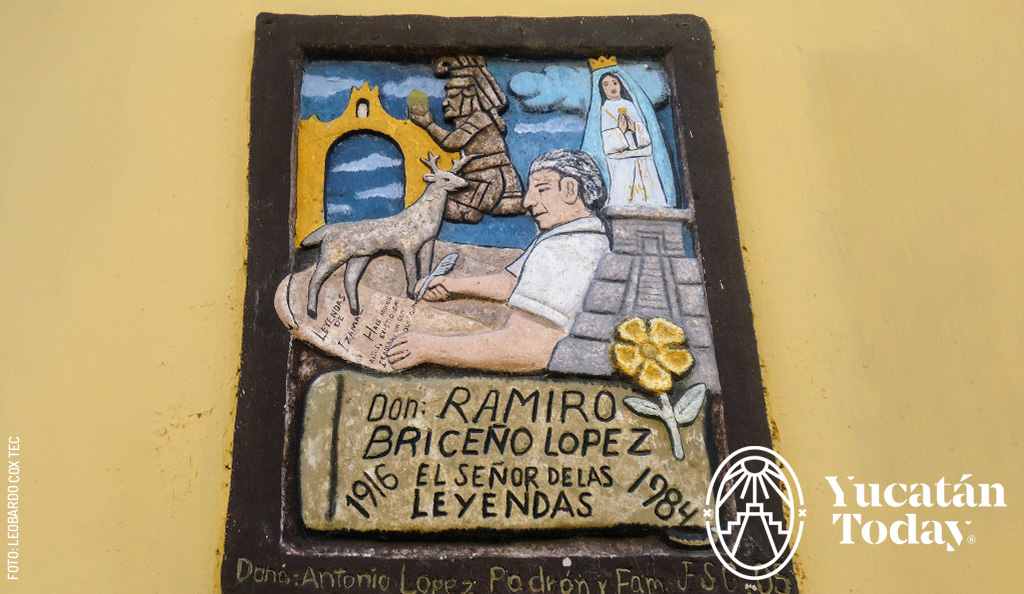
His tireless work earned him the affectionate nickname "The Keeper of the Legends." One of the greatest tributes to his legacy is a commemorative plaque placed on the house where he was born, on Calle 27 between 30 and 32 in downtown Izamal. Today, the building houses La Siempreviva – Casa de Leyendas, a restaurant owned by members of his family. The plaque ensures that his name—and his work—will continue to inspire future generations.
A lifelong love for Izamal
Ramiro Briceño's devotion to his hometown began early. He was the son of Julia López Ortega and Sérvulo Briceño Sosa, who served as mayor of Izamal and instilled in him a deep appreciation for the town's history and traditions.
At just sixteen years old, Ramiro became one of the founding members of the Yucatán Explorers Club, whose members organized educational and recreational expeditions throughout the peninsula. Later, in 1938, he joined the Crescencio Carrillo y Ancona Historical Studies Circle, dedicated to researching Izamal's historical landmarks. These experiences further fueled his passion for writing and historical research.
His editorial legacy
Those who knew Don Ramiro remember him as a warm, kind-hearted man who was deeply respected within the community. During his lifetime, his articles and stories appeared in several local and regional publications, most notably La Voz de los Cerros ("The Voice of the Hills"), a magazine supported by a distinguished circle of Yucatecan intellectuals. Between 1965 and 1970, his legends gained widespread popularity through its pages.
Some of his writings were later compiled in the 1971 book Izamal en la historia y la leyenda (‘Izamal in History and Legend’), published by México's Chamber of Representatives. In the final months of his life, he also contributed to the newspaper Novedades de Yucatán. Even after his passing, the newspaper continued publishing many of his best-known legends along with several previously unpublished essays.
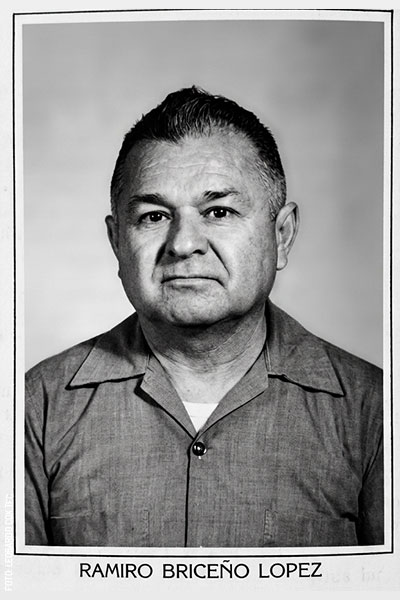
Ironically, his most celebrated work appeared six years after his death. In 1990, the first edition of Leyendas de Izamal was published with funding from México's National Council for Culture and the Arts through the Municipal and Community Cultural Support Program (PACMYC). The book remains one of the most valuable contributions to the cultural heritage of both Izamal and Yucatán. Its illustrations were created by Professor José Miguel Briceño Amaro, the son of the "Keeper of the Legends."
Today, nearly every corner of Izamal pays tribute to Don Ramiro—one of the men most responsible for preserving the oral history that continues to give this Magical Town its distinctive character.
The Legend of the Arch
In 1557, Friar Diego de Landa, guardian of the Franciscan convent then under construction in Izamal, brought two identical images of the Virgin Mary from Guatemala. One was destined for the Franciscan missionaries in Mérida, while the other was intended for Izamal.
Because Izamal's population was overwhelmingly Maya, some Spaniards believed its inhabitants did not deserve such a beautiful image, with its fair complexion and finely crafted features. The Spaniards of Valladolid admired the sculpture so much that they petitioned the bishop to transfer it to their convent; soon, a delegation of Spanish officials and their attendants traveled to Izamal to carry out the order.
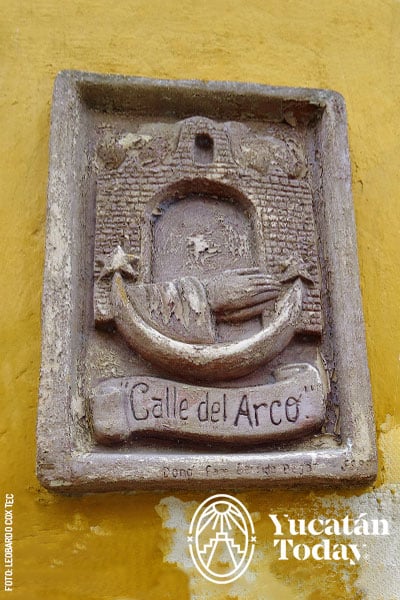
The unfinished convent's bells rang to summon the entire town. The friar announced to the Maya and mestizo locals that the bishop had ordered the Virgin to be taken to Valladolid, and the statue was carefully placed inside a wooden crate for the journey. But when the procession reached the spot where today's arch stands, something extraordinary happened: the crate suddenly became impossibly heavy. Those carrying it buckled under its weight and could no longer lift it from the ground. After repeated attempts, the Spanish delegation abandoned its plan, accepting what they believed to be a sign of divine will.
Then the Maya, many of whom had not yet become devoted followers of the Virgin, stepped forward to help carry the crate back to the Convent; to everyone's amazement, it became light once again. The image was easily returned to the Convent, where devotion to the Virgin of Izamal steadily grew over the following years.
The Legend of the Two Brothers
Long ago, two mysterious men, who looked remarkably alike, arrived in Izamal looking for work. They took jobs clearing brush, cleaning homes, and performing all kinds of manual work, and soon earned a reputation as hardworking, good-natured laborers.
Over time, each brother saved enough money to purchase a home—one in Sitilpech, the other in Citilcum. Every Sunday, one attended Mass in Izamal while the other worshipped in Tekantó.
One year, the Virgin of Izamal was taken to Mérida to comfort the city's faithful during a devastating epidemic. The people of Izamal worried that their church had been left without its sacred protector. Around that time, the two brothers announced that they would be leaving town, but before departing, they instructed their neighbors not to enter their homes until three days after they had gone.
When the townspeople did as they were told, they found a beautifully carved image of Christ in each house. One statue was placed in the church of Sitilpech and the other in the church of Citilcum, where both have been venerated ever since. Some believe the brothers themselves were miraculously transformed into the sacred images, while others insist they were simply the talented sculptors who created them.
To this day, the Christ of Sitilpech visits Izamal every October, while the Christ of Citilcum is carried in procession to Tekantó each November.
The Legend of the Sorrowful Troubadour
During the seventeenth century, one of Izamal's encomenderos had a daughter renowned for her extraordinary beauty. Blonde-haired and blue-eyed, she attracted the admiration of nearly every young Spanish gentleman living in the town.
Among her father's employees was a handsome young minstrel who also served as the estate's administrator. His job allowed him to befriend the “Golden Lady,” and then earn her love; before long they became engaged. As a wedding gift, her father presented them with a grand mansion, where a portrait of his daughter—painted in Spain—was displayed with pride.
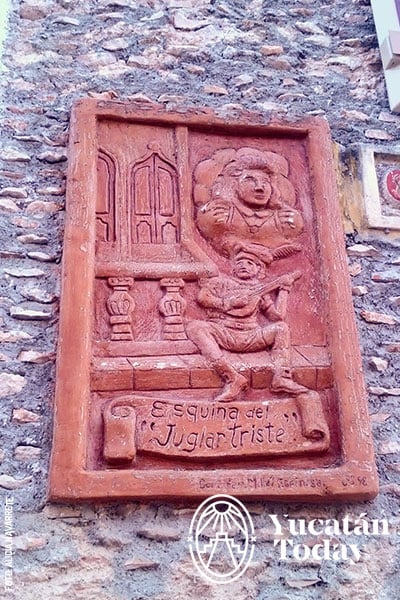
One evening, as the troubadour serenaded his beloved outside her window with his lute, two jealous rivals attacked him. During the struggle, tragedy struck: instead of the young man, it was the beautiful maiden who received the fatal wound.
From that night forward, the minstrel wandered the streets of Izamal alone, consumed by grief. Then, one full-moon night, he was found lifeless beneath the portrait of his beloved, his lute still resting in his hands. No one could determine the cause of his death; the people of Izamal simply say that the young troubadour died of a broken heart.
First published in Yucatán Today website in July 2026.
Photography by Carlos Guzmán Andrade, Alicia Navarrete and Leobardo Cox Tec for use in Yucatán Today.



Related articles


