

A Celebration Amid the Cenotes
The town of Homún is widely recognized across México for being home to over 300 cenotes of cool, crystal-clear water. These breathtaking natural wonders make it one of the most vital tourist destinations on the Yucatán Peninsula. Yet, despite tourism driving its economy, the community proudly retains its essence as a traditional Maya town, fiercely preserving its living history.
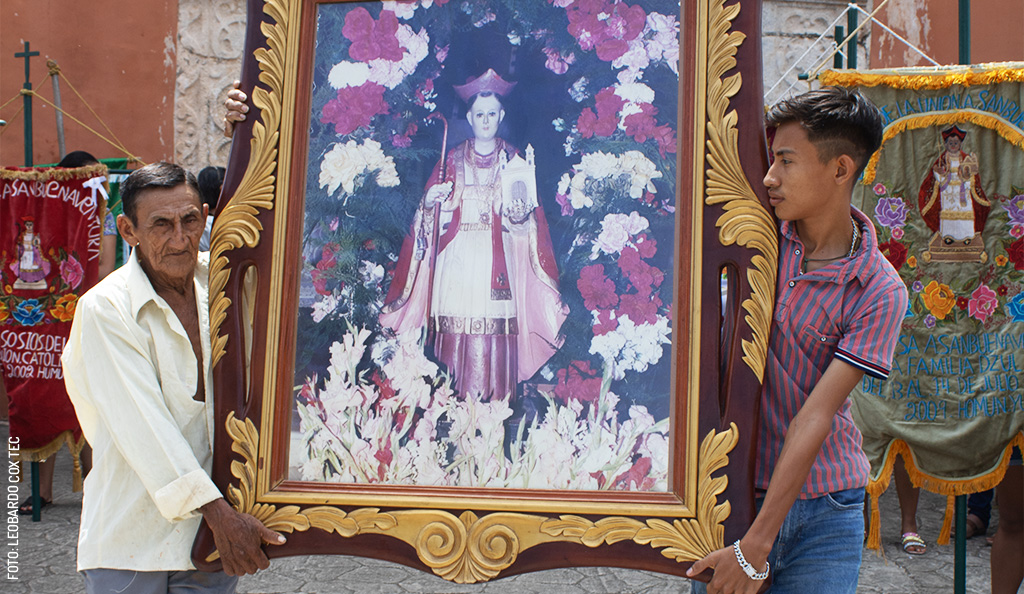
The greatest display of this local identity is its vibrant patron saint festival. Held during the first two weeks of July, this celebration fills the streets with religious guilds (gremios), traditional jarana music, and a profound showcase of local faith.
Homún, a village of enchantment
Homún is a place rooted in mysticism. Researchers note that its name comes from the Maya root juum, which means sound, noise, or hum. The celebrated Yucatecan poet Antonio Mediz Bolio suggested it derives from joom (trumpet) and juum, translating to "where the trumpet resounded."
This historic connection is backed by the Chilam Balam of Chumayel (a sacred compilation of Maya mythical and prophetic texts), which names the town as a stopping point during a legendary ancient exodus: "Human [Homún]. There the word resounded over them, there their fame echoed."
This ancient "sound" may very well describe the water of the cenotes echoing against cavern walls as the wind passes over them. Since pre-Hispanic times, cenotes have been revered as sacred portals to the underworld and places of spiritual purification. Historical records show that as late as 1807, locals still gathered in these caves at night—well hidden from Spanish authorities—to perform invocation rituals fueled by traditional dances and balché (a sacred bark beer). This is yet another example of how the Maya have resisted and fought to keep their beliefs and traditions alive.
While these rituals are no longer held in the hidden depths of caverns, today we can witness expressions of faith and devotion in the town’s beautiful church, especially during the guild celebrations and other festivities that take place during the July festival.
San Buenaventura: The Patron Saint of Homún
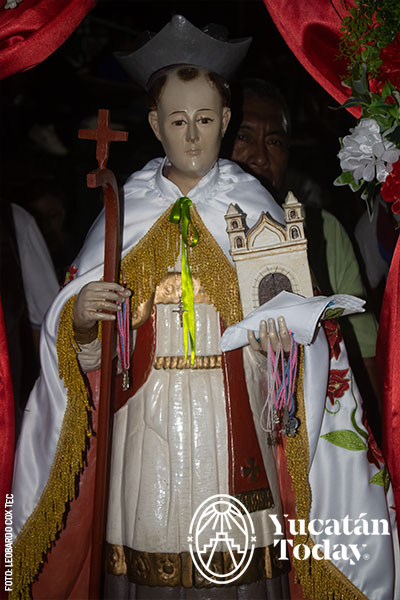
The festivities officially ignite with the ceremonial lowering of the image of San Buenaventura, the town's patron saint.
Who was San Buenaventura? Born Giovanni di Fidanza in 13th-century Italy, Saint Bonaventure was a Franciscan bishop, theologian, and philosopher. Regarded as one of the greatest minds of the Middle Ages, he was canonized in 1482 and is recognized as a Doctor of the Catholic Church.
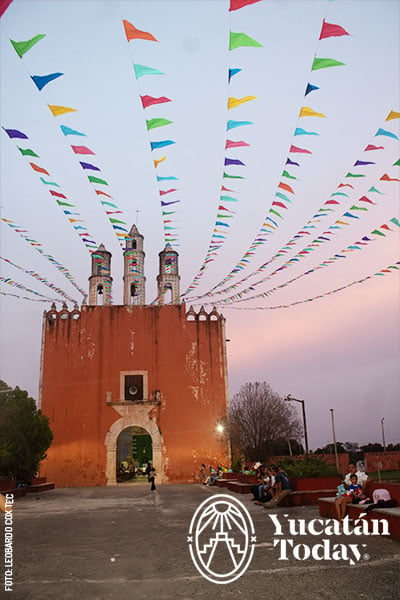
Franciscan friars originally placed Homún under his protection, building a beautiful parish church easily recognized by the three distinct turrets on its façade. The peak of the festival takes place on July 15, Saint Bonaventure's official feast day, when his historic statue is carried through the streets to bless the town.
The fortnight is packed with vaquerías (traditional Yucatecan dance galas) and public parties renowned throughout the Península for their color and joy. A highlight of the local religious guilds is the distribution of ts’aambil sa’, a traditional regional beverage made of fermented corn and cinnamon given freely to all attendees.
Miracles and local lore
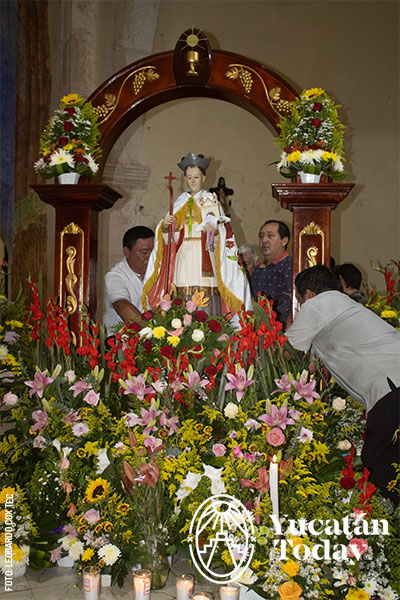
The image of San Buenaventura is steeped in fascinating oral histories passed down through generations of Homún's families. Local lore says the statue was originally discovered inside a cenote near the town square. When it was moved to the church altar, it kept mysteriously vanishing, only to reappear back inside the damp cave. The townspeople finally promised to hold a grand celebration in his honor every single year if he stayed. The saint remained on his altar, the cenotes were formally blessed, and Homún flourished into a land of sacred waters.
Grandparents in town also tell stories from the Caste War of Yucatán (during the late 19th century), when a brave stranger mysteriously appeared to defend the townspeople and save lives. Once the battle cleared, locals noticed the feet of the saint's statue inside the church were caked in fresh mud, realizing their patron had physically stepped off his altar to fight alongside them.
Then, during a devastating year with zero rainfall, the cenotes dropped, crops withered, and cattle died. Facing severe famine, the village elders gathered to promise a massive, growing annual festival if Saint Bonaventure brought relief. That very night, a massive downpour began that lasted for three solid days, replenishing the water tables and saving the town. Since then, the celebration in his honor has grown to become one of the most important in the region.
Visiting Homún in July offers a rare window into a side of the town very few travelers get to experience. It is a perfect opportunity to pair a refreshing swim in the underworld with a deep dive into the living heart of Yucatecan faith and history.
First published in Yucatán Today print and digital magazine no. 463, in July 2026.
Photography by Leobardo Cox Tec


Related articles


