

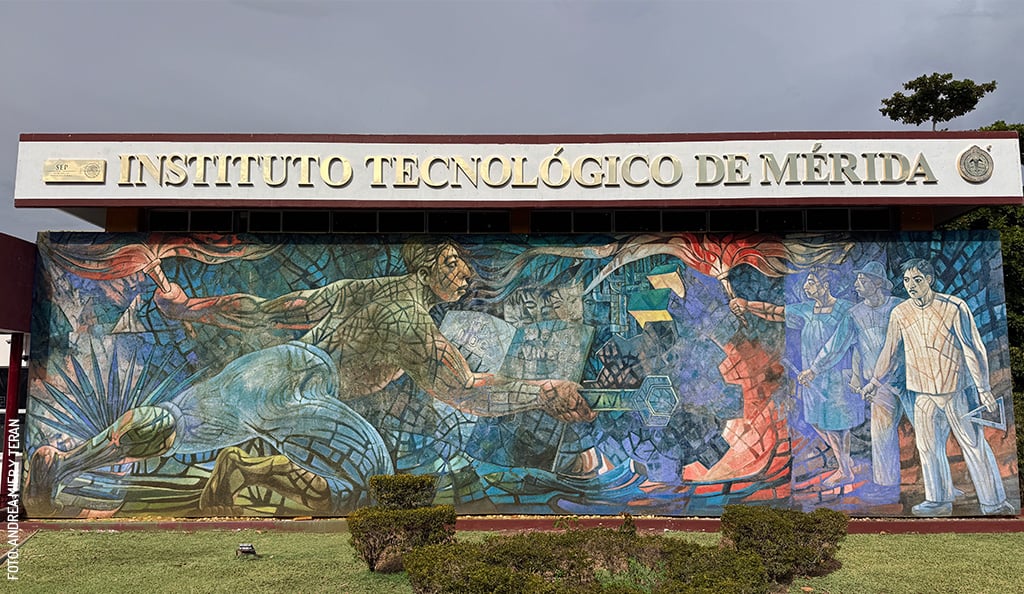
If you’ve ever passed through Calle 60 North, you probably have noticed the enormous mural covering the façade of Mérida's Instituto Tecnológico de Mérida (ITM). Since its unveiling in 2012 as part of the institute's fiftieth-anniversary celebrations, it has become a familiar sight for everyone who travels along this long avenue.
While this isn't the only mural that has earned its creator, Yucatecan artist Víctor Argáez, widespread recognition, its scale and prominent location have made it one of the best-known public artworks in the state. Today, I'd like to share the story behind both the mural and the artist who created it.
The symbolism behind the mural
Titled Social Integration, the mural was commissioned to commemorate the ITM's 50th anniversary. To bring the ambitious project to life, Víctor Argáez assembled a team of fellow painters who collaborated on its execution. The mural's central theme is the journey of young Yucatecos who leave their hometowns in pursuit of higher education, returning with the knowledge needed to transform both their own lives and the communities they came from.
The dominant figure on the left represents a young man from a rural village traveling to the city in search of education and a bright future. Behind him stand humble thatched homes and a henequén (sisal) plant, symbols of the world he leaves behind. Ahead of him are the people who guide his path: a woman carrying a torch, a fellow student, and a professional who embodies the opportunities education can provide.
In his right hand, he holds a wrench while adjusting a gear, symbolically setting his future in motion. Behind him, his left hand carries a torch whose light reaches back toward his hometown. Finally, at the center of the composition lies an open book bearing the ITM's motto, the Latin phrase In hoc signo vinces ("In this sign, you shall conquer").
Who Is Víctor Argáez?
Born in Buctzotz, Yucatán, in 1962, Víctor Argáez began his artistic career at an early age, participating in national painting competitions while still in middle school. He later spent a brief period working in the studio of painter Ermillo Torre Gamboa before returning to his hometown to establish his own workshop. In 1993, he founded Casa de los Artistas A.C. in Buctzotz, an artistic center that continues to train emerging painters to this day.
Before creating his monumental mural for the Instituto Tecnológico de Mérida, Argáez had already completed large-scale works for the Carlos Acereto Theater, the Schools of Accounting and Law at the Universidad Autónoma de Yucatán (UADY), and the Universidad Tecnológica Metropolitana.
Over the course of his career, he has represented Yucatán during the annual Semana de Yucatán in México City, founded the Colectivo Parque Hidalgo, exhibited his work both within and beyond the state, and published Herederos Ancestrales I and II, two visual compilations celebrating the work of Yucatecan artists.
In 2019, he joined the Arte 1010 gallery project in Mérida, where he continues to present at least one exhibition each year. More recently, he opened Galería Punto Cero, located in his personal studio in the Brisas neighborhood on the eastern side of the city.
The hallmarks of his art
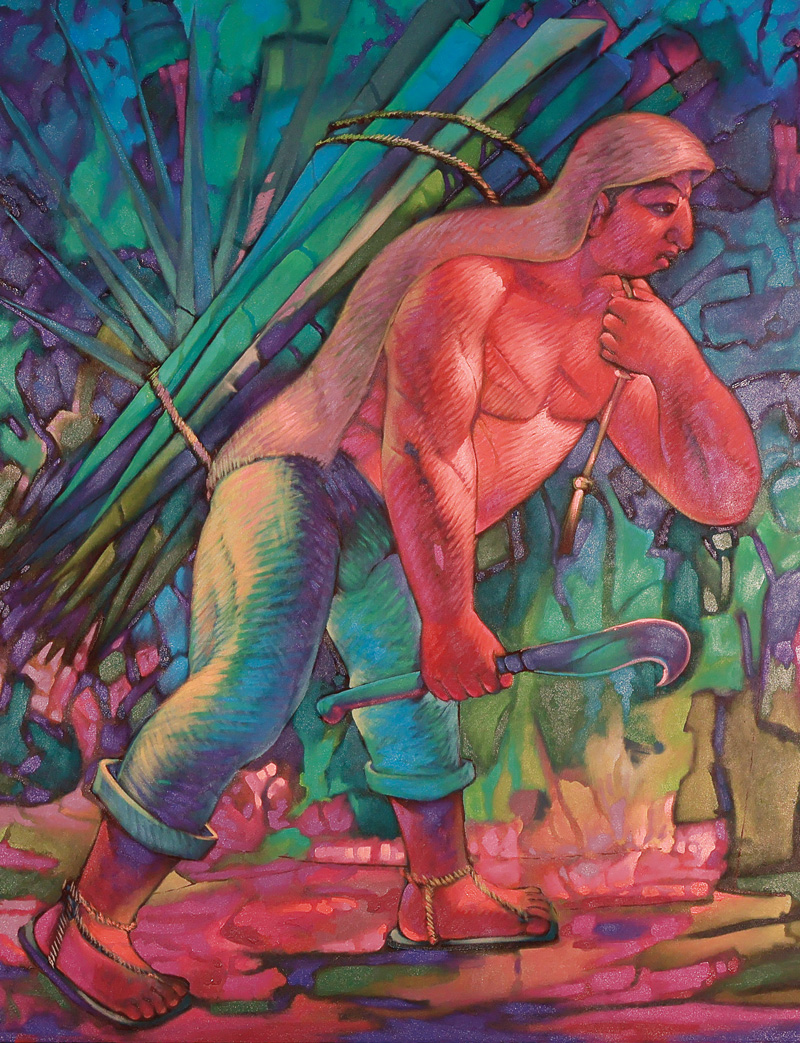
Known for his preference for large-scale works, Argáez paints with a vibrant palette inspired by Yucatán's natural landscapes: its forests, coastline, and landscape. His paintings portray everyday life in Yucatán—its people, trades, and celebrations—drawing on the region's shared cultural memory.
The protagonists of his work are ordinary people: children at play, women wearing hipiles, and men and women carrying out the routines of daily life. Yet his paintings are not simply portraits, nor do they romanticize traditional ways of living. Instead, Argáez uses his work to tell the story of everyday life on the Península while celebrating the resilience of the Maya people. By depicting occupations and customs that have endured for centuries, he not only honors the past but also presents tradition as a force capable of shaping the future.
First published in Yucatán Today print and digital magazine no. 465, in September 2026.



Related articles


