


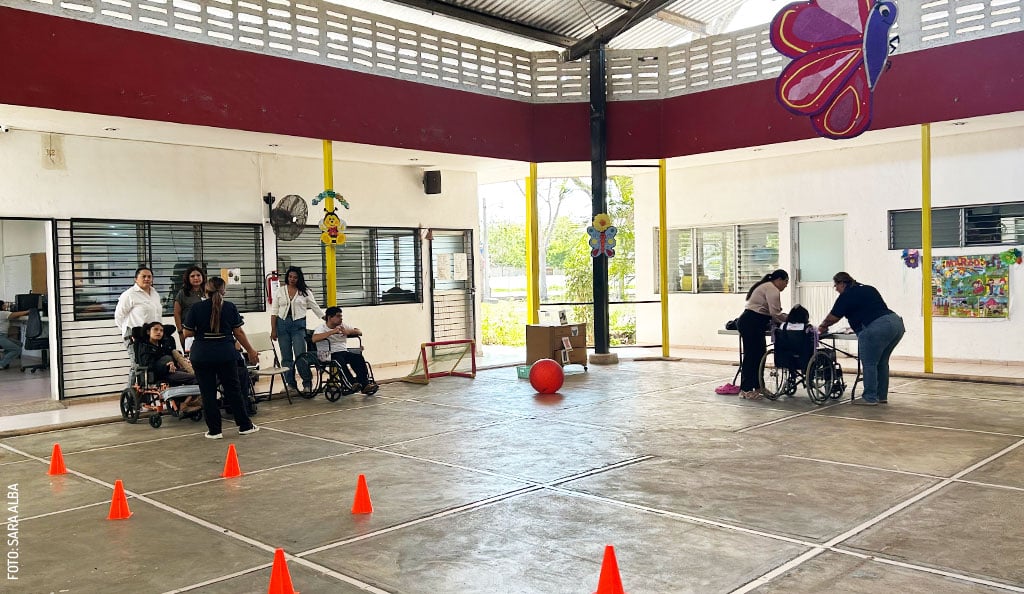
Construyendo Sonrisas (Patronato Peninsular Pro Niños con Discapacidad Intelectual IAP Association), founded in Mérida in 1958, is a non-profit organization that provides comprehensive care, rehabilitation therapies (physical, speech, and psychomotricity), and INEA-certified special education to people with intellectual disabilities. Its center in the Vergel IV neighborhood offers everything from early stimulation (starting at 45 days of age) and job-inclusion workshops to independent-living skill programs and psychological support for families. To finance its activities, the organization operates the Bazar del XIX and accepts second-hand item donations Monday through Friday.
What began as an initiative to help families who did not have the resources to take their children outside Yucatán for medical care eventually became a place where children, teenagers, young adults, and adults find tools to learn, develop, and build more independent lives.
This is the story of Asociación Patronato Peninsular Pro Niños con Discapacidad Intelectual IAP., better known as Construyendo Sonrisas. This Yucatecan nonprofit organization was founded in 1958 by Doña Elsy Cisneros de Seguí. In 1982, it was formally established as a foundation, with the mission of providing care to people with intellectual disabilities of all ages while also supporting their families.
Today, from its headquarters in Mérida, the organization works primarily in two areas: education and therapies, supporting its students and their families at different stages of their development.
From a fundraiser to a care center
The story begins with Elsy Cisneros de Seguí. After learning about the difficulties some families faced in accessing specialized treatments and surgeries, Mrs. Elsy began raising funds to help them cover the expenses of traveling to México City.
Over time, this work led Cisneros to identify an even greater need: it was not enough to help families obtain treatment for a specific condition; Mérida also needed permanent spaces for education and specialized care.
This led to the creation of a special education school. Since it was initially a private institution, one of the next steps was to raise funds to provide scholarships to children whose families could not afford tuition. Once again, this experience revealed a broader need and led to the creation of a comprehensive care center. It was first located on Avenida Cupules and later moved to its current location in Vergel, where it now welcomes patients from different parts of Yucatán.
Learning from the earliest years
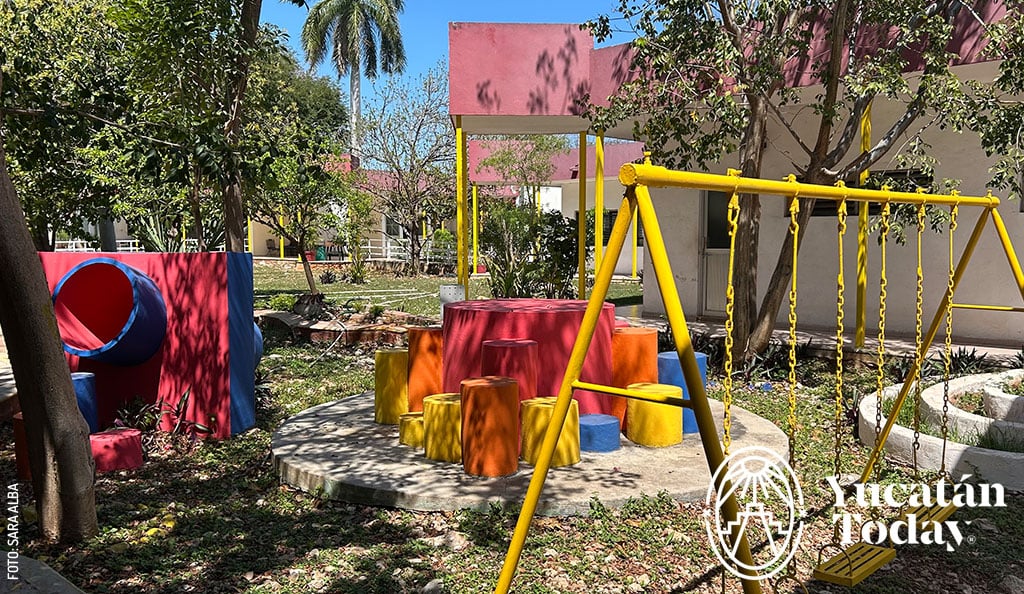
One of the areas that distinguishes the center is early stimulation, with care available for babies as young as 45 days old. Intervention during the first months of life can be essential for supporting development and identifying care needs.
It is also not necessary to arrive with a definitive diagnosis to receive support. In many cases, families arrive while the medical assessment is still ongoing; in the meantime, the team can begin working with the child. This area is also open to the general public, regardless of whether or not there is an intellectual disability.
The work is complemented by specialists and doctors who collaborate from different hospitals and contribute their expertise according to each patient's needs.
Education for life
Education at Construyendo Sonrisas goes far beyond the classroom. The center has six educational spaces, including areas specifically dedicated to developing independent living skills.
Elementary and middle school students can study through INEA, whose certificates are just as valid as those issued by regular schools. This is a program with around 30 years of experience that allows students to continue their academic education while receiving specialized care.
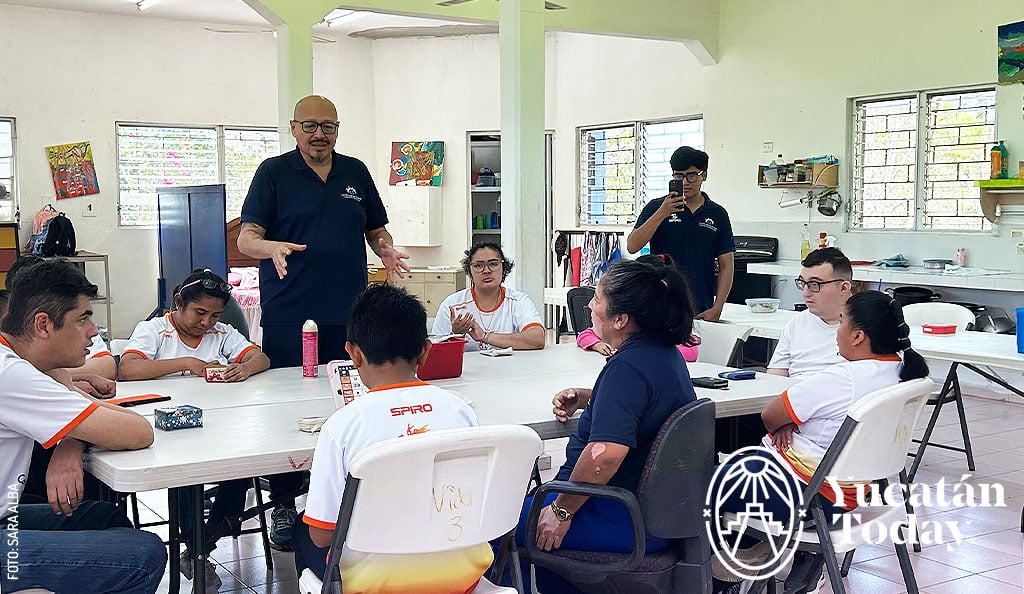
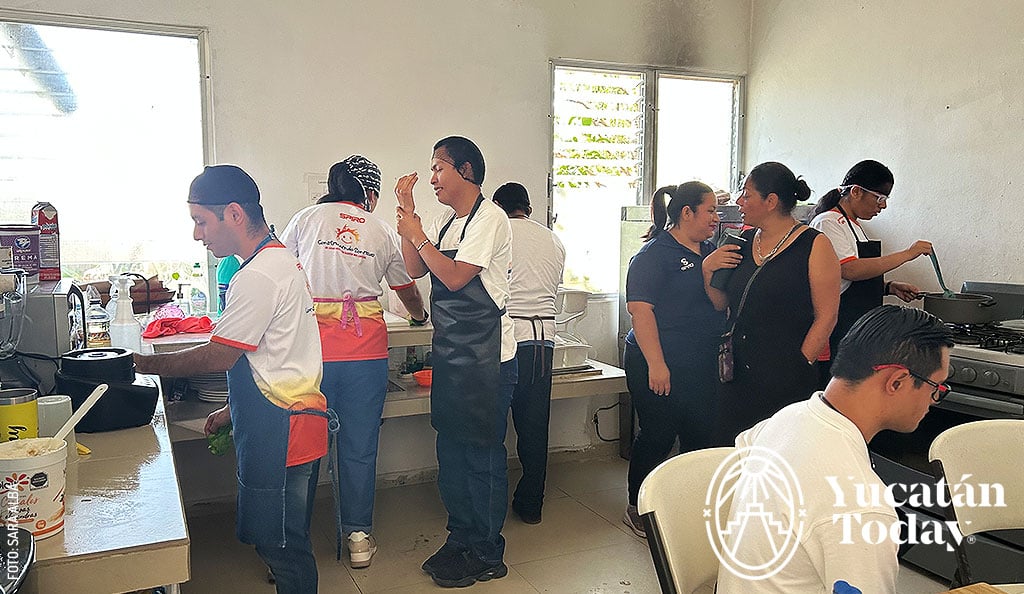
But learning also means knowing how to navigate everyday life. In the Vida 1, Vida 2, and Vida 3 areas, students work on skills ranging from personal care, such as getting dressed and understanding aspects related to their own bodies, to preparing food and doing household chores.
In Vida 3, for example, they can practice everyday situations and learn not only how to take care of themselves, but also how to care for their homes. During our visit, they were learning to recognize bills and become familiar with handling money.
The goal is for each lesson to gradually become a tool that helps them function with greater autonomy.
Therapies for different needs
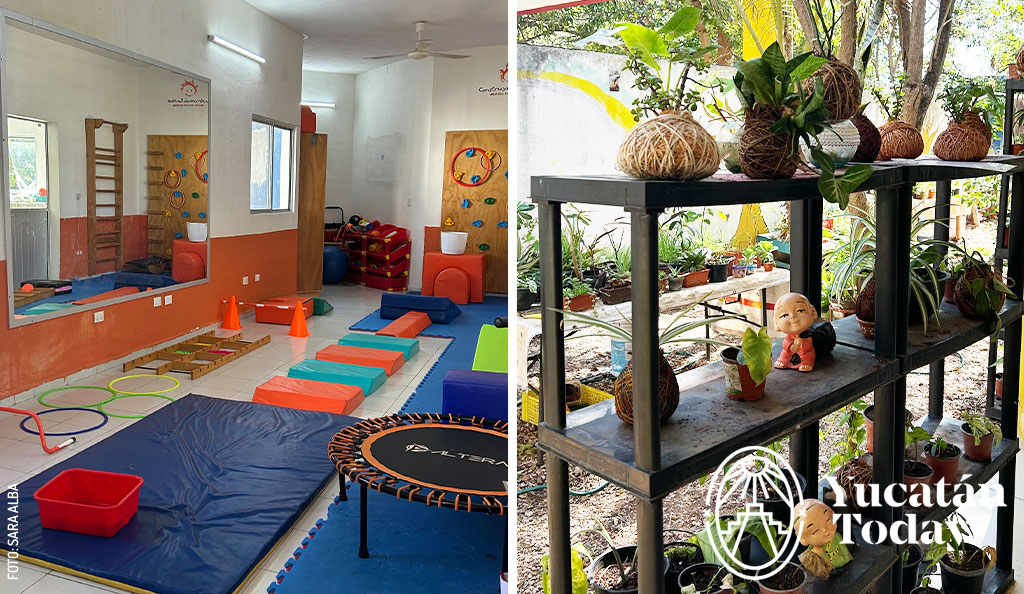
The therapy area brings together different specialties and is staffed by professionals with training in rehabilitation. Services include psychomotor therapy, physical therapy, speech and learning therapy, feeding and habituation techniques, as well as other interventions adapted to each person's needs.
In speech and learning, there is an emphasis on communication. The center uses both electronic devices and physical communication boards and seeks to ensure that all its students have some kind of tool that allows them to communicate, regardless of how they choose to do so.
Preparing for the working world
Inclusion is also addressed through independence and the skills needed to navigate life outside the center. Through its inclusion and vocational education workshops, students develop skills that can serve them both at work and in their everyday lives. This includes learning to carry out activities independently and, for example, acquiring the tools they need to travel on public transportation by themselves.
The center currently offers different workshops and has a space dedicated to a garden, where students of different ages participate. The products they make are also available for sale, from flowerpots and compost to kokedamas.
A place that also supports families
Construyendo Sonrisas' work does not end with its students. The organization has a psychology department and multipurpose spaces where talks are held for mothers, fathers, and family members. When someone receives a diagnosis or begins a process of specialized care, the family also needs information, support, and tools.
That is why, once a month, they hold an activity to spend time with the students, creating opportunities for community and togetherness that form part of everyday life at the center.
How you can help Construyendo Sonrisas
One of the simplest ways to contribute to Construyendo Sonrisas is through its Bazar del XIX. The bazaar serves as one of the organization's sources of funding and accepts items that can still have a second life: clothing, kitchenware, furniture, and other objects you no longer use but that could be useful to someone else.
The bazaar is open Wednesday, Thursday, and Friday from 9 am to 1 pm, while donations are accepted Monday through Friday, from 8 am to 4 pm. The organization also has two other donation drop-off points around the city, so donating does not necessarily mean traveling to its headquarters.
Construyendo Sonrisas, one step at a time
After more than six decades, the story of Construyendo Sonrisas still has much in common with what set it in motion: identifying a need and finding a way to address it. Today, that support takes many forms, from a therapy session or a class to learning how to prepare a meal, take public transportation, or recognize a bill.
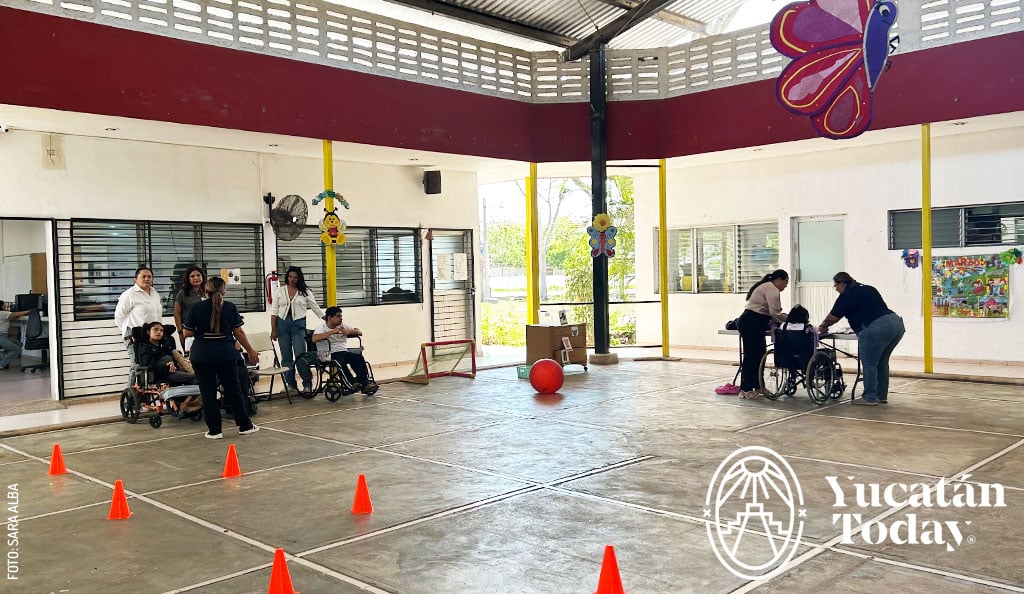
It is an example of a philosophy that runs through much of the organization's work: providing support without losing sight of each person's autonomy and participation. Rather than doing things for its students, the goal is to give them the tools they need so that, step by step and according to their own abilities, they can do more and more for themselves.
And perhaps that is one of the most valuable aspects of Construyendo Sonrisas: understanding that building opportunities also means creating spaces where each person can find their own way to learn, participate, and be part of the community.
Construyendo Sonrisas
Calle 19-A #234 x 2 y 4B Paseos de Vergel, Vergel IV
Tel. 999 982 3858
WA: 999 398 5128
comunicacion@construyendosonrisas.org
www.app.allin-one.mx/construyendo-sonrisas
IG: constsonrisas


Related articles


