


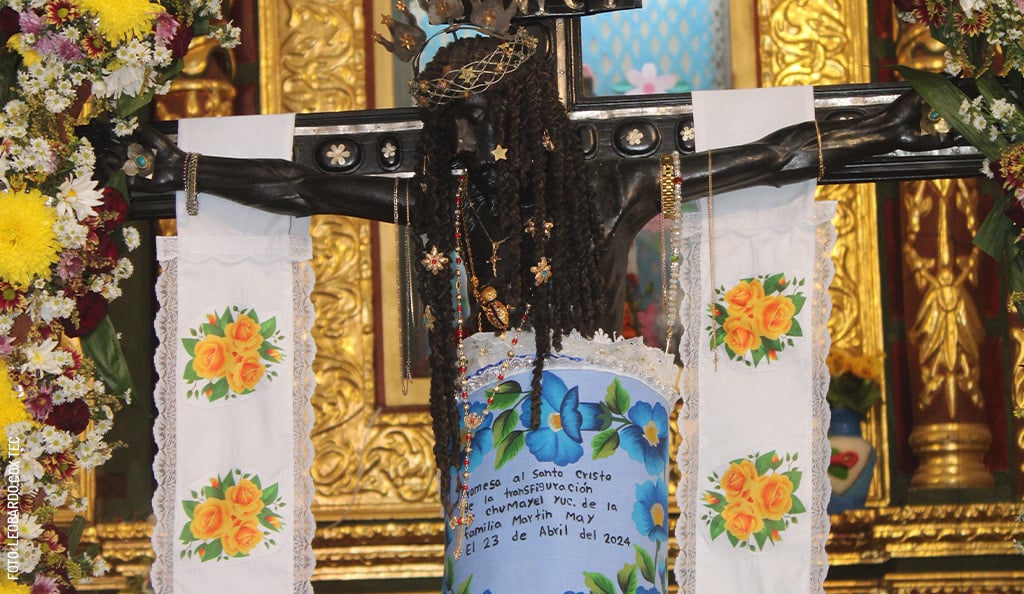
The south of Yucatán is famous for fiercely guarding its traditions. In this region, two "sister towns" share not only their customs but also a deep love for their patron saint, the Cristo de la Transfiguración (Christ of the Transfiguration). Teabo and Chumayel, separated by just 3 kilometers (less than 2 miles), are linked by a shared history and unwavering faith.
![Cristo-de-la-Trasfiguracion-de-Chumayel-2-by-Leobardo-Cox-Tec]() The origin of the devotion: the Christ of the Transfiguration
The origin of the devotion: the Christ of the Transfiguration
 The origin of the devotion: the Christ of the Transfiguration
It all began in Chumayel. Legend has it that long ago, during a severe drought, locals got their water from a well near the town square. One day, they found that a mysterious object was blocking the well from the inside; when someone descended to try to fix the problem, they discovered a beautiful sculpture of Christ. This miraculous event quickly spread through the region, turning skepticism into devotion.
The image was named Santo Cristo de la Transfiguración, referencing the biblical moment when the appearance of Jesus physically changed, revealing his divine nature—just like the sculpture had appeared in the depths of the well. Local elders also talk about a fire that once reduced the original church to ashes; only a wooden crucifix survived, which is believed to be the one where the Christ of Chumayel is set. Others still say that it was the fire that turned the image completely black, the striking color it retains to this day.
A shared heritage of faith and celebration
Because of its reputation for performing miracles, the Christ of Chumayel began to be taken to Teabo to be celebrated in August and September.
In Chumayel, the Christ was—and still is—celebrated from mid-April to May 3, the Day of the Holy Cross.
 However, a tragic episode in 1915 marked both towns. The legend goes that, in 1915, during the anti-religious movements inspired by the Mexican Revolution, every religious image in the area was taken to Teabo to be burned. Two Teabo locals, Florentino Cetina and Amado Carrillo, managed to rescue and hide the Christ of Chumayel, saving it from destruction. After the danger passed, the Christ was taken once to the Church of Teabo, but the residents of Chumayel demanded its return.
The next year, when the organizers of the Teabo celebrations in honor of the Christ of the Transfiguration tried to retrieve it, the Chumayel custodians announced the image would not be leaving the town again—there was still fear the image would remain in Teabo or again endangered somehow.
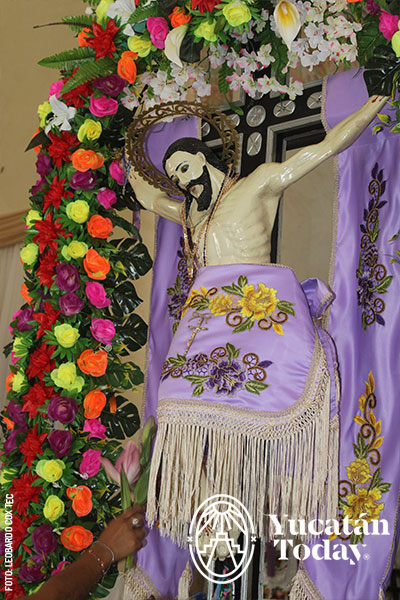
Teabo no longer had an image to honor during their celebration. In 1922, Miguel Ancona, owner of Zot Kaal hacienda, donated a similar-sized image of Christ to continue the tradition. Although this second image has lighter skin, it is venerated under the same title.
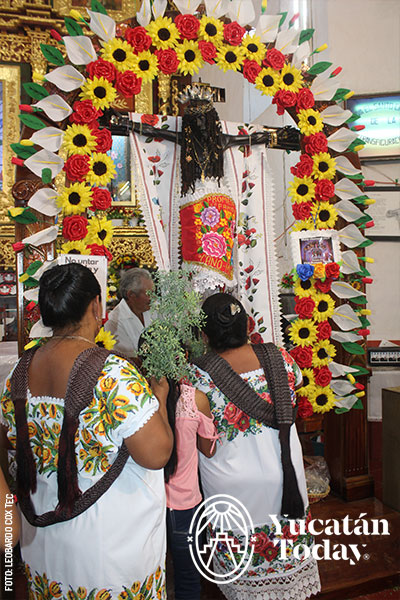
Because of this, the traditional celebrations in Teabo were moved to April, and now happen at the same time as in Chumayel. While both towns share the celebration, they each have additional activities, such as gremios, the alborada, and novenarios on different days.
People traditionally visit both celebrations. Their vaquerías are held on April 28 and 29, respectively, followed by matinés, popular dances, and many other activities. On the main day of the celebration, May 3, both sacred images are paraded through the streets of their respective towns amidst songs and prayers, celebrating a bond that remains stronger than ever.
First published in Yucatán Today website in March 2026.



Related articles


