


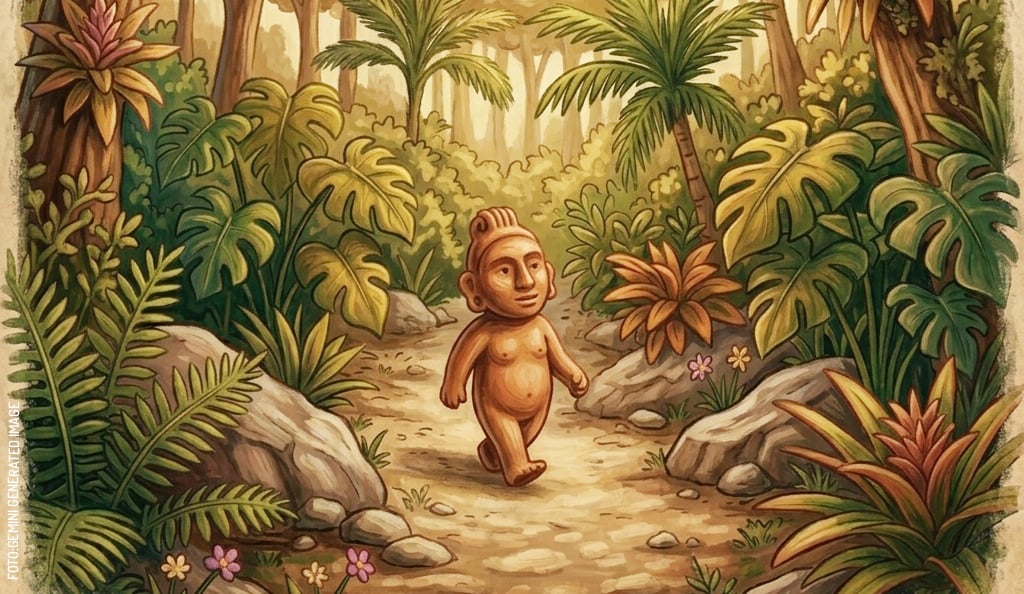
Aluxes, Guardians of the Maya World
ALUX. noun. A tiny mythical man made of clay who comes to life and protects archaeological mounds and cornfields.
(Diccionario Introductorio Español - Maya / Maya - Español, Universidad de Quintana Roo, 2009)
Have you ever heard of the aluxes? In Maya lore, aluxes—or aluxo’ob in the plural—have many different representations and origins, depending on the region or the researcher whose work you consult.
For example, one myth says that aluxes are the “men of the first humanity,” who built the great cities before the sun rose. These short, wise beings would turn to stone when the sun came up, only to regain their original form at dusk; this would explain why they are more often encountered at night than during the day. Other specialists, however, including professor Carlos Augusto Evia Cervantes, have noted that some communities believe that aluxes can actually be created. It begins with little clay figures; they are given breath, saliva, and blood, and as a result they come to life, awaken to reality, and become eternal.
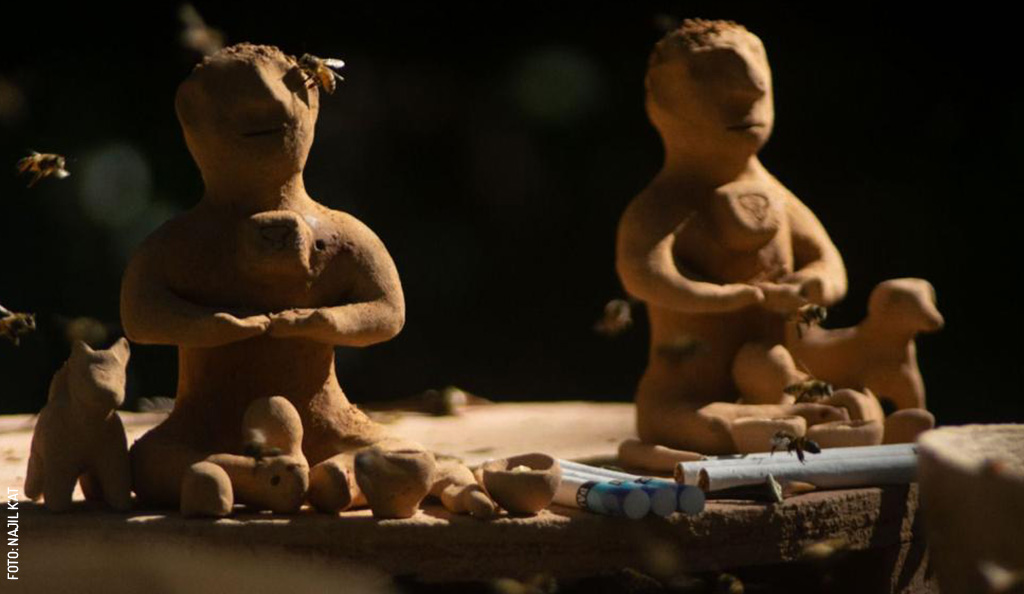
Whatever their origin, aluxes are widely regarded as guardians and protectors of the forest, cornfields, and archaeological remains. It is not unusual to hear of them also watching over old houses or lots in the historic centers of towns and cities throughout the region.
Those who claim to have seen them say they are so small that they can easily be mistaken for children, and that they are made of wind. They usually wear traditional Maya clothing (sometimes with sandals, sometimes barefoot) and are occasionally accompanied by a dog. Most of the time they remain invisible, but you may sense their presence as a shadow or a gust of wind, particularly when you are out in nature, in caves, cenotes, or fields.
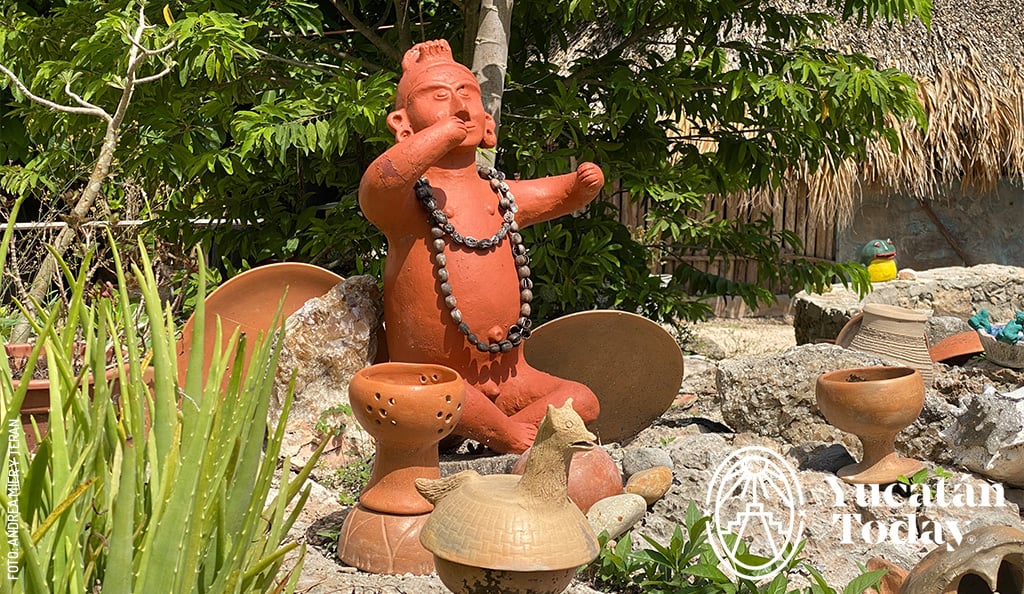
Because aluxes take their duties as guardians seriously, those who enter their territory without showing proper respect are the ones most likely to encounter them. They may make their presence known through mischief: objects disappear or mysteriously change places, and at night you may hear laughter, footsteps, whistles, or tapping at doors and windows. But aluxes are also said to be capable of causing illness through “bad air,” which only a j-meen—a Maya priest or wise person—can cure. They are also known for causing people to become lost in the forest until a ceremony is performed to ask for their return.
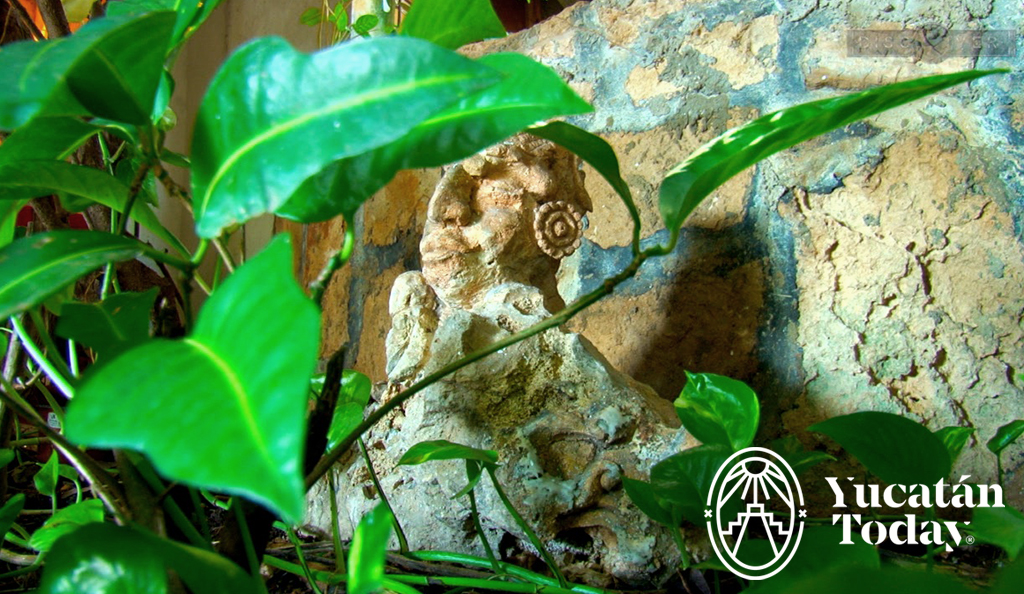
People in Yucatán understand the importance of living peacefully alongside these beings. For example, farmers usually make offerings during planting season, asking the aluxes to protect their crops, scare away thieves and animals, and keep anyone with bad intentions off their land. To do so, they build a small altar where they place jícaras filled with honey and corn, making sure there is always water and something sweet. This structure is sometimes shaped like a house, and called the “house of the alux.”
Some believe the ceremony must be repeated every year, naming the people who work the land so the aluxes do not mistake them for strangers. Others say an alux will protect the land and ensure a good harvest for seven years, after which it must be enclosed in its sanctuary-home to prevent it from becoming uncontrollable.
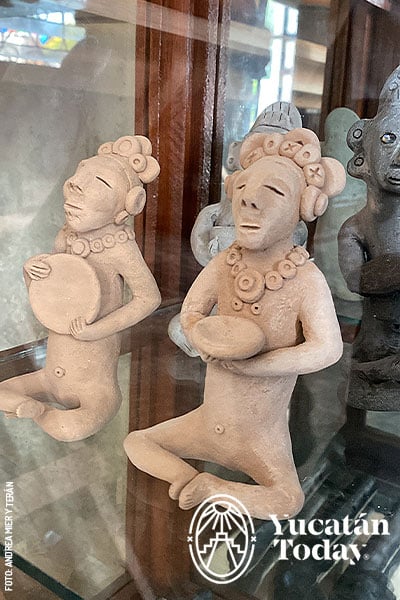
The great outdoors isn't the only place where people make room for aluxes. It is still fairly common to find people in Yucatán who leave offerings for them somewhere in their homes, from sweets and fruit to alcohol and cigarettes. Even if there is no ceremony involved, it can't hurt to keep the peace.
Whether you are just passing through Yucatán or call it home, always remember that the foundation of your relationship with aluxes should be respect for your surroundings. Especially when you find yourself in caves, cenotes, archaeological sites, or simply out in the monte (the wilds), take a moment to acknowledge that you are only a visitor, and perhaps that you would like their permission and protection while you’re there.
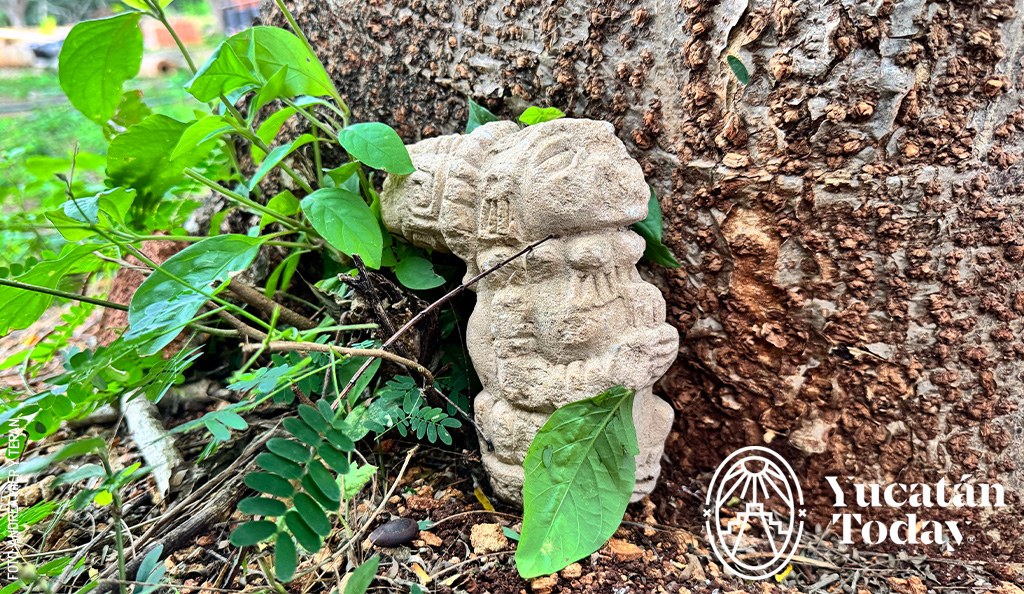
And if you happen to encounter one, there is no need to be afraid. Ask for its help, keep up your end of the offering, and don't forget to say thank you afterward. The guardians of the land and the harvest will remain on your side.
By José Ivan Borges Castillo, Olivia Camarena, Violeta H. Cantarell and Goretty Ramos.
A few tales featuring aluxes
We asked readers to send in any alux stories they might have heard or experienced themselves. Here are a few submissions.
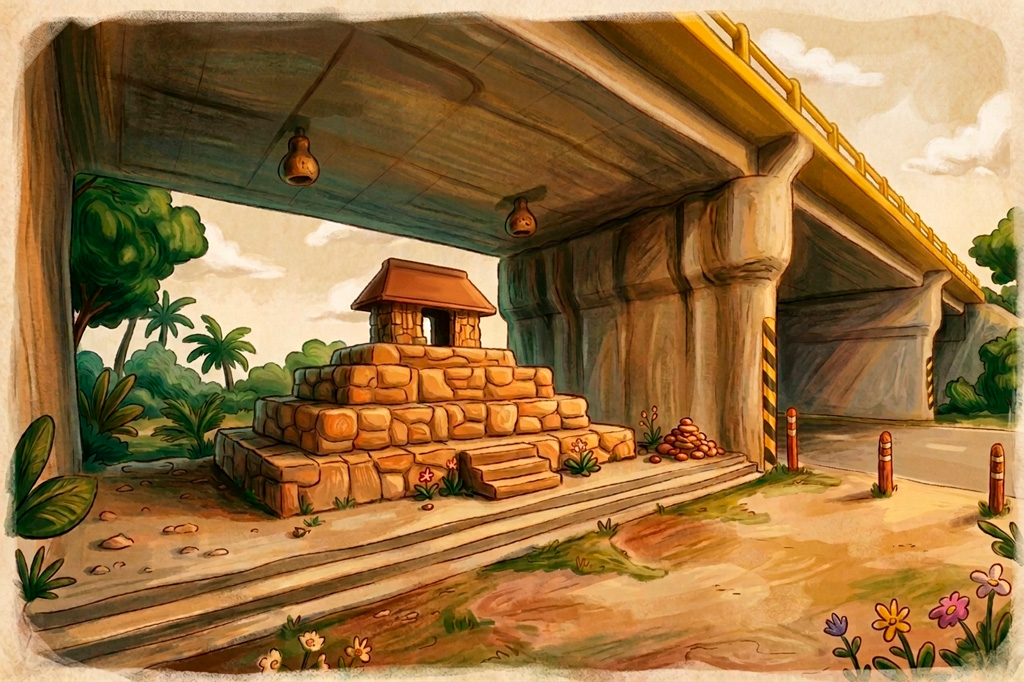
My father says that while a bridge was being built in Cancún, the construction collapsed several times for no apparent reason. Several engineers tried to figure out what was wrong, but they couldn't understand why the structure would constantly fail. One day, someone asked the builders whether they had asked the aluxes for permission to build there. The engineers weren't particularly convinced, but they were at their wits' end, so they built a little “house” and left offerings for the aluxes. Only then was the bridge completed without any further trouble. The little house can still be seen beneath the bridge.
—Jocelyn M.
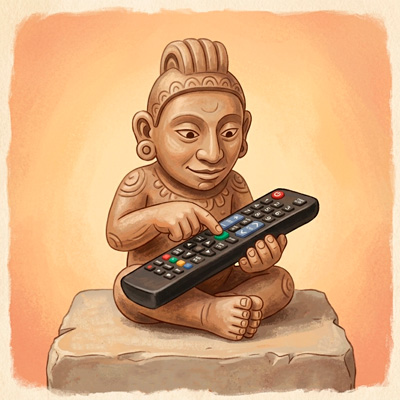
I'm from Mexico City, but a good friend from Yucatán gave me an alux, one of the handmade figures sold at the market. I'd already heard that they were protectors who could also play tricks. One day, my TV remote disappeared. I looked everywhere, moving things around, under the bed, pillows—nothing. So I spoke to my alux and said, “Hey! No! You're a protector, you're a guardian, and I've never done anything to you, so you're going to help me find my TV remote.” The next morning, the remote appeared underneath my pillow. I thanked my alux and told him that now that we had this bond, he'd become my guardian. I left him some sweets and a little glass of xtabentún, and since then he hasn't hidden anything from me or played any more tricks.
Some time ago, a woman in Sisal had a stomachache, but because it was late in the day, she missed the last doctor’s shift. Near the health center, she came across a very, very old, tiny woman wearing a hipil, who seemed to have emerged from the nearby brush. The old woman gave her a small bag of natural ingredients to make a remedy and warned her that drinking the concoction would cause intense pain, but afterward she would feel better. Desperate, the woman followed her instructions and was cured. The next morning, no one could tell her who the old woman was, so they advised her to leave an offering in gratitude.
—Olivia C.

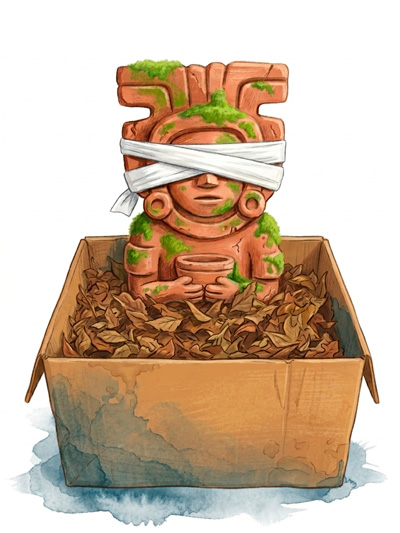
A neighbor once told us about a clay figure she saw in a village that caught her attention. When she tried to buy it from its owners, they told her it wasn't for sale, but she insisted so much that they eventually gave it to her for free. As soon as she brought the figure home, strange things began happening: noises, things falling over, and objects disappearing or changing places. Another neighbor suggested that she cover the figure's eyes and ears with a piece of cotton cloth, place it in a closed cardboard box, and return it to its owners, because it was surely an alux who wasn't happy in its new home. That's what she did, and according to her, everything immediately returned to normal.
—H.W.
When I was doing fieldwork at university, my classmates and I asked a man from a village whether he'd ever seen an alux. “Thank God, no,” he replied. He told us about the grandson of a friend who had gone missing while playing outside his house. His parents called the police, but his grandfather told them they were wasting their time and went to find the j-meen. While the search continued, the j-meen performed a ceremony asking for the boy's return and then told his grandfather where to look for him: in a cornfield about five kilometers away. That's where they found the boy, perfectly fine and unbothered by heat, thirst, or hunger. He said he'd met some children who had kept him company and told him what he could eat in the cornfield. When the boy heard his grandfather calling, he turned toward his new friends—and saw that they were made of wind before they disappeared.
—José Luis L.

I once had to fill in for a night watchman at a school. When night came, I settled into my hammock, but as is normal, I didn't fall asleep right away because I wasn't at home. A little after midnight, I heard what sounded like hammering on the walls, over and over again. I turned on my lamp and went outside to investigate, but found nothing unusual. I shone the light along the walls and saw nothing strange. Certain there were no people—or anything else—around, I went back to sleep. A short while later, I heard the knocking again, this time coming from the roof. Once again, I went outside, thinking it might be an owl or some other animal, but just as before, I found nothing. The next night, I mentioned it at home, and they suggested that I bring some sweets. That night, I didn't hear the knocking again.
—José A.
Several years ago, my cousin Laura was invited to spend a weekend at the grandparents' house of a friend in a village near Peto. During dinner, she caught a glimpse out of the corner of her eye of a shadow that quickly moved along the floor by the wall at the far end of the kitchen. She didn't think much of it. Later that night, while preparing her hammock for sleep, she saw—or thought she saw—the same swift shadow coming out of the bedroom. The next morning, she told her friend what she had seen (or thought she'd seen), and her friend replied, “Don't be scared. It's the alux that lives in the yard. He's been with us for a long time, and he gets curious whenever we have visitors. He probably just came over to see who you were.”
—Alberto C.
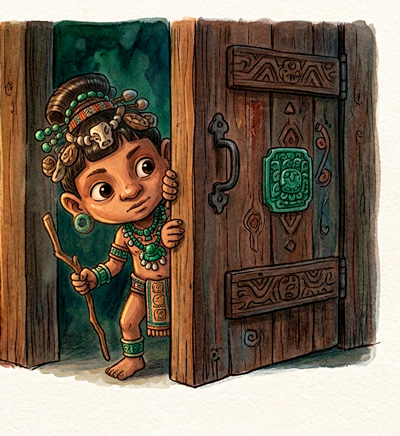
My aunt was a very mischievous and restless child. So much so that her grandmother was always scolding her and warning her that if she didn’t behave, the aluxes would come and take her away. One day, the girl went into the chicken coop to chase and bother the chickens. Suddenly, she felt such a strong tug on her braids that she fell backward. When she got up, frightened, she saw a tiny little man still pulling her hair. Terrified, she began to cry and scream. Her family came running to see what was happening, but all they found was the girl crying on the ground. The creature had vanished. When she told them what had happened, her grandmother explained that it had been an alux. Since the fright and crying wouldn’t stop, they had to ensalmar her — passing an egg over her entire body while reciting a prayer — to remove the mal aire she had picked up.
—Coni.
A friend of my husband once told him about a young man who found a “clay child” in the woods, an old figurine representing an alux. According to the local wisdom, these figures should never be touched or moved from where they are found. The young man thought nothing of it and took it back to town, hoping to make some money from it. He assumed it was simply an archaeological artifact and sold it, not knowing what he was getting himself into. The next day, strange things began happening to him, along with an unexplained physical ailment. When he failed to get better, he went to a traditional healer who knew about these things. The healer told him that he had to return the figurine to where he had found it in order to cure the mal aire. To this day, neither my husband nor I know how the story ended, or whether the young man ever had the courage to go back and return the figurine.
—Ana.
A coworker told me he has a piece of land near Acanceh. At first, every time he went there, someone would throw little stones at him out of nowhere and hide his tools for clearing and planting. Tired of it, he brought a man to help him clean up the property. As soon as they arrived, the man told him, “There are aluxes here protecting the land. They see you as an intruder, so they’re bothering you.” He advised him that, if he wanted to work there in peace, he should leave them an offering before going to bed: a lit cigarette by the door and some sweets. He followed the advice, lit the cigarette, and left it by the door, but forgot to put out the sweets. When he came back to do so, he noticed that the cigarette was already halfway gone. Ever since then, every time he visits, he brings along his box of cigarettes and some sweets for the aluxes.
—Melania.
When I was seven or eight years old, I went to a Scout camp in Seyé. I remember that night very clearly because we had a campfire where we all gathered and talked before going to bed. We were staying at a hacienda, surrounded by nothing but woods. Later, we went to our tents, but when we got there, one of the boys realized he was missing his piola, the coiled rope we wore on our belts and which, to a Scout, was practically sacred. We all organized ourselves to help him and retraced our steps with our flashlights on. When we shone them on the ground, we came across something very strange: the piola wasn’t lying on the ground. It had been completely stretched out, leading toward a little path into the woods. The adults told us that an alux had probably taken it to get our attention.
—Oscar.
When I worked at a cenote, a group of young visitors once arrived and refused to ask the owners of the place for permission before going in. Unconvinced by the custom, they wrapped their belongings in a towel and went swimming. When they came out, their car keys had disappeared. We searched everywhere but couldn’t find them, and they had to leave their car behind. The next day, another person who had been there that day called me, surprised: a key had turned up in their backpack, and it matched the car. We arranged to return it at the cenote that same day. When the tourists received it, they were embarrassed and frightened. One of the young men’s fathers asked me to go down to the cenote with him. I went along and watched as he murmured an apology while leaving some candies on the edge of the water. He admitted that he knew it had been the aluxes, and that he had gone down to apologize for the young people’s disrespect.
—Luis.
A legend in full: The revenge of the Alux
Long ago, in the village of Tabi, there lived a solitary man who was well beyond his younger years. Gray colored his temples, and he wandered the village with a deep sadness, for he had never married and had no wife or children.
He was very poor, often going hungry, and loneliness consumed his days. One day, tired of suffering, he made a terrible decision: he would throw himself into the great cenote in the village square.
As he sank into the deepest, darkest waters, he heard what sounded like laughter and voices mocking him and his miserable fate. He opened his eyes beneath the water and was astonished to discover that there really was someone there.
Behind him stood an aruxk’at—an alux made of clay, a tiny, little being. The alux looked at him and asked:
“Why do you want to end your life?”
“I’m just so tired of my life and my loneliness! I’m poor; I go hungry during the day and suffer the bitter cold at night. I work honestly from sunrise to sunset, but I can never make enough money. The milpa gives me nothing, and to make matters worse, I’ve never met a good woman who would love me. I’ll never know the joy of having children.”
The alux smiled and said:
“I know how hard you work and how unfair life has been to you. I can give you everything you want, but in return I’ll ask you for one small favor. Nothing extraordinary. You only need to bring me a few offerings: honey or sugar, four jícaras of sakab, a golden beeswax candle, and a bouquet of flowers.”
Sakab is a ritual drink made from corn cooked with water and unalkalized corn. It is traditionally presented as an offering during agricultural ceremonies.
The man hesitated, then asked, suspicious:
“But tell me something… Am I making a pact with k’aak’asba’al, the devil?”
“No,” replied the alux. “Only with me. For us aluxes to live in peace, we must eat, but I was abandoned in this cenote. My body is made of clay and corn, and I need to replenish it.”
“If that’s the case, then all right,” the man agreed. “I’ll put an end to your suffering, and you’ll put an end to mine.”
And so, his luck changed completely.
His milpa quickly flourished, and the corn harvest was abundant. With the money he earned selling it, he opened a small shop and became a merchant. His business grew quickly; if he bought something for one hundred pesos, he would sell it for three hundred. Before long, the man had amassed a small fortune.
He was also blessed with another stroke of luck: he met a beautiful, wealthy young woman who fell in love with him. He never could have dreamed that a woman like her would take an interest in him! Before long they were married, and a few months later, she became pregnant.
There was only one problem in their new marriage: the woman did not believe in spirits of the forest. She believed neither in aluxes nor saints, and she disliked having religious images or sculptures in the house.
Even so, the man was determined to keep his end of the bargain. Every so often, he would slip out in the early hours of the morning to take offerings to the alux at the cenote.
His wife began to notice her husband’s disappearances. One day, curious, she quietly followed him to see what he was doing in secret. She discovered him before an altar beside the cenote, speaking to the alux.
“Thanks to you, brother aruxk’at, I have everything I ever wanted.”
His wife was furious when she saw him kneeling before the little clay figure. Enraged, she stomped on the altar, cursed the gods, kicked the alux, knocked over the offerings, and snapped the golden beeswax candle in two.
“I can’t believe you worship lifeless idols! If I had known this, I never would have married you! You’re a fool to believe in such superstitions!”
Terrified, the man replied:
“Woman, don’t do something you’ll regret! You don’t play with aluxes. Everything we have was given to us by him!”
“We prospered because of our own hard work, not because of some useless clay doll! If you keep worshipping it, I’ll leave you! You’ll never meet the child I’m carrying!”
The man was afraid of losing the woman he had waited so long to find, so he decided to abandon the alux. No more sugar, sakab, candles, or flowers appeared on the altar. Their agreement was forgotten.
One day, as the man entered his bedroom, he heard a macabre laugh. It was the aruxk’at.
“I thought you were an honest man, but you forgot your promise. The wife I gave you managed to manipulate you, and now you’re going to lose everything. I will take revenge for what you and your wife did to me. I’m going to do something that will hurt you for the rest of your days!”
The man thought that if he returned to the cenote with offerings, the alux would calm down and everything would go back to normal, but a few days later, his wife went into labor.
The husband fetched the midwife and waited outside the house for the baby to arrive. Once the child was born, he walked inside to meet his newborn son—and once again, he heard the alux’s laughter and saw his wife was crying bitterly in the hammock.
When the man picked up his son, his blood ran cold. The baby was identical to the little alux. His face appeared to be made of rough clay, his skin had an earthy texture, and he had been born with an incomplete ear—the same way the aruxk’at’s ear had been left after the woman kicked him.
Overcome with terror and grief, the man ran all the way to the cenote in the village square, the very place where the alux had once saved his life. Without thinking, he threw himself into the water again.
This time, no one saved him: he died.
Because he had broken his promise, the alux had taken everything from him. After his death, the fortune the man had accumulated turned into tobacco leaves. His widow was left in poverty, raising a son who looked exactly like the alux. That was their punishment for blaspheming against the spirits of the forest.
Text by Leobardo Cox Tec
First published in Yucatán Today print and digital magazine no. 466, in October 2026.


Related articles


