


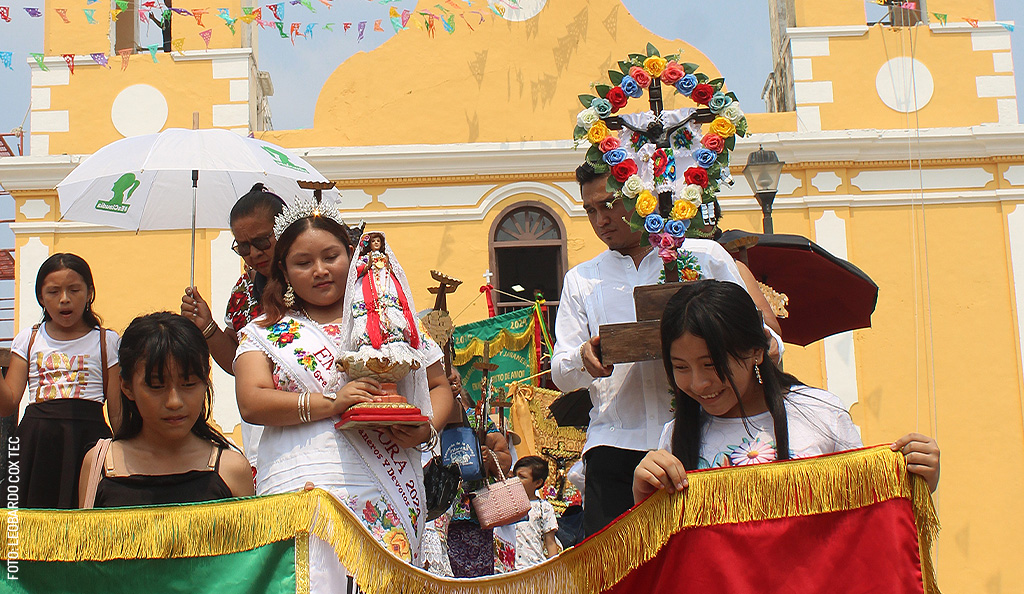
The municipality of Kinchil is located approximately 42 kilometers west of Mérida. Its name, of Maya origin, likely means "Place of the God Kinich" (Lord of the Solar Face). Its clean streets are typical of a warm Yucatecan town, as is its imposing Temple of San Miguel Arcángel. This church guards the image of the Cristo de Amor (Christ of Love), who is celebrated annually by the people of Kinchil during the month of May.
The Cristo de Amor, or Lord of Kinchil, is renowned for being miraculous. Legend says he arrived in Maya lands from the sea as sacred cargo on an anonymous vessel. Local elders tell of three Black Christs—three brothers who were separated upon arrival. Once they reached the Yucatecan coast, the three sculptures were consigned to their respective churches, and the history of Kinchil’s religious festivities began.
The Gremios of Kinchil
In Yucatán, gremios (guilds) are groups of Catholic devotees who share a common trade and, during the festivities of their patron saint, express their faith through various public activities. These include convivios (community gatherings with free food and drink), church decoration, the donation of vestments for the saint, processions, masses, the burning of toritos de fuego (firework structures), and ritual dances. The gremio is a form of popular devotion where the Maya people maintain a certain level of autonomy, with traditions varying from region to region.
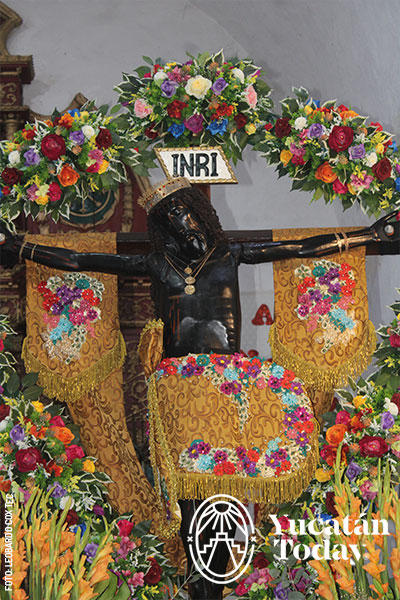
The gremios dedicated to the Santo Cristo de Amor begin on May 1 with the "lowering" of the image and can extend until mid-month.
Currently, Kinchil has 12 active gremios, representing groups such as youth, merchants, hunters, bricklayers, farmers, and even coheteros (firework makers) and jaraneros (traditional dancers).
The "Hachas" or "Hacheros"
It is customary for the gremios to offer embroidered banners and standards bearing their names. They also provide candles to be lit during the masses they fund, ensuring the saint receives their offerings with pleasure.
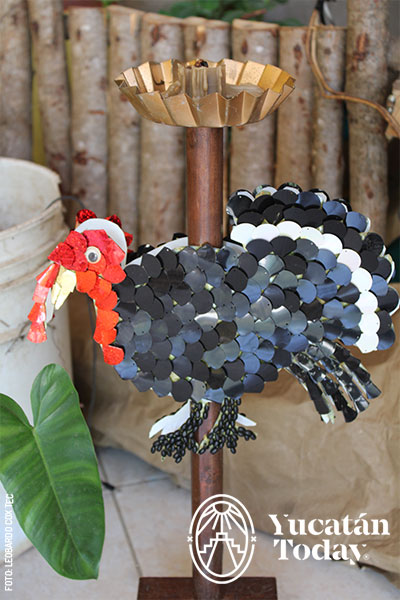
These candles are placed in hachas or hacheros, small bases or candlesticks used for stability. Traditional hacheros were liturgical instruments used by the Church to hold large wax tapers. Today, these wooden bases are handcrafted and decorated with the creativity of the devotees. They often take the form of animals—such as turkeys, bulls, cardinals, or pigs—and are embellished with sequins, paper, ribbons, and colorful flowers.
The Chi’ik and the Dance of the Pig's Head
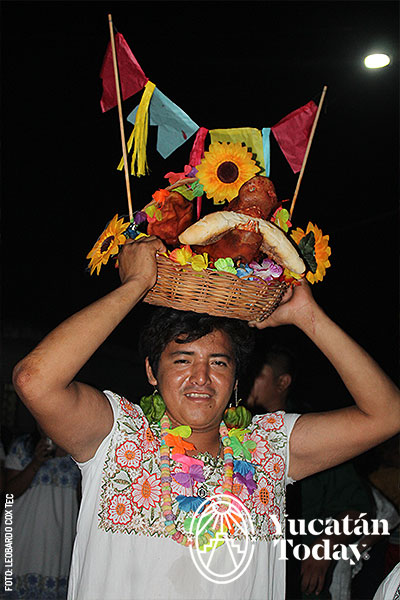
Some gremios perform the Danza de la Cabeza de Cochino (Dance of the Pig's Head) to publicly present the organizers of the following year's festivities. The dance winds through the streets of Kinchil until it reaches the church doors.
Afterward, the pig's head is taken to the home of the family assuming the commitment for the next year. A key figure in the dance is the chi’ik, a man dressed in traditional women's clothing who plays the role of a comedian, playfully interrupting the dance and joking with the crowd.
First published in Yucatán Today website in April 2026.


Related articles


