


01 april 2025
/ 3 min. de lectura
The Maya, in addition to their numerous scientific, astronomical, and cultural discoveries, also dedicated part of their time to artistic representations, mainly rituals and ceremonies that incorporated dance and theater.
 Dances and songs dedicated to the gods were performed with feathers and jewels, masks, and painted faces and bodies. Some of the costumes represented birds and animals. It is believed that on the platforms of the north stairway of the Kukulkan pyramid "El Castillo," in Chichén Itzá, comedies were performed.
Because of its similarities to theater as we know it, with makeup, costumes, scenography, and a stage, we can say that this was the base of Maya theater.
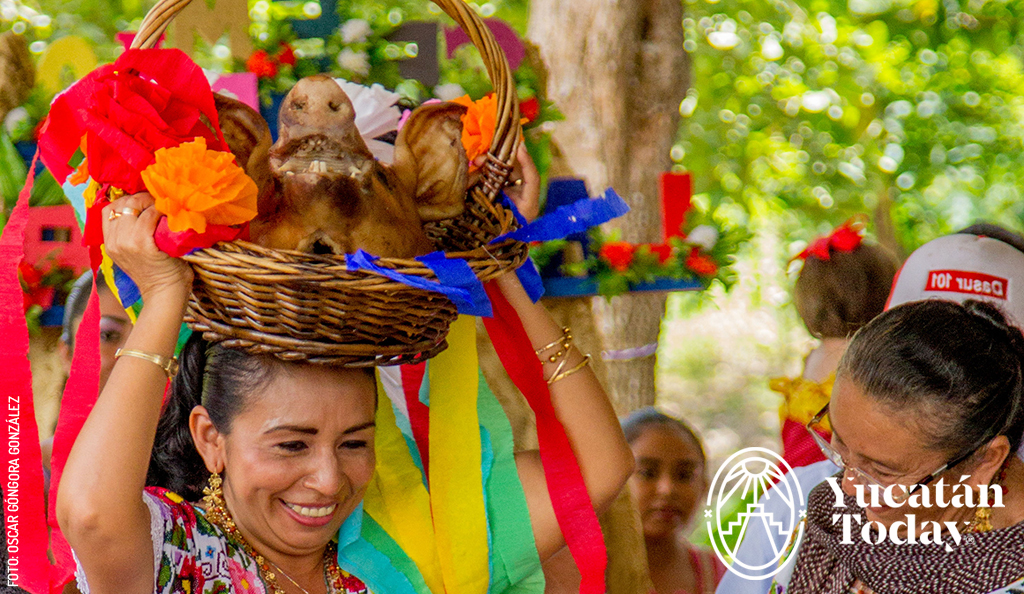
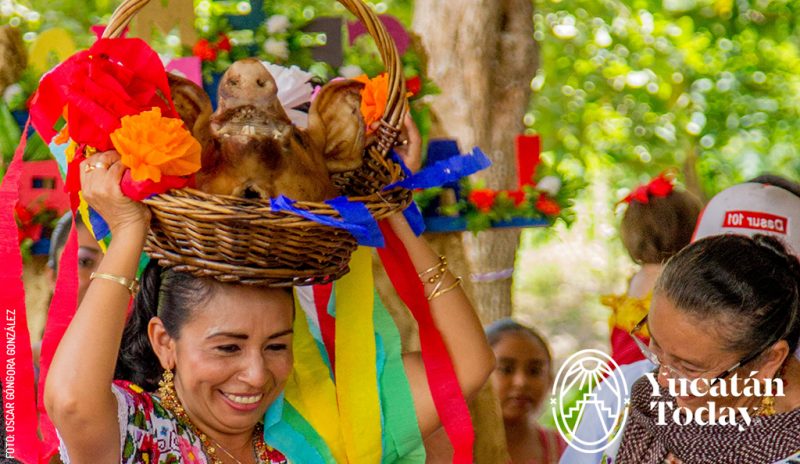
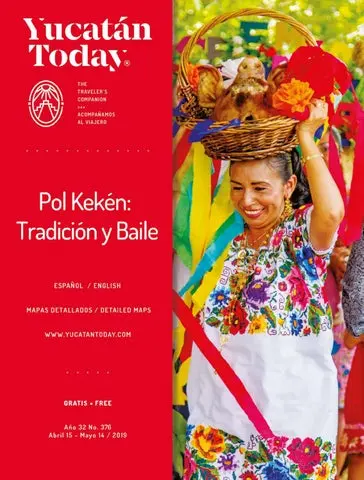
Today, some of these customs are still carried out, transformed into dance and representations that unite the pre-Hispanic traditions and Christian religion; such is the case of the "Cabeza de Cochino" (pig's head, known in Maya as Pol keken), which can be seen today as a dance at the "vaquerías" and other popular events. Originally, they were performed with a deer's head, but with the arrival of pork with the Spaniards, it was changed. On our cover, we show you a snapshot of this traditional dance being performed in Tixcuytún, a community of Tekax, during the traditional "fiestas" dedicated to their patron saint, the Virgin of the Assumption.
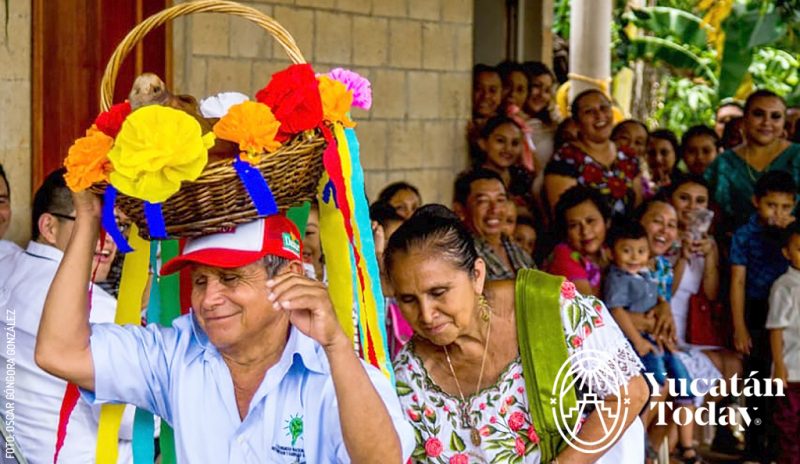 This performance begins with the preparation of the pig's head, adorning it with narrow ribbons of various colors, as well as other elements. Elder women dance around the person carrying the pig's head on a tray on their head. The owner of the pig also participates, as the head of the family, who will guide the pig during the procession.
The story is simple: a family that has raised a pig takes it to the market to sell in order to buy necessities. It has four moments:
- The departure from the owner's house
- The walk to the market
- The dancing on each corner
- And finally the arrival to the house of the new owner.
To the rhythm of live "jarana" and "charanga", the person carrying the pig's head dances among the people. The different colored ribbons are taken by each of the jarana dancers, representing union in the community. This dance/theater is very popular and demonstrates the integration of the entire community participating in the sale of the pig.
You can see the Vaquería dance every Monday at 9 pm outside the main doors of the Palacio Municipal, on Calle 62 between 61 and 63, Centro.
Photography by Oscar Góngora González and Guillermo Pruneda for use in Yucatán Today.
First published in Yucatán Today print and digital magazine no. 376, in April 2019.


Related articles


