


Designing a Home in Yucatán: An Insider’s Guide to Mérida Interior Design
A house can be beautifully renovated and still not feel finished.
Before moving to Yucatán, I spent more than a decade in film and television set decoration in New York, where every room had to tell a cohesive story before anyone entered it. My work on major productions such as Mr. and Mrs. Smith and John Wick trained my eye to notice exactly what makes a physical space believable: the weight of an object, the distance between pieces, the way light changes the mood, and the small details that suggest a life has unfolded there.
In Yucatán, that specific way of seeing matters immensely. Homes here are shaped by climate, local craft, history, and a uniquely tropical hard light. If you are thinking about purchasing, renovating, or simply decorating a historic property, whether in Mérida or anywhere else in the state, this guide will offer another way to envision the project, and help you turn any architectural space into a unique piece of livable art.
Mérida architecture speaks: listen before you furnish
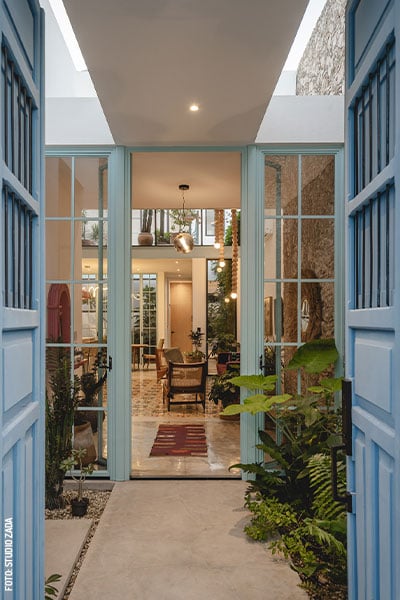
Before choosing your furniture or layout, spend time noticing what the room is already telling you. Where does the light become difficult? Where does the air move? Where do people naturally pause? These architectural observations should shape your practical design decisions early on: where seating should face, how ambient lighting should behave after sunset, and which structural parts of the home deserve the most attention and financial investment.
Pasta tile as inherited architecture and local history
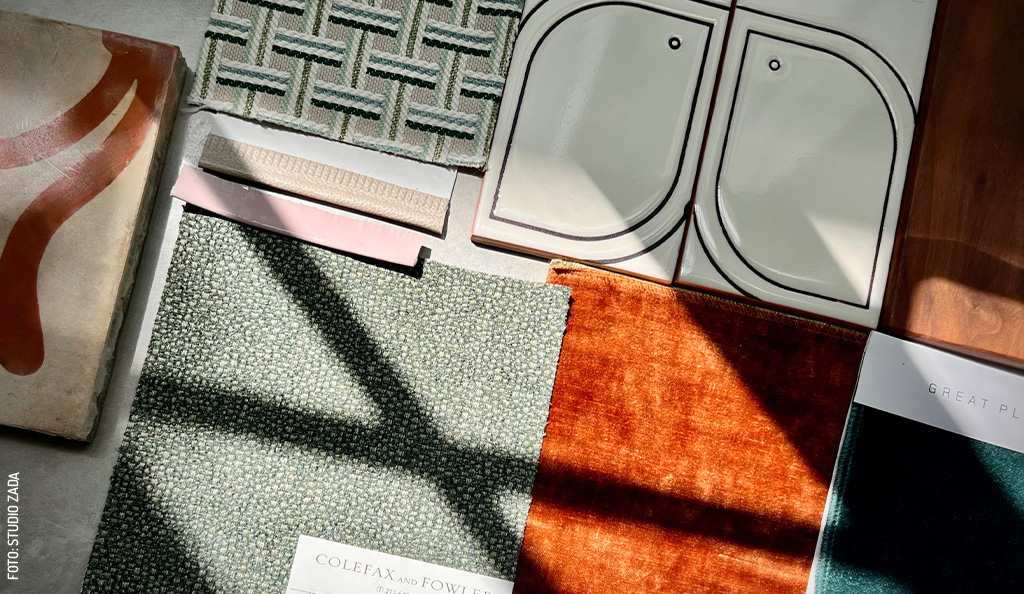
In many Mérida homes, the floor is already doing a significant part of the design work before a single piece of furniture enters the room. Mosaic pasta tile carries a long local history, but it is not frozen in the past. Each tile is still made slowly by hand, through pigment, cement, pressure, and repetition, then laid into intricate patterns that can make a room feel formal, playful, graphic, or elegantly restrained.
The floor in a Yucatecan home is both craft and architecture: an art piece made by hand that becomes an essential part of how the house is read, moved through, and remembered. For anyone considering using pasta tile into a restoration project, the primary question is not only which pattern to choose, but what kind of physical and visual presence the floor should have in the house.
Look closely at Mérida’s cultural geometry around you
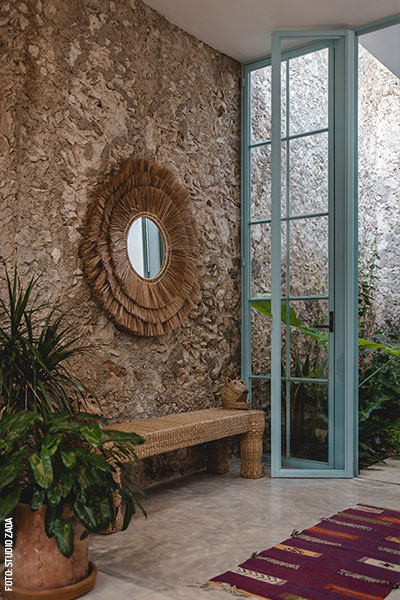
Inspiration matters, but for a premium renovation in Yucatán, it does not only have to come from an image saved from the internet or a designer reference. Spend a few days walking through Mérida before deciding what your house needs. Beyond the vibrant colonial façades, a new, fascinating language starts to appear: stepped forms, sunburst grilles, patterned tile, carved moulding, and window guards that look almost drawn by hand.
These shapes echo the Neomaya (Mayan Revival) and Art Deco currents that later influenced legendary architects like Frank Lloyd Wright and found their way into the cinematic, visual world of films like Blade Runner. For homes in Mérida, these regional geometries offer a useful starting point: let the lines, shadows, and architectural repetitions already present in the city become part of your home’s visual vocabulary.
Custom woodwork: build with local Yucatán makers
One of the great advantages of designing and renovating real estate in Yucatán is having access to skilled carpenters and millworkers. These artisans possess an innate understanding of regional woods, the tropical climate, and the specific way older masonry homes are built.
By working with resilient local materials like tzalam, native makers can create custom furniture and architectural millwork that belongs (as in, feels completely organic) to the property. In historic houses characterized by thick stone walls, high ceilings, and unusual proportions, custom-built pieces can solve spatial challenges that standard furniture often cannot.
Treat lighting as atmosphere, not hardware
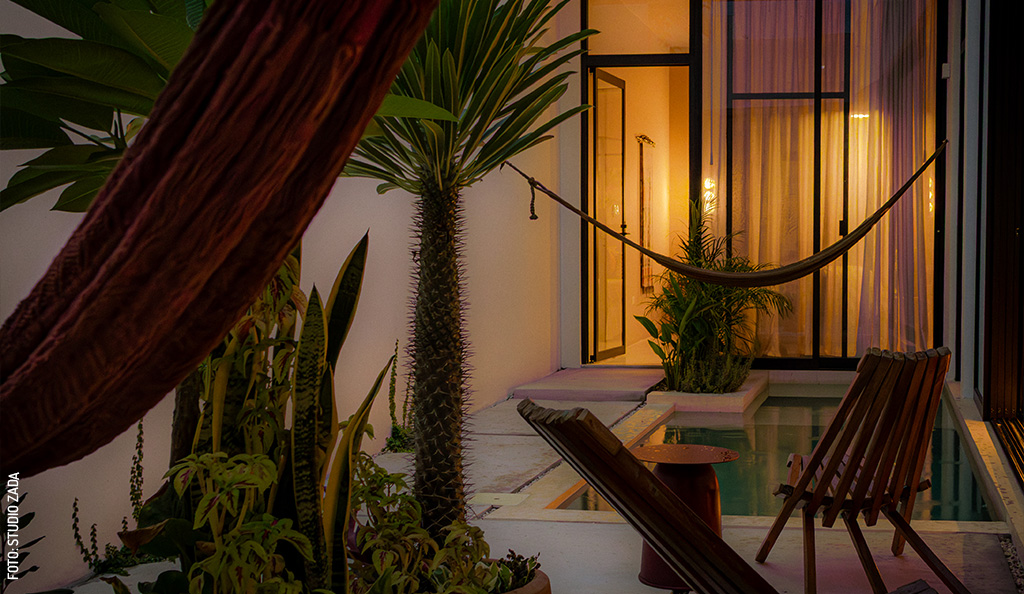
Many interior design problems are, at their root, lighting problems. A room can feature beautiful materials, but if the light is too cold, too harsh, or coming from the wrong place, the space never fully settles. Light is one of the first sensory things a person experiences when entering a room. Before adding more furniture or decoration, pay close attention to how the house feels in the late afternoon, during dinner, or after sunset.
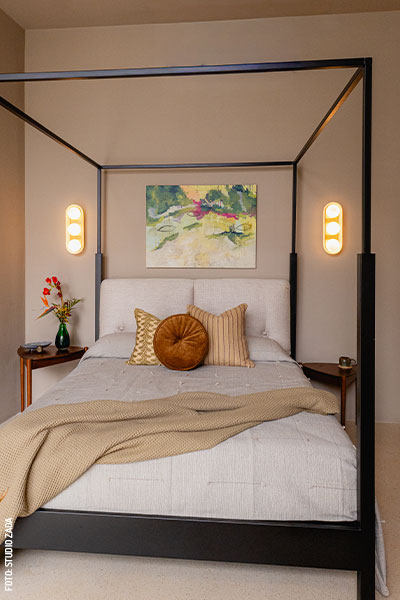
Regional fibers such as henequén and palm can soften that interior experience. Incorporating custom lighting fixtures, woven screens, and shaded exterior pieces will diffuse the harsh tropical brightness and make the transition into a room feel more natural and inviting.
Let the ironwork tell part of the story
Before removing old ironwork during a remodel, spend a little time with it. In Mérida, gates, grilles, railings, and window guards often carry a particular regional charm: atomic curves, floral geometries, repeated loops, and hand-drawn patterns that sit somewhere between mid-century modernism, Art Deco, domestic ornament, and brilliant climate adaptation.
These pieces are functional, but they can also read like custom artwork built into the house. They allow the breeze to move freely, filter the intense midday light, offer privacy from the sidewalk, and soften the edge between the home and the street. The same is true of older louvered windows, which allow air to pass through a room even during a heavy tropical rain.
Restored, simplified, or reinterpreted, these elements can give a sense of cultural continuity and undeniable character while still feeling current.

IG: @wearestudiozada
First published in Yucatán Today website in June 2026.å


Related articles


