


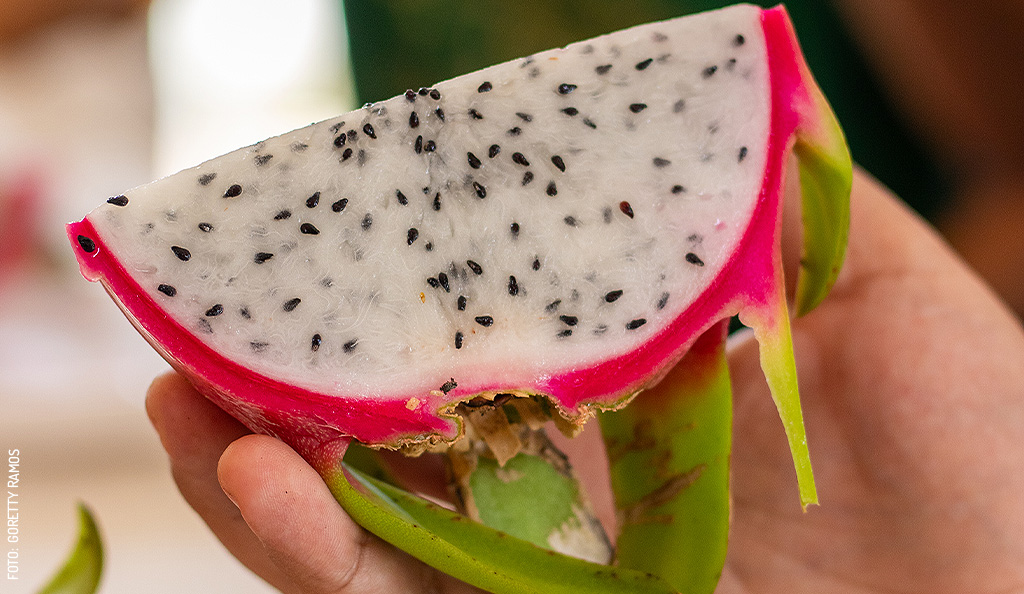
The Pink Heart of the Yucatecan Countryside
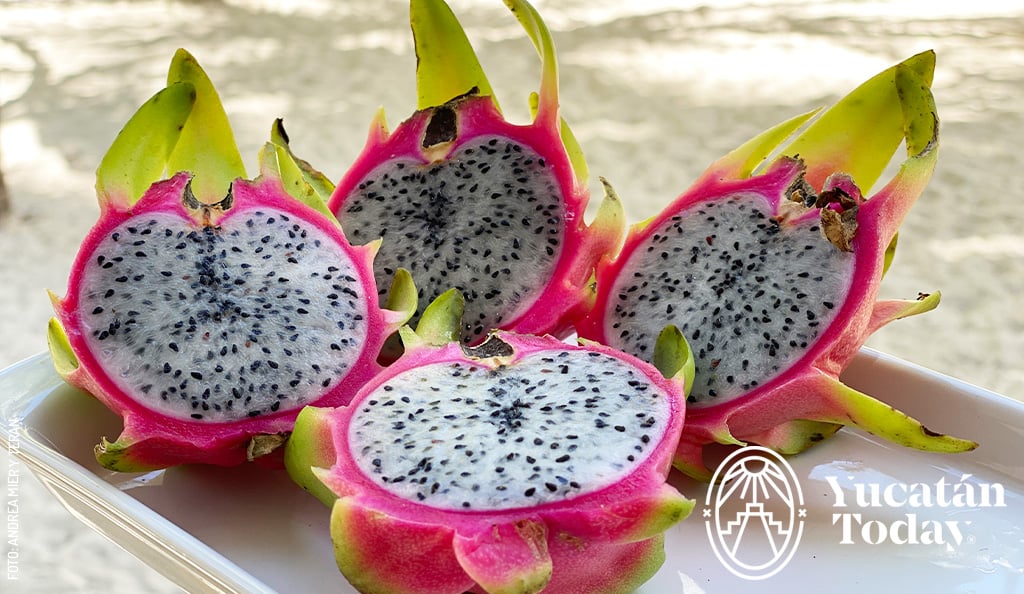
Between May and October, the markets of Yucatán are dyed a vibrant shade of hot (Mexican) pink thanks to dragon fruit, known locally as pitahaya. Its exotic appearance and refreshing sweetness have made it one of the favorite fruits of the Península. What you might not know is that behind every pitahaya, there are months of patience, care, and many hours of delicate labor.
Growing dragon fruit in Yucatán
The pitahaya harvest season depends entirely on the rainy season, which also runs from May to October. However, during the dry season—the other half of the year—the plant requires special care to ensure a bountiful production later on.
The dragon fruit plant is a succulent cactus. This means its branches grow and extend upward before cascading down and expanding outward. Because of this growth habit, farmers use different cultivation methods to support the plant. A while ago, pitahayas were grown mainly in people’s homes, specifically on their stone walls or albarradas; nowadays, farmers use one of the following methods:
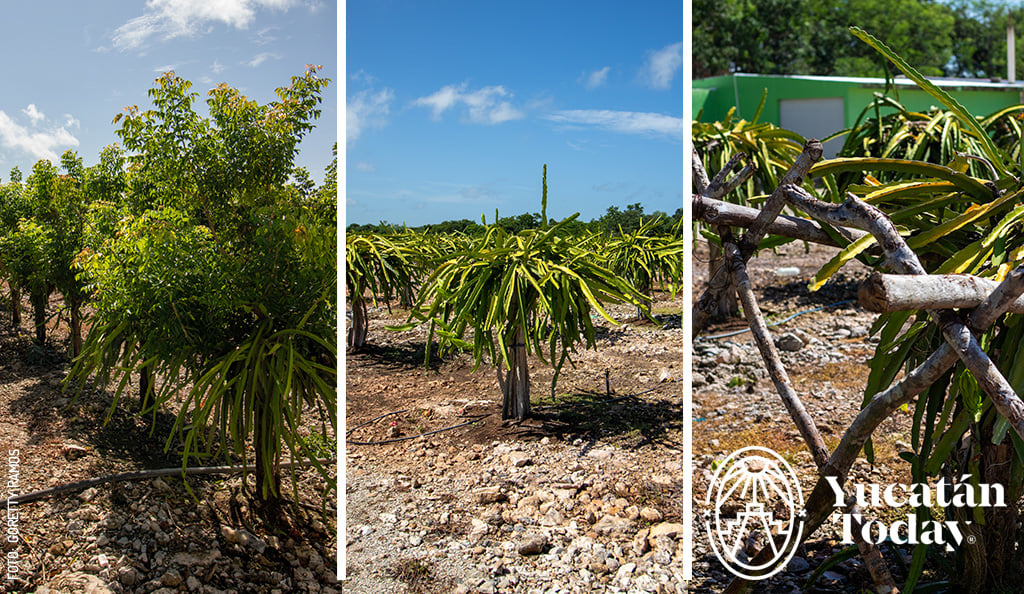
1. Living tutor. This is the most traditional method. It involves using chaká trees (famous in local legends) and letting the dragon fruit plant grow among its branches. The tree is planted first, and after a few months, cuttings (esquejes) of the pitahaya are placed to climb it. The disadvantage is less control over quality, as pests or issues can transfer from the chaká trees to the fruit.
2. Dead tutor. Currently the most common method used by farmers, it consists of a circular concrete base, supported by a cylindrical pillar. The plant is placed at the top, allowing the branches, flowers, and fruits to hang down. This "dead tutor" method is highly effective at preventing pests and other soil-borne issues.
3. Wooden bases. This involves making X-shaped structures from thick branches to place a natural frame that can support the heavy weight of the plant.
The dragon fruit harvest
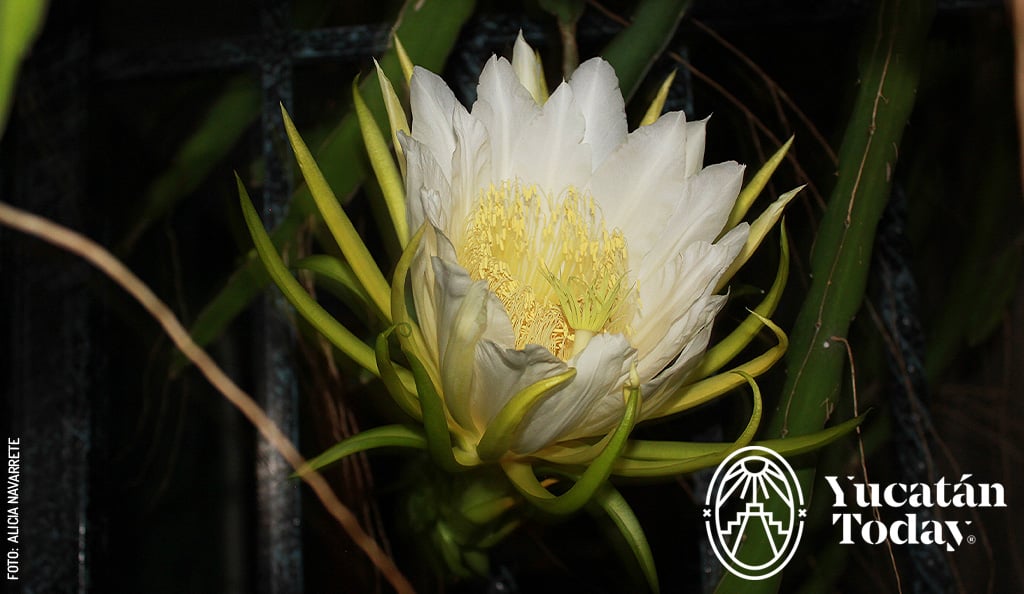
The pitahaya flower is so large and striking that it is known as the “Queen of the Night” or Belle de Nuit. These flowers bloom only at night, releasing a soft, enchanting aroma. During a single bloom, each plant can produce between 40 and 60 flowers.
Twenty-eight days after the flower wither, the fruit starts to grow and change color, shifting from a green similar to the branches to a pale pink, and finally to its characteristic deep pink. However, it must be harvested as soon as the color begins to "blush," as it continues to ripen during its "shelf life"—the period it spends in crates (huacales) before reaching the consumer.
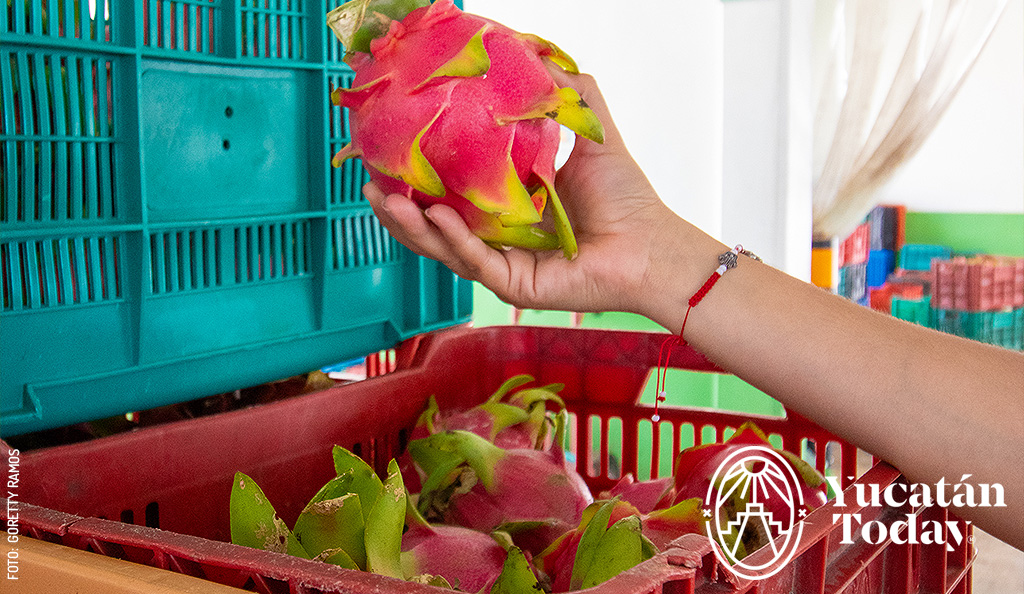 In a single month of production, each hectare can yield up to 20 tons of pitahaya, which is approximately 2,500 crates full of pink, juicy fruit. This does not include the fruit that gets lost along the way: the highest ones, as well as the smallest, are often eaten by birds. In times of drought, even deer may appear in the fields, seeking the hydrating water found within these juicy plants.
The art of producing dragon fruit
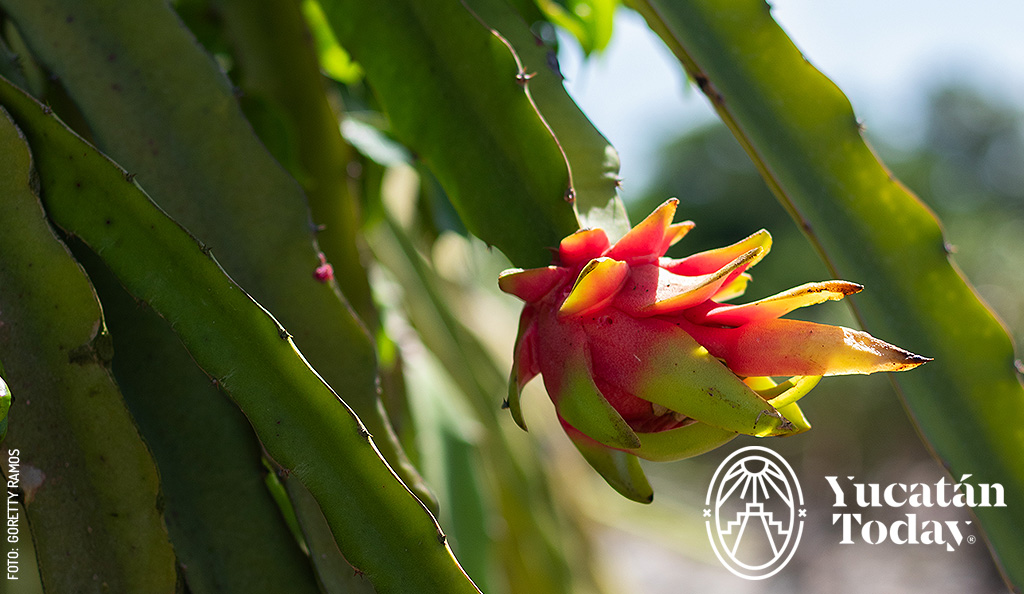
Considered the most difficult and laborious stage, production is key to guaranteeing a good harvest and, above all, maintaining the quality of the fruit. During harvest, one must be very careful with the plant's spines, given its cactus nature.
Success requires constant irrigation, protecting the branches from the intense Yucatán sun, and ensuring that no pests enter the chaká trees. Periodic fumigation and continuous care are essential to protect the entire plantation. At the end of the season, the chaká trees or "living tutors" are pruned to provide more space for the pitahaya plants to grow and expand the following year.
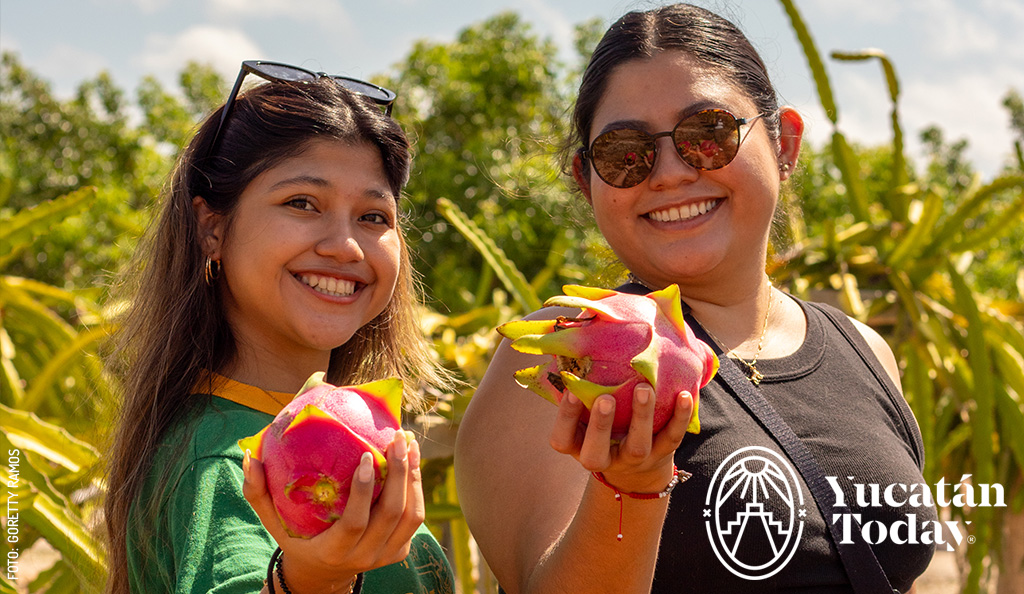
Every pitahaya, with its vibrant color and natural sweetness, is the result of the care and dedication of many hands over months of work. From planting to harvest, each fruit reflects the patience, effort, and passion of Yucatecan producers, reminding us that behind its flavor lies a deep history of commitment to the land and the traditions in this corner of México.
Special thanks to “La Pitahaya Yucateca”, who kindly opened the doors of their plantation to us and explained the intricate art behind cultivating dragon fruit.
First published in Yucatán Today print and digital magazine no. 461, in May 2026.


Related articles


