Mérida Va y Ven Guide: Routes, Fares, and How to Pay
Mérida is a city with endless spots to visit and sights you simply cannot miss. However, they aren't always close to one another. The city is growing every day, and with that comes traffic, meaning that getting around by car isn't always the best option.
If we add the undeniably hot climate into the mix, we know that walking long distances isn't always viable either. That’s why today we’re sharing the "not-so-secret" secret used by locals to move around the city more comfortably and efficiently: the Va y Ven transportation system.
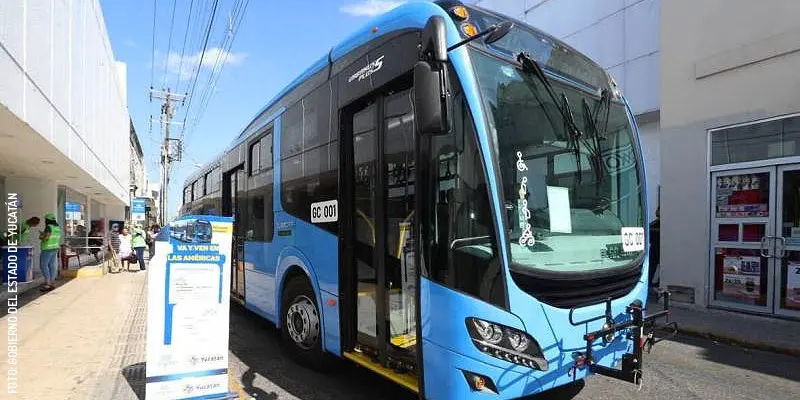
The Va y Ven is designed around the needs of daily commuters. Its units are modern, feature universal accessibility (such as ramps for people with disabilities and preferential seating), have air conditioning, and use designated stops that make trips easier, more comfortable, and efficient.
Why the Context Matters This might sound basic, but the background is important: until just a few years ago, no urban bus (locally called a camión) offered any of these features. Units were often in poor condition, made stops anywhere (making routes and schedules unpredictable), and air conditioning was a distant dream. Because each route was operated independently by different contractors, there was no possibility of transfers or a way to plan a journey combining different lines.
How to Pay on Va y Ven Buses
The first thing you should know is that Va y Ven buses do not accept cash. The system uses three electronic payment methods:
- Physical smart card
- Virtual card via the Va y Ven app (which generates digital tickets)
- Contactless bank cards
If you plan on using the bus frequently, the physical card is your best bet, as it offers transfer discounts—but we’ll get to the fares in a moment.
Airport Route: From the Plane to the Heart of the City
If you arrive by air, there is a key route to start your journey: the Airport - Centro Route. This special line connects the Mérida International Airport (MID) with various points in the city center, including Paseo 60, the International Convention Center (CIC), and the ADO bus station (Calle 69 x 68 & 70). Even if none of these are your final destination, taking a taxi or rideshare from any of these hubs will be much more affordable than from the airport terminal.
The general fare for the Airport Route is $45 pesos—this is the only route in the system with this specific price. As mentioned, you can pay with a contactless bank card, or purchase tickets at booths inside the airport and at ADO sales points in the city.
Fares for All Other Va y Ven Routes
Except for the Airport route, the standard fare for the general public is $12 pesos per trip. While there are preferential rates ($5 pesos) for students, seniors, and people with disabilities, these require a prior registration process.
Payment is made via electronic validators inside the buses. If you plan on taking more than one bus, the physical card is highly recommended for its transfer discounts: the first trip is $12 pesos, the second is $6, and the third and fourth are free, provided they occur within a two-hour window. Cards can be purchased and reloaded at Súper Akí, Súper Willys, Dunosusa, and Oxxo stores.
Routes and Schedules
The system currently boasts over 80 routes. While many originate in the city center, some are specific to certain neighborhoods, and others connect to nearby municipalities like Umán, Kanasín, or Conkal.
To make your trip easier, the system has its own mobile app called "Va y Ven" (available for free on iOS and Android). Through the app, you can:
- Consult routes and schedules.
- Track buses in real-time.
- Locate start, end, and intermediate stops.
- Use the "Origin - Destination" feature to find the best route and estimated travel time.
Google Maps also serves as a great complementary tool for visualizing public transit routes and potential transfers before you head out.
What Lies Beyond Va y Ven?
In addition to the Va y Ven, some traditional routes still operate using mini-buses or combis (vans). These units charge in cash (generally $12 pesos) and do not always have digital maps or marked stops. Because of this, they can be less predictable for visitors; it’s always best to ask a local or the driver before boarding.
Ready to Travel Like a Local!
Moving through Mérida on public transit is a fantastic alternative. Not only is it more sustainable and economical, but it also allows you to see the city from a different perspective—from tourist zones to everyday neighborhoods and parks. It’s an excellent way to experience the city up close!